Stop Guessing, Start Pacing

Want to outperform the market? Freewyld Foundry’s Revenue & Pricing Management service is driving an 18% performance lift for $1M+ STR operators, even in down markets. If you’re managing 10+ listings and want a free pricing audit, apply here
Why do airlines charge $500 for a 40-minute flight while STR hosts drop prices 70% last minute? The answer reveals a fundamental difference in how inventory works, and understanding it will change how you think about pricing strategy.
In this episode, Jasper Ribbers tackles the three most common questions about pacing that STR operators struggle with. You’ll learn why your property type forces different pricing behavior than hotels, how to measure whether you’re ahead or behind the market, and the surprising scenarios where having lower occupancy than competitors actually makes you more money.
You’ll learn:
- Why STR operators price opposite to airlines and hotels (and why you can’t copy their strategy)
- How to calculate Market Penetration Index in 30 seconds to know if your pricing is working
- The “last man standing” strategy that turns being the final available property into premium pricing
- Why empty January rooms are killing your July bookings through OTA algorithm penalties
- When to aggressively undercut the market vs when to hold prices high and wait
We also talk about:
- The temporary arbitrage opportunity that pricing tools create during demand spikes
- How pickup rate combined with MPI shows the direction you’re heading, not just where you are
- Why individual unit performance is meaningless but portfolio MPI reveals true positioning
- The PriceLabs calculation error that artificially inflates your MPI when units are unavailable
- Real examples from Australia and Ibiza showing these strategies in action
Mentioned in the Episode:
- Freewyld Foundry Free Revenue Report
- PriceLabs Multi-Calendar MPI View
- VRMA Orlando 2023 Conference
- Why STR Hosts Drop Prices Last Minute (Market Pacing Guide)
- From Guessing to Data-Driven: How to Track STR KPIs
- The STR Pacing Playbook
Understanding pacing separates operators who react to the market from those who strategically position ahead of it.
Subscribe for more episodes every week on YouTube, Spotify, and Apple Podcasts.

The STR Pacing Playbook
A step-by-step guide to tracking and using pacing data to optimize your short-term rental pricing strategy.
Download Free GuideContinue Listening
Midterm Rentals with Frank Bosie: The Revenue Strategy Already Happening in Your Portfolio
Frank Bosie of Hostfully joins Jasper to break down the data behind midterm rentals, including why 39% of STR operators already have 30+ night bookings, how the occupancy math works, and when the hybrid approach beats a hard minimum-stay strategy.
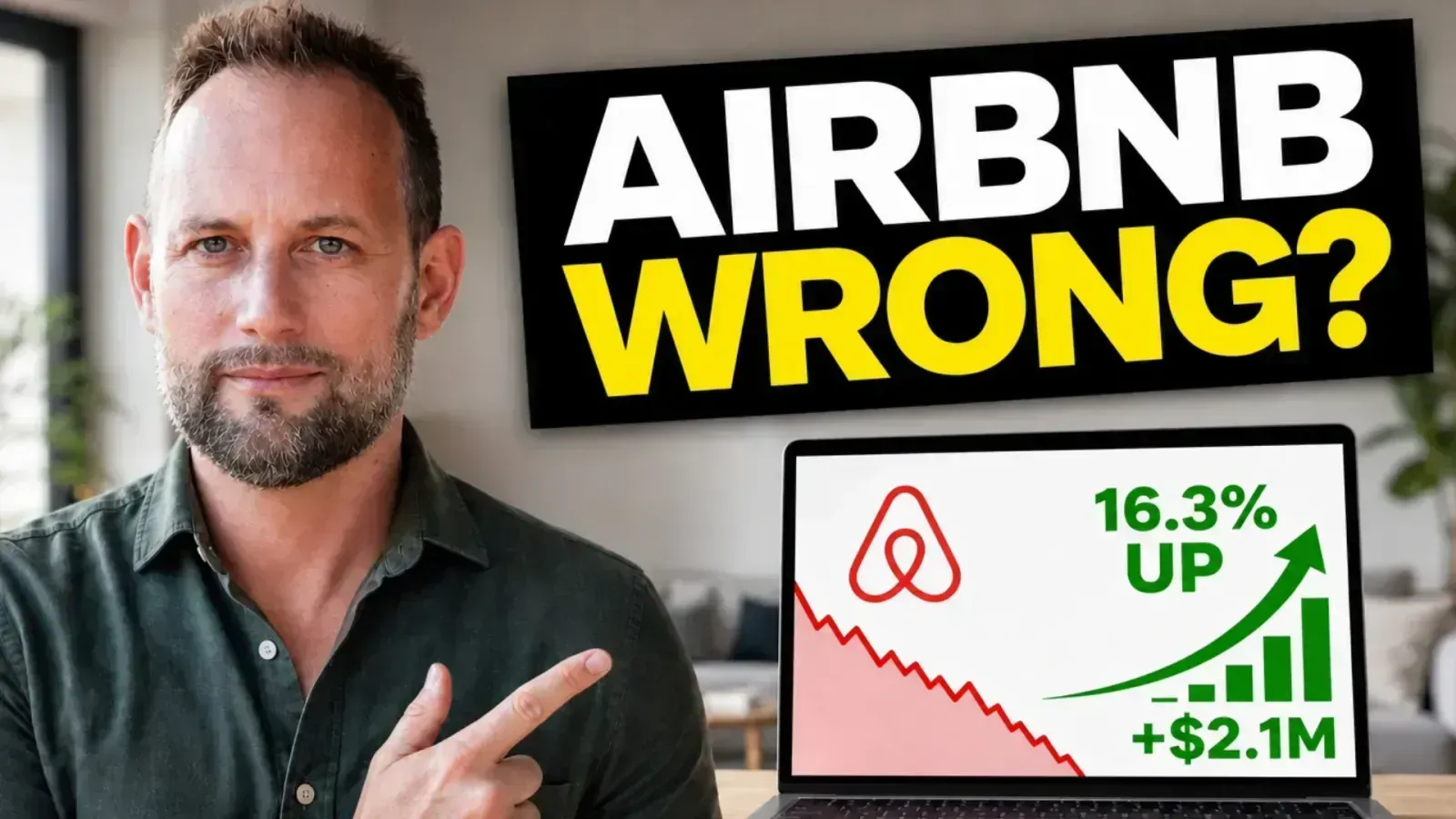
August 2026 STR Market Update: 16% Growth While the Market Declined 2.5%
Jasper shares the full August market update including July portfolio results (16.3% YoY growth vs. a 2.5% market decline, $2.1M in additional client revenue), the top winning and declining markets, the Labor Day weekend shift, Airbnb's AI pricing model and new mobile discount, VRBO sponsored listings, OTA discount stacking risk, and what operators should focus on heading into shoulder season and low season.

Secrets of a Pro STR Revenue Manager to Maximize Your Revenue
Jasper sits down with Patrick Morton, one of Freewyld Foundry's revenue managers, for an inside look at the pricing tactics, listing optimization moves, and team strategies that are moving the needle for STR operators every day.
Discovery Traffic vs. Search Traffic and What It Means for Pricing
Jasper: What's up, everybody? Welcome back to Get Paid for Your Pad. Today's episode of Rev Up, I want to answer some of the most common questions that we get around revenue management and in particular around the concept of pacing. If you've been listening to these episodes, then you know that pacing is one of the most, if not the most important concept in revenue management. It's also a concept that is pretty tricky to understand. And so we typically get a lot of questions from listeners around the concept of pacing. And so today I want to answer three questions that seem to, over the years, just get asked many, many times.
And so I'll name the three questions first and then I'll cover them one by one. So the first question is why do short-term rental hosts drop prices last minute so much more than hotels and airlines do, which is a very good question. Number two is what are the best KPIs to look at to measure pacing? And what are some examples of when I would want to pace either behind, in line with the market, or ahead of the market? So very, very good questions and not so easy to answer, but I'll try my best to answer these questions and explain the rationale behind it.
Why Short-Term Rentals Price Opposite to Airlines and Hotels
Jasper: So first of all, it's like, why do short-term rental hosts tend to drop prices so heavily last minute? But when you book a hotel or an airline and a flight, essentially like oftentimes booking a flight last minute can be extremely expensive. As an example, I am currently in Ibiza in Spain. And so July and August are super, super busy here. Europeans from all over Europe and outside of Europe as well, people visit from all over the world to visit the famous nightclubs here in Ibiza, but also it's an incredibly beautiful island. And so there's also a lot of people that come down here to find some peace and just enjoy the summer. So very, very busy times.
Now there's two ways to get to the island. There's either a ferry from the mainland of Spain or you can fly. And I've actually, my friend lives here, I've actually been coming back and forth between the mainland and Ibiza. And flights are extremely expensive. The ferry ticket is expensive as well. Like it's only like a two hour ferry ride and tickets are like several hundred euros, which is crazy. And the flights, like booking a flight last minute, it's literally like a 40 minute flight. It's such a short flight from where I'm flying to. I'm flying to Alicante in Spain. And these tickets are like two, three, four or five hundred dollars for a one way ticket, which is crazy for such a short flight.
And so why is that the case? And obviously like hotels as well. If you want to book a hotel on the island right now, it's extremely expensive. And so why are hotels often expensive last minute and flights often are last minute very expensive as well? If you're an Airbnb host or if you're a short-term rental host, then you know that last minute it's very difficult to get high prices for our units. So why is there this difference? It's a very good question. And it has to do with the type of inventory.
The Economics of Airline and Hotel Inventory
Jasper: Imagine you have an airline. Let's say you have an airplane with 100 seats and you can predict when demand is going to come in based on historical patterns. Now, if you have like, let's say it's a week in advance and you have like 10 seats left, and from past booking data that typically another like five seats will get booked in the last week or so. Now, you can afford to price these tickets at a very high price because there's only so many airplanes that fly on any given day. And when there's not a lot of seats left, you can try and get a really high price for those seats because you don't have to sell out the entire airplane. If you sell 95 out of 100 tickets or if you sell 90 tickets out of 100 even, that's a pretty good result. So you're not desperate to sell every single seat in the airplane.
But for short-term rental hosts, it's a little bit different because let's say you're an individual host. You want to, at least in the high season, you want to book as many nights as possible because you can only sell each day once. So if you have a weekend empty in the high season, it has a huge impact on your financials, especially if you own a house, you're dependent on that income. You can't really take too much risk. You could leave your prices higher and maybe in the long term, maybe that might be the best strategy. But you don't want to take too much risk with your pricing.
And the other challenge is because most hosts think that way, most hosts want to prefer to have a booking and have some income versus having the house sit empty. This is also the case for managers. Even if you're managing 100 homes, if you own all 100 homes, then you'd be in a better position to take some risk and say like, okay, well, I've got 90 out of 100 homes booked. Let's just charge a premium for any last minute bookings that might come in because if you own all the homes, then you can take that risk.
The Owner Portfolio Problem
Jasper: But most of us don't own 100 homes. If you have a portfolio of 100 homes, they're probably owned by different owners. Maybe not 100, but probably like you'll probably have maybe 20, 30 or 40 owners who each own like one, two or three homes. And so from a portfolio standpoint, you might be willing to take some risk and leave prices higher. But if you're in the summer and one of your homes is not booked for like a weekend, for example, that owner is not going to be happy. That owner is probably will not want to take that risk.
So as a result, most hosts take this strategy of lowering prices last minute because they want to maximize the chance to get booked. They don't want to risk not getting booked, especially in the high season. Now in the low season, people are just happy with any booking. They'll drop their prices to the minimum. And so that's how it works for short-term rentals. And that's where the difference is between hotels and airlines. They have multiple inventory.
A hotel also typically has, especially the larger hotels, like it's a bit different when you have a boutique hotel with like 10 rooms or something. Some boutique hotels that are a little bit smaller, they price a little bit more like a short-term rental. But if you look at the big hotels, like the Marriott's, the larger chains, the Wyndham, the Hilton, all those type of hotels, they typically have 100, 150, 200 rooms per hotel.
The Brand Power Advantage
Jasper: And also hotels and airlines have a strong brand. Everybody knows the biggest hotels and airlines. And so airlines also have some branding concerns as well. Everybody knows that Spirit Airlines and Frontier, those type of airlines, they are low-cost carriers. And so they often have very aggressive marketing strategies with very low prices, especially if you book early. The prices are typically very low.
Other airlines and bigger hotels, especially the luxury hotels, airlines maybe not so much. But especially like Four Seasons is never going to sell a room below a certain price. They'd rather leave the room unoccupied because they do not want to be associated as a brand with a low-cost option. They also have strong brands that allow them to charge premium rates.
And most hosts don't have any branding. And even if they do, they're not well-known. The brand recognition is very low. I mean, if you think, what are the top five short-term rental brands? If you ask a random person, they'll probably say Airbnb. It's like there are a few companies that have a strong brand and they are recognized like Vacasa, for example. Although if you ask most people, they don't necessarily see those like Vacasa as a high-end option.
So yeah, there's not a lot of brands in the short-term rental space. And so the branding is typically not a concern. And as a result of all these factors, the reality is that most operators will aggressively discount. And because other hosts are doing that, you kind of have to do the same because you can leave your prices, you can leave, let's say you have 100 units and in the last week or so, you have 20 homes that are still available. And everybody else is dropping their prices to like 100 bucks a night. And you're still sitting there at like 300. The reality is, unless your property is super unique and you have a lot more to offer than other hosts, people are probably not going to book your homes last minute because you're pricing yourself out of the market, right?
So that in a nutshell, that's why typically short-term rental operators will price high, far out and low last minute. And airlines is kind of the other way around. If you book a long time in advance, you're more likely to get a good price for a seat than if you book last minute. So I hope that makes sense.
Market Penetration Index: The Essential Pacing Metric
Jasper: Let's go to question number two. What are the best KPIs to look at to measure pacing? And just as a reminder, pacing, what pacing really means is just how does your future occupancy compare to the market? And when I say market, it's really whatever concept you're comparing yourself, your unit to.
So for example, if you look at the next 90 days, if your average occupancy over your portfolio right now is like 30% and the market occupancy is, let's say 60%, that means you're pacing at a market penetration index of 50%. So market penetration index is our favorite KPI to measure pacing. It's simply defined as your future occupancy divided by the market or the comp set's future occupancy.
You can apply this KPI in any way you want. You can look at one unit for the next month. You could even look at one unit for one particular weekend. You could look at how am I pacing for Thanksgiving and look at a couple of units and see how many of those units are booked versus the market. When you look at a very short period, it doesn't really make sense to look at one unit because you're either booked or not. So it's either zero or 100%. And then the market's probably going to be like whatever it is, like 30, 40, 50%.
Applying MPI to Portfolio Management
Jasper: But if you look at your entire portfolio, it can be helpful to look at shorter periods. Because if you have 100 units and let's say you're looking at Thanksgiving, so people will typically book three or four nights for the weekend. So let's say a Thursday, Friday, Saturday, Sunday is a typical booking or like a Wednesday, Thursday, Friday, Saturday could be a typical booking as well.
So if you look at those four nights and you look at your market penetration index, which in PriceLabs is very easy to do in the report section. Other pricing tools, you have to do the calculations yourself. I don't think they provide this KPI. But either way, if you look at, let's say you have 100 units and let's say that your occupancy for those four nights is, let's say, 40%. And let's say the market is at 40% as well. That means you're pacing with the market. Your future occupancy matches that of the market.
Now, if you're at 40% and the market's only at 30%, then you are pacing 33% ahead. Your market penetration index will be 133%. If you're looking at the multi-calendar in PriceLabs, you can also display the MPI. When it's in there, it's displayed as, essentially a one means 100%. So if you're pacing 33% ahead, your market penetration index will be 133%. And then on the multi-calendar, it'll be displayed as 1.3.
So then you're pacing ahead of the market. And if your future occupancy is 40%, but the market's at 60%, then you are, your market penetration index is 66.7% or 0.67. Or maybe on the multi-calendar in PriceLabs, you'll probably be rounded to like 0.7, I think. But either way, so you can be pacing ahead of the market. You can be pacing with the market or you can be pacing behind the market. And yeah, market penetration index is the easiest KPI to use to estimate that.
Important MPI Caveats
Jasper: One caveat is a couple of things that you have to take into account is PriceLabs, unfortunately, counts unavailable days in the market penetration index. And so if your unit is not available, then it will show like a really high MPI. So that's just one thing to keep in mind. And if you're calculating your market penetration index manually, then you got to make sure that you don't count unavailable days. You only want to count the booked days.
Okay, so MPI is our favorite KPI to look at. Also, when you look at your pacing, you want to also keep an eye, not just on your future occupancy compared to the market. You also want to see what direction am I going in. And the best way to look at that is your pickup.
Understanding Pickup Rate
Jasper: So for example, if your market penetration index for certain units for the next 90 days is, let's say, 60%, let's say you want to be at about 100, then you're behind. And so you might want to lower your prices a little bit to catch up. However, if you've gotten like six bookings in the last seven days, that means that you are getting more bookings than you would expect. Typically in any given month, depending on your length of stay, you probably get between six and eight bookings a month. So if you're getting like six in one week, that means your MPI is catching up.
So you're not where you want to be in terms of the occupancy, but your prices are low enough to get more bookings. You probably get six bookings a week is more pickup than the market's picking up. And so your MPI is catching up. You're catching up in future occupancy. And so you want to take that in consideration too in making pricing decisions.
When to Pace Behind, With, or Ahead of Market
Jasper: Let's go to the next question. What are examples of when I would want to pace behind, with, or ahead of the market? That's a really good question. And it's not so easy to answer because there are a lot of factors that you want to take into account. But I can give some general guidelines. And before I give these examples, if you want to challenge yourself, what I would recommend that you do right now is pause this podcast and spend 30 minutes and think of situations where you might want to pace ahead, with, or behind the market. And then write down one example of each. And then once you're done with that, continue the podcast and compare your thoughts with what I'm sharing.
So let's start with the scenario that is least likely to happen, which is what scenarios would you want to pace behind the market? In what scenarios do you want your future occupancy to be lower than the market? There's really only one scenario. And that is what we call the last man standing scenario. That is when you expect the market to fully book. Okay, you expect that there is going to be less supply than demand.
The Last Man Standing Strategy: Taylor Swift Concert Example
Jasper: So let's just take a simple example to illustrate this point. Let's say there's a Taylor Swift concert in your town and you're in a pretty small town. There's only 100 Airbnbs. Okay, let's just assume. Now, given the amount of people that are coming into town, you can safely assume that every single unit is going to be booked up. There's going to be more people that are going to be looking for a place to stay than accommodation that's available. And so, yeah, it's a seller's market, right? You can name your price almost.
Now, in that scenario, you probably want to pace behind the market. And the reason for that is that most likely other hosts are most likely going to undersell their units. And that's because, first of all, not everybody has a pricing tool and not everybody has the understanding of these concepts. A lot of hosts, they just price their units at a certain price. They'll say weekdays, I want to be at about 100 bucks a night. Weekends, I want to be like 200. In the summer, I want to be a little higher. The winter, a little lower.
And yeah, if Taylor Swift comes into town, first of all, they might not know it. So the first couple of units might just get booked up because hosts aren't even aware that this is happening. If you don't have a pricing tool, you might not even be aware. If you have PriceLabs and Taylor Swift books a concert, you're going to know very quickly. Because right away, you're going to be seeing in the data that there's a spike in demand for a certain day in the future. Like a bunch of bookings coming into the market for next year, February, and your booking window is typically 30 days. Then like it's out of the ordinary that people book more than a couple months in advance.
How Pricing Tools Detect Demand Spikes
Jasper: So if you see those bookings coming in, you can easily see that on the future occupancy charts. You know that something's happening. But if you don't have a pricing tool, you probably don't even know. And your unit's probably going to be sitting at the original normal February price and someone's going to book it. So there's going to be out of the 100 units, there's probably going to be, I don't know, maybe like 10, 20 units that will just get booked up where the operator either wasn't aware that there's a concert or was too late to adjust prices.
Like the first couple units, and it's interesting actually, the CEO and founder of PriceLabs and Rajeev actually did a presentation in Orlando in 2023 at the VRMA. He did a speech on what are the disadvantages or what are the flaws of a pricing tool? And he mentioned that this is one of the examples where if Taylor Swift today announces a concert in February, PriceLabs is also not going to know. And they might have some type of system in place to get notified. But the moment it gets announced, there are going to be people that probably know before PriceLabs knows it.
And so there are going to be some people that are going to book units at the normal price. It's either people that don't have a pricing tool or people that do have a pricing tool. But you can get unlucky because once there's a couple bookings coming in, PriceLabs is automatically going to raise the price. And I say PriceLabs just because we're using that. The other tools work in a very similar way. But the pricing tool needs to see that demand coming in before it knows to raise the price.
Why Early Bookings Happen at Low Prices
Jasper: So there's going to be a number of units that are just going to be the unlucky ones or the ones that are not paying attention. And those will get booked at a lower price. If you have, let's say, out of the 100 units in that market, if you have, let's say, 20 units and let's say 20 properties have already been booked and none of your properties have been booked yet. That means you're behind. But that's not a bad thing because those first 20 units probably got booked at a way too low price.
So you don't really want to engage or participate in that very early booking window where normally you do want to participate in the early booking window because typically that's when people are willing to pay a higher price. So it's kind of the world upside down in that sense. It's kind of like the airline model where if you book early, you get a lower price. But if you book late, you're probably going to get a higher price.
So, yeah, that's a scenario where you might want to pace behind the market. In the extreme scenario, if you knew that there's only 100 Airbnbs, let's just say there's no hotels. And let's just say there's like 10,000 people that want to come to the concert. There's not enough accommodation. And so people are literally going to have to stay like an hour away, two hours away. So you know that people are going to be willing to pay like a really high price for your unit.
The Extreme Last Man Standing Play
Jasper: And so in that scenario, it might be beneficial to set your prices really high and not get booked until the last minute. Because when those other 80 units are booked up, your units are the only ones that are left. And now it's just a question of how much are the people that still need accommodation, how much are they willing to pay?
And out of 10,000 people, there's probably going to be some people with a lot of money who have a child whose dream it is to go to Taylor Swift. And they're like, you know what, I'm just going to spend five grand because this is a dream for my child. Or how many times is Taylor Swift going to throw a concert in your area? So another example is like last year we had the solar eclipse where people were paying insane amounts of money to be able to see that because it happens once in a century or something like that. So people are willing to pay.
So those are extreme examples of when you might want to pace behind the market. There are some more, these are extreme. This is literally you could gamble and just literally try and get booked as the last part of the inventory. Typically, you don't want to, that strategy can be very risky. And people have been burned by that strategy because there's been examples of big events in the past where people were trying to do that.
The Risk of Last Man Standing Strategy
Jasper: And what happened was in the last few weeks, a lot of local people decided to quickly put up an Airbnb listing, hearing about the prices that people were paying. And so suddenly supply increased and then a lot of people who were hoping to get booked at a very high price last minute actually did not get booked at all. So it's a risky strategy. But in certain situations, it makes sense.
Now, there are some other situations where, for example, we have a client in Australia where Christmas and New Year's in his market pretty much books up 100%. And it's not a very professional market. So a lot of hosts are underpricing. So they could be charging way higher prices for Christmas and New Year's. But they maybe bump up that price a little bit, but not nearly enough. And so in that market, we are always pacing behind the market for Christmas and New Year just because most of the other operators in the area are just selling their inventory too cheaply.
And we know that there's enough demand that will fill up all of our units. There's just, it's a situation where it's such a popular area for people to go to for Christmas and New Year's that if there's a unit available at a reasonable or not like a crazy price, but way higher than still way higher than all our operators are charging, the demand is going to fill up. If somebody sees that there's a unit available for Christmas, they'll book it. Someone's going to book it. There's a limit, of course, if you price it at like $100,000 a night or something. But that's an example of something that happens every year. Nothing out of the ordinary. But yeah, we want to pace behind the market there because the competition is pricing too low. So those are examples of when you want to be behind the market, right?
When to Pace With the Market: High Season Strategy
Jasper: Now, if you think of when do you want to be pacing with the market, those are your typical high season. You're expecting 80, 90% of the market to book, but you don't want to rely on last minute because the market's not going to completely book out. So you do run the risk of not getting booked last minute or you have to drop your prices pretty aggressively last minute.
So those are scenarios where you want to be pacing with the market. So if the market's about 60% occupied, you want to be around 60% as well. Obviously, if you're 50, 55, 65, 70, that's fine. But if the market's at 60, you're at 30, then you're going to have to sell more, relatively more inventory later in the booking window. And that's going to hurt your overall revenue. So that's a pretty easy example.
When to Pace Ahead: Low Season Strategy
Jasper: And then the other example is when do you want to pace ahead of the market? That's in your shoulder, your low season, where if the market is going to be, let's say, 40, 50% or even lower, you pretty much just want to get as many bookings as you can get your hands on. Even if you have to, typically it's best to be pretty aggressive early in the booking window there. So when other hosts are still pricing a little higher is to undercut the competition early on. So you can take advantage of the full booking window and really what you really just want to get as many bookings as possible.
The low season is not the time to try and get a higher price. It's the time to focus on occupancy, not just to maximize revenue, but also because you want to continue to keep momentum on the OTAs. If you don't get, if you can hardly get any bookings during the winter, it's going to be really hard to get booked for the summer next time as well. Because let's say you're in January and you hardly have anything on the books, your visibility of your listing for July is also going to be affected by the lack of bookings that you're having in January.
And in the low season, yeah, just price pretty close to your minimum and just try and focus on occupancy, try and fill up, just get heads in beds. Essentially, that's the best strategy for the low season.
Final Considerations and Nuance
Jasper: Now, there's a lot of caveats and different factors that you have to take into account as well. Every situation is unique, but these are some guidelines that you can follow when it comes to setting your MPI targets or your market penetration index targets or your pacing targets, essentially.
So I hope that was helpful, guys. Now, if you want us to do a free revenue report and analyze your portfolio, then you can do that. If you are doing at least a million dollars in top-line revenue, you can go to freewyldfoundry.com/get-started. You can apply there for a free revenue report. That means that myself and our team, our revenue management team has expanded. So feel free to go to freewyldfoundry.com/get-started. We'll dive into your pricing tool. We'll look at your strategy. We'll look at how much revenue you're generating compared to your comp sets. And based on that, we'll give you some direct recommendations of where we think you can improve.
And if we think it's a win-win to partner with us, then we'll make you an offer to partner where we take over your entire revenue management in your business. So with that said, thanks for listening. I hope you enjoyed this episode and we'll be back next Monday with another episode of Rev Up. Until then.
Related Articles
Midterm Rentals for STR Operators: The Data, the Math, and How to Start
Midterm rentals are already happening in most STR portfolios. 39% of short-term rental operators have received at least one 30+ night booking. Here is the data, the occupancy math, and how to be intentional about it without abandoning your short-term rental business.
STR Market Update August 2026: 16.3% Growth While the Market Fell 2.5%
August 2026 was the highest-impact month in Freewyld Foundry history. Comparable client listings grew 16.3% year over year while the broader market fell 2.5%. Here is what drove that gap, which markets won and lost, what Airbnb and VRBO just changed, and what every STR operator should be doing right now heading into shoulder season.

How to Increase Airbnb Revenue: 5 Tactics From a Full-Time STR Revenue Manager
Most operators cap their prices, skip amenity audits, and discount when bookings slow down. A professional STR revenue manager does the opposite, and the results show it.