99% of STR Portfolios Leave 10-40% on the Table: The Invisible Revenue Problem

Most short-term rental operators think they have revenue management figured out because they use PriceLabs or a similar pricing tool. But having a tool isn’t the same as having a strategy.
Eric and Jasper break down why 99% of portfolios they audit are leaving 10-40% of potential revenue on the table. The invisible revenue problem is real. When you’re performing better than market average, you feel successful. But you’re actually comparing yourself to other underperforming operators, not to your property’s true potential.
This episode reveals the fundamental concepts that actually move the needle (like pacing) versus the hundreds of settings that just create complexity. You’ll hear about real client transformations, including one portfolio that went from $20K to $68K in weekly booked revenue in just four weeks.
You’ll learn:
- Why having a pricing tool doesn’t equal having revenue management
- The pacing concept that 99% of operators ignore (and how it costs them 25-40% in revenue)
- How restrictive minimum stay policies block 80% of potential demand
- Why strict cancellation policies create a dangerous visibility trap
- The daily 15-minute routine that protects against invisible revenue loss
We also talk about:
- Real results from portfolios earning $1M to $15M annually
- The Tesla self-driving analogy for pricing automation
- How to identify if your base prices are killing your booking window
- When to hire in-house revenue talent versus outsourcing to specialists
- Why market comparisons create false confidence
Mentioned in the Episode:
- 7 STR Revenue Management Secrets to Boost Your Bookings
- How to Scale STR Revenue Management from 10 to 100+ Properties
- World Cup 2026 Revenue Playbook
Subscribe for more episodes every Monday and Friday on YouTube, Spotify, and Apple Podcasts.

World Cup 2026 Revenue Playbook
Your city-by-city pricing strategy guide for the biggest revenue opportunity in STR history. Demand tiers, team analysis, 5 costly mistakes to avoid, and an 8-step action plan.
Download Free GuideContinue Listening
Midterm Rentals with Frank Bosie: The Revenue Strategy Already Happening in Your Portfolio
Frank Bosie of Hostfully joins Jasper to break down the data behind midterm rentals, including why 39% of STR operators already have 30+ night bookings, how the occupancy math works, and when the hybrid approach beats a hard minimum-stay strategy.
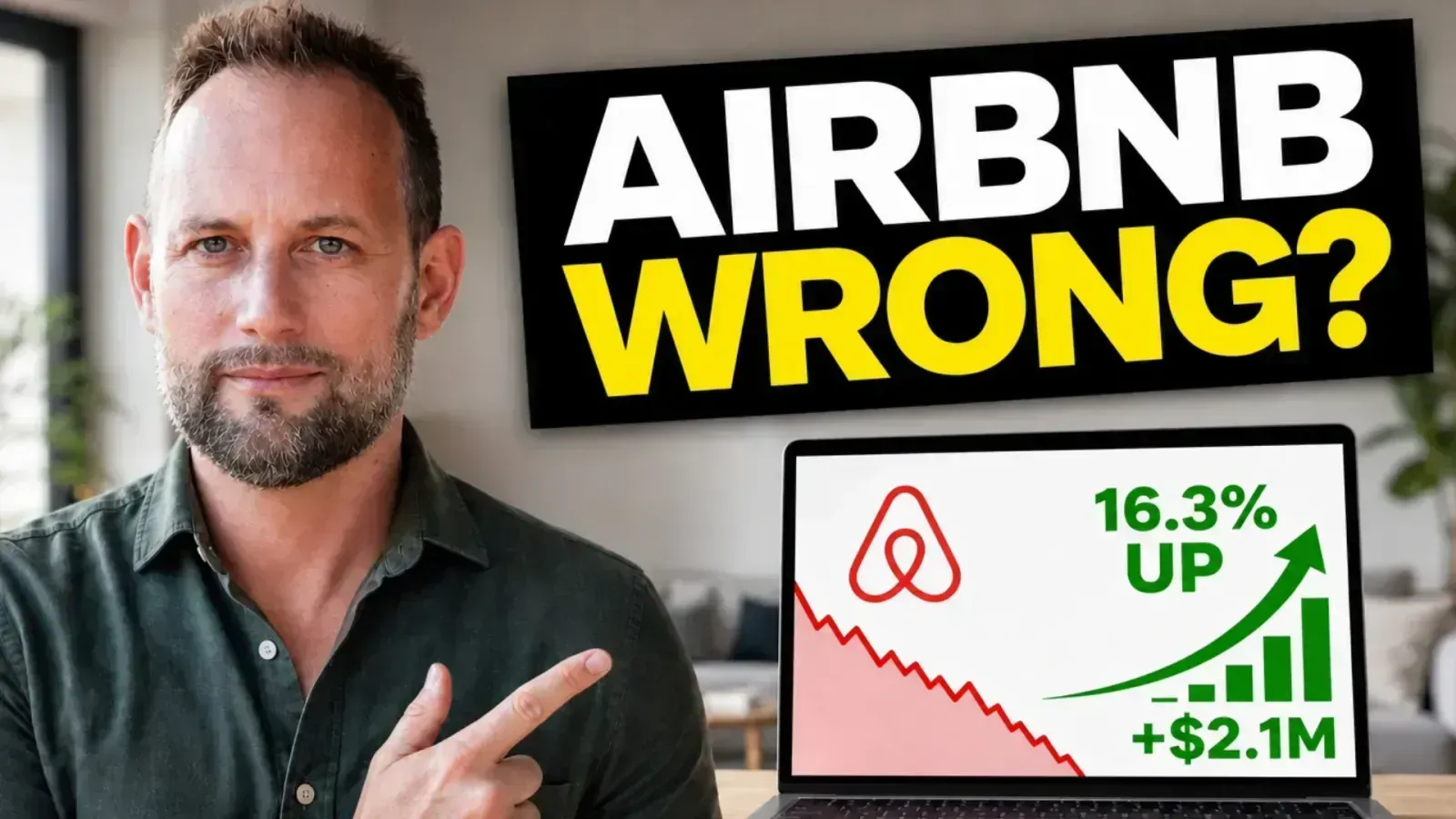
August 2026 STR Market Update: 16% Growth While the Market Declined 2.5%
Jasper shares the full August market update including July portfolio results (16.3% YoY growth vs. a 2.5% market decline, $2.1M in additional client revenue), the top winning and declining markets, the Labor Day weekend shift, Airbnb's AI pricing model and new mobile discount, VRBO sponsored listings, OTA discount stacking risk, and what operators should focus on heading into shoulder season and low season.

Secrets of a Pro STR Revenue Manager to Maximize Your Revenue
Jasper sits down with Patrick Morton, one of Freewyld Foundry's revenue managers, for an inside look at the pricing tactics, listing optimization moves, and team strategies that are moving the needle for STR operators every day.
I asked him like, Hey, what are you doing for revenue management? And he's
like, oh, I use PriceLabs. I was like, yeah, but what are you doing for
revenue management?
I think the challenge is it's invisible revenue because if you are in a market and you're comparing yourself against the average in the market, you don't know what you don't know.
You don't know how much additional revenue you could be making. And it seems like a lot of operators are kind of, they're treating revenue management as, as like that thing that they do if they have some time left at the end of the day, and you know, I think we have to consider this a real part of the business.
This really, it deserves to get the same attention as operations, as marketing, as all the other parts of the business.
I think like a really good starting point here is I would love to just kind of understand at a high level, what are you learning by. Running revenue management and, and for some context for everybody as well. It's, you know, we started revenue management with our own properties, right? You saw an opportunity of leveraging and developing a revenue management strategy for Freewyld cabins.
And, you know, with the design and the marketing and all that stuff matched with this revenue strategy. We just saw this like incredible. Uptick in bookings and you had the idea of like, Hey, I think I can help people, uh, and companies with this revenue strategy, we don't really see anybody else in the industry doing it quite like the way that, that I think we can do it.
And then along through that process, we also built this incredible revenue management team of like really understanding what is the challenge in the industry with revenue management. And we recognize, like it really comes down to the people that's running the strategy. So with that long. Set up here. I'm just curious, like high level, like what are you learning through this process of running revenue management across all these listings and companies leading this team?
Yeah. What comes up for you?
Yeah. I would say the first thing that comes up is, you know, when you look at a pricing tool like Price Labs, there are so many different settings. There's like hundreds of different levers that you can pull and you know, things that you have to input. It's, I can totally see how this could be very overwhelming to people that are not naturally, you know, group with numbers and understand data and graphs and, and you have so many other things to do in your business.
But really what I've learned is like, there's a couple core fundamental concepts that you have to really understand and you have to really focus 80% of your, of your time on. And there's a lot of stuff that. Is out there that you could be doing, but that doesn't necessarily, you know, really move the needle.
And so if you pull all those levers, like it kind of makes it just like unnecessarily complex. And then it just becomes very difficult to measure. Very difficult to understand what's happening. Why. You know, the tool is setting the prices, uh, the way that the tool is setting it. So yeah, there's really a couple fundamental concepts that you really have to understand and that you have to focus on.
And then, you know, the rest is just, it's very specific to certain portfolios in certain markets where you might apply some of your settings. But we found that a, a pretty simple setup and just focusing on the most important concepts is, is actually driving the best results. So, which is not uncommon in when you solve.
Complex, mathematical, economical problems, oftentimes a relatively simple strategy actually gets the best result. That's something that I've learned a long time ago when I was a university. So it's interesting that that seems to be the case for revenue management as well.
Now, I'm curious, why do you think this is so important now for the short term rental industry?
For, for companies that are growing, hosts that are growing, why is it so important now to focus on revenue management in their businesses?
The difference between having the founder of the company or the, the CEO just kinda do it as a, as a side gig, like kind of what a lot of operators do.
Every day, you have so much to do, you have so much to manage. The guest checking in, there's cleaners that has to be managed. There's like maintenance issues. There's all this stuff that comes at you every day. And it seems like a lot of operators are kind of, they're treating revenue management as, as like that thing that they do if they have some time.
Left at the end of the day, right, with, oftentimes that's not the case. We have to consider this a real part of the business. It deserves to get the same attention as operations, as marketing, as all the other parts of the business because there is a lot of untapped revenue for you if you do not have somebody who's fully focused on revenue management, who understands revenue management.
And I think the challenge is that it's invisible revenue because if you are in a market and you're comparing yourself against the average in the market, which I see a lot of. The companies that apply for a service, they'll say in the comments that we read, when we get the application, they'll say like, oh, we feel like we're doing pretty good.
You know, we're like 20% higher than average. You know, our average occupancy is like 70%. That feels pretty good. And so. You don't know what you don't know.
You don't know how much additional revenue you could be making. You know what I mean? If somebody is doing like 20% occupancy, they understand that they have a problem, right? Right. It's like, Hey, 80% of my time, my units are empty. That's not good, right? Everybody understands that, but if you are like 70% occupied, and you're doing a little better than the average, hey, you don't really have a reason to think that
you're leaving money on the table. However, there is a lot more juice to you squeeze out of that orange, but people are just not aware of it. I think.
I agree and we see it a lot where, uh, of companies of all sizes, right? Most of the time people think revenue management is a pricing tool. I was an event and I was talking to a owner.
I mean he is been in vacation rentals. For a very long time, very successful company. For the seasoned short-term rental operators, they would know this company's name, beautiful properties, great brand. And I asked him like, Hey, what are you doing for revenue management? And he is like, oh, I use Price Labs.
I was like, yeah, but what are you doing for revenue management? And he is like, yeah, we, we have someone who manages Price Labs for us. This is someone who's been in the space for a long time, who has a huge business and a great brand. Still thinks revenue management is just a pricing tool, and most it's operators that we talk to and that we do these revenue reports for.
I don't think we've come across one. Maybe there's been one portfolio, but 99% of the portfolios that will audit are leaving. 10 to 40% on the table because they're approaching it with that mindset of, oh, I have a pricing tool and I have a strategy, and I do some stuff, I check it once or twice a week type of thing.
Like most companies are doing that. So let's use two for examples, right? We have two companies that we're potentially gonna be working with. One is doing about a million, the other is doing about, I think 15 million. Don't want to use the names or markets or anything like that just for privacy, as we're going through his audit, you showed me that in his price labs, that there was basic settings that were missing and there was some strategies that were set up two years ago and he approached us with confidence of like, I have price labs and you know, I drive, I drive this strategy.
And you showed very easily like, no, this strategy or is costing you $200,000. He's leaving $200,000 a year with his current listings because of that strategy on the table. And then the bigger company. Those numbers blew my mind. I mean, I think you found like an additional $2 million of untapped revenue in this portfolio because they were approaching it the exact same way.
So it's something that we see often is that mindset of, I have a pricing tool and I have a strategy and I check it once or twice a week, but most of the time that's costing them the money to do that. What are some of like these top mistakes that you're starting to see in analyzing all these portfolios?
Like what comes up for you when you see that?
Yeah, I'd say the biggest thing is like people don't watch their pacing. And pacing is a concept that we could talk about for two hours, but essentially what it means is that they're not looking at their forward occupancy compared to similar units or compared to the compset.
compset is just a fancy term for similar units in the market, right? The whole idea is that, you know, there's a booking window. There's a moment in time when people start booking for a certain time for certain units, and, and so let's say that's Christmas, right? Let's say people start booking in July for Christmas, right?
Which is pretty typical. What a lot of people don't do is they don't look at in July, at the end of July, they don't look at like, Hey, how much of the market is already. Booked for Christmas, or how much of my comp set is already booked and how many of my units, or even how many days if you have one unit, even how many days between like let's say like the start of the Christmas holidays until the end of the Christmas holidays do I have booked?
So that's something that you have to monitor because if. People are booking your type of property in your area, but they're not booking yours. That's a strong signal that your, your pricing might be too high. And so if you're not paying attention to that, you could just be, be sitting there and, you know, two weeks before Christmas you look at your portfolio and you're like, I don't have any bookings yet.
Right. And now you have to drop it. All the way down because everybody else is 80% booked and they're just filling up the gaps. You know? They're dropping the prices because they just wanna fill up their gaps and that's okay. You know, like you, you have to drop your prices last minute to fill up a few gaps, that's fine.
But if you have to fill up your entire. Month or your entire portfolio last minute. Now you're competing with all the people that have already gotten a lot of bookings earlier in the booking window and they're dropping their prices. So now you can get premium prices unless there's this peak demand date, and maybe Christmas is actually one of those dates in the year.
Some markets, if the market books. A hundred percent. Then you can get premium prices last minute, right? Just like airlines, right? Mm-hmm. If you have that, that very popular flight, and there's only one seat left, it'll be priced very high, but 99% of the times, you know, people dropping last minute because inventory doesn't sell out completely.
Yeah.
So that is the biggest mistake that people are making. They are not. Monitoring their forward ancy and comparing it to the compset. As a result, most of the properties that we look at units are either underpriced or they're either overpriced, right? And one of the two, not always.
I mean, there are some examples of portfolios that we looked at where operators were doing a pretty decent. And then, you know, there's always like some other fine tuning to be done that where we could still increase their revenue. But the pacing thing is that's just, there's a few major concepts that people forget about, or not leverage, but I would say pacing is probably the biggest one.
Well, it sounds like the number one mistake is just assuming that revenue management is having a pricing tool and just like checking it once or twice a week and then pacing comes in very close second to that. Correct?
It's funny because a lot of operators are using a pricing tool that they might think like, oh, we're pretty advanced, you know?
Mm-hmm. There's all these other people that are pricing manually. They just have the same price. Right. The whole year and, and 10 years ago that, that would be true. 10 years ago, like people were just like. Hey, my place is a hundred bucks on the week on the weekdays, and 150 on the weekends, and that's it.
And then maybe for Christmas it's like 200, right? But nowadays, just having a pricing tool, you know, you're not ahead of the curve anymore. You know, everybody has a pricing tool, almost everybody, right? And so yes, if you go all the way back high level, like yes, setting prices manually is the biggest mistake.
Having a pricing tool that you set up and then you don't look at it will be the second. But then even if you have a pricing tool, we see operators that have a pricing tool and they, they have a pretty good setup, you know, but the pricing tool is not gonna adjust prices based on pacing. Yeah, it'll do a little bit, but not, not enough.
Not nearly enough. There's no perfect setup that you can, where you can let it run exactly it. It just doesn't exist.
It's funny, I was thinking about this the, the other day, driving our Tesla. We just did the upgrade where it has self-driving mode, which is unbelievable. It's like you're literally, we're in the future.
This car is driving itself, making decisions, turning all this stuff. But even as we're in this car, I, I learned really quickly, I can't just let the machine drive itself, I have to pay attention and I have to take over, make some decisions from time to time, right? Like it's just doesn't really understand turnarounds and it doesn't really understand merging in construction zones that well.
And like there's a lot of elements there that you don't wanna just leave a hundred percent trust to the machine. And we see that a lot with people with their pricing tools, that they just leave the trust to the machine, where then the AI is making decisions and it's either underpricing or overpricing your properties and causing, causing some issues.
Getting back to that pacing real quick and for everyone who's listening, like this is a big topic that we're gonna be going into and creating training around and 'cause you feel like this is one of the most impactful things someone can do in their business. Talk to us about like the mindset of like how far out
are you looking and studying your occupancy and comparing it to the market, and then how do you make decisions on adjusting your pricing? Like how often are you doing this? Walk us through that process.
Yeah, for sure. I mean, essentially you wanna look at the future where bookings are coming in. There's no point.
Looking at like two years from now where no one's booking. I mean, if no one's booking, then yeah, we're not gonna book either and that's fine. But wherever you see in your future occupancy graphs in the, and you are looking at your markets or your compset, if you see that people are booking your type of unit in your area and they're not booking yours.
Then you gotta keep an eye on that. So it, it really depends. Like it, you know, there's markets like Miami where the booking window is very short. You know, it's like literally like a couple weeks and then maybe like, you know, people book for like ultra, the music festival people book for like, you know, maybe Christmas, new Year's.
They book a couple months in advance. So then like, you know, for that market you just kind of be looking at the next month plus like these. Peak date events, right? Mm-hmm. But there's other markets, you know, where people are booking windows, like six months. You know, people start booking six months in advance.
You know, a lot of the summer markets, so think like the Great Lakes in the north of the us right? Like Traverse City is a good example. Like people are booking for the summer. They start booking maybe even in October or November, right? You know, the, the first ones right? Or maybe in January. Still, like that's a long booking window, right?
Yeah. So it really depends on when people start booking. And just to clarify one more thing is, you know, like the pricing tool will make adjustments based on, 'cause sometimes people tell me they're like, there's a setting in Price Labs that, that's called like occupancy. It makes adjustments based on the occupancy.
And so they're saying like, isn't price apps automatically gonna lower the price if you don't have a lot of bookings? And it will, but this default setting, it doesn't really change it that much. So to give you an example, if you set your brace prices way off, the corrections that price apps the algorithm is gonna make is not gonna be enough.
So if we have a unit that's, let's say like we should be, our base price should be 200. If we set the base price at like 500. Yeah. Price Labs might go and see like, hey, there's, there's no ancy. Like, you know, we'll bring the price down 20% from 500 to 400, but you're still way overpriced.
Hmm. You,
you understand?
So like the pricing is dynamic and. Price ups will, will look at demand and all these other factors to bring the price up and down. But if your, if your baseline is way off, then it's not gonna matter. You know, and, and so that's why it's really important to look at your pacing and based on your pacing, you should be adjusting those brace prices to make sure that your overall price level is in the right spot.
Right? Yeah. And that's what people forget. I think, you know, that they literally, like you mentioned, that one portfolio that we looked at that was set up in May, 2023. And none of the base prices have been changed since. No matter what, I can already tell you that is not optimal. 'cause there's no way.
Yeah, yeah.
Because things change all the time. You know? That is, we're in a very dynamic industry. Like, man, I mean, can you imagine over the last two years how many things have changed in our industry?
Right?
Think of like economical situation, think of like travel trends, think of like inventory, you know, like so much has changed that there's no way that the base price that you set two years ago is still optimal.
So. Outside of pacing, 'cause we can, we can get lost in that rabbit hole. What are some other major mistakes that you're seeing that most operators and hosts are doing with their revenue management?
Yeah, I would say, you know, another part of revenue management, like a lot of people think revenue management is prices, right?
But it's also availability settings and it's also thinking about like, how do we strategically choose, you know, cancellation policies for example. So when are people able to book for certain amount of days, right? So minimum night stay settings. Like, can we book a two night stay, you know, three months out?
Or are we restricting that to a free night or fortnight or five night? Do we allow people to cancel like five minute, five days before, right, or the day before? So there's a lot more than just the pricing. It's also availability settings. There's like, when do we allow people to check in or check out? Like, you know, some operators, they can't do turnovers on the Labor Day or Memorial Day, right?
So like how do we restrict that? There's different ways of doing that. So I would say that's a second. Mistake that we see that a lot of operators are making is that there seems to be this idea that you know, far further out, your settings should be more restrictive. You know, there's some rationale behind that that is valid, but at the same time, what we see is that the more restrictive you are generally the lower the revenue.
There are some exceptions, but overall, like people tend to have. Too many restrictions, right? So for example, people don't really look at the average length of stay in their market. So I'll give you as an example just to understand it, right? Let's say we're looking at a market and the average length of stay is two nights, so that's very short.
So that means that there's not a lot of people that are booking a free four, five nights stay. And then even though that's the case, we come across a lot of operators that will, then we will have two night minimum stay for the last, in the last 30 days. And then it goes up to a free night until like, let's say 45 days out.
And then it goes up to a four night, 60 days out and it goes up to a five night, 90 days out and looking at the big booking win. And then the one are like, why am I only getting last minute bookings? Well, it's like because you don't allow people to book the most common length of stay booking, which is two nights, you don't allow people to book that in the last 30 days.
So obviously you're only gonna get bookings in the last 30 days. But then if the booking window is like five months, now you're utilizing one out of five, you know, 20% of the booking window is being utilized. So you have to fill up all your occupancy in the last 20% of, of the booking window. So if they're, let's just say to simplify, like, you know, let's say there's a hundred people that are looking to book a unit.
Well, the first 80, they can't book your, your unit, so you are losing 80% of demand. You know, that's, I mean. You can't expect a great result, right? If that's the case. Right? So generally, like people are too restrictive. Same with cancellation policies. You know, Airbnb's now really pushing back on the strict cancellation policy.
A lot of people are confused about that policy because they think that it's, it's a little confusing how Airbnb worded it, but you know, it's not a rapid hole we can get lost in. But essentially, you know, the thing with cancellation policies is when you have a strict policy and you benefit from it, it's visible.
Somebody cancels and you get half the money, right? Or you get all the money and you're like. Woohoo. Yeah. You know, I'm glad I use this, this strict cancellation policy because now you know, I get like $2,000 and otherwise I wouldn't have, but you cannot see all the people who didn't book because first of all, your listing didn't show up because Airbnb doesn't, sh doesn't show you because of your policy.
Or secondly, you showing up. But people are not booking you because they can only cancel within 48 hours. If they book 14 days with an advance or more, that's the only time they can cancel. So like you're, even if you're booking a year out, you're locked in after 48 hours. That's not very, uh, appealing.
Right, so all the bookings you're losing, you're not seeing that. That doesn't pop up. Everything doesn't tell you like, Hey, you lost $20,000 because your policy is tricked, but that one time that somebody does cancel your policy, you see the benefit of it. So like that's, I think that's why people are biased towards more strict policies.
Right. That's a great way of looking at that. I would love to get a little tactical with it and kind of share actual. Results or a case study or, you know, experience of us actually implementing this into a portfolio. So is there any, uh, clients that come to mind that we're currently working with, that we've, you know, jumped in, taken over revenue, implemented your strategies into this and, and got a result?
Like, what, what are those results? What did you learn through that? What, what changed?
Absolutely. There's one very specific client that comes to mind who was kinda like a classical example of everything that we were talking about where they were relying way too much last minute bookings because they were being overpriced and too restrictive far out, and so the only time that their units were priced competitively was in the last 30 days.
And so when we came in, I mean it was, it was obvi. It was like a red for us. It was like a red elephant in the room, right? So we were very confident with the client of like, Hey, listen, like here's exactly what you're doing right now and here's what we're gonna do and this is what's gonna happen. And what we said was gonna happen is, is exactly what happened.
And you know, I'm just looking at the price lapse, the portfolio analytics right now. And I looked up our starting date. And to give you an idea, we, before we started this line, was booking anywhere from around like. 20 K per week, which was way too low. And this was like back in February, March, early April when we started, like the first week, our book revenue went up from about 20 K to about 30 k.
The week after it went up to like 30 5K, then it went up to 50 5K and then it went up to 68 K. Right. Wow. So all the way from like about 20 k. All the way up to 86 and, and the reason that we shoot up so much, and then ever since then it's been hoovering around like 40 to 50 K. But like the reason that I went up so much in the beginning is because we had so much of the booking window to catch up on.
And so it's funny because this, this client actually send us a message. I, I have the message somewhere here because it was, it was funny because this client was actually a little skeptical at first. Yeah. You know, you know what I mean? And a lot of, a lot of people that join our, our service. They're a little skeptical and they should be
most,
you know, because Yeah, most are, yeah.
I mean, you've been running your business for a couple years, like you feel like you know what you're doing and then the, you know these, and then you and I come in and then we're telling you like, Hey, we could do 20% more revenue just by tweaking the numbers in PriceLabs. It's like, really? So that's too good to be true, really?
Right. But then like. He sent a message and this was, I think this was like we were three weeks in or so, and literally I, I won't name the client or anything, but I'll read part of the message that, that he sent me. It's like, right, he said, while running cash flow tonight, I was shocked with what I'm seeing.
The volume of revenue is ridiculous. Makes me a little nervous actually, like it's a fluke. Pretty clear that what you're doing is working here. I was carefully skeptical and there's no denying the correlation of your star time and our most recent results. Just wanted to share my pure. And yeah, I mean, it's awesome.
This, this was just a classic, you know? It was a classic and I knew exactly what was gonna happen because it just makes sense. You, you know what I mean? It just makes
sense. Yeah. So we saw within a couple of months, we saw going from 20,000 a month to, you said about 86,000. A month.
- Right? Um,
68,000
a month.
That was catching, that was catching up. A lot of that was catching up.
Right. You know, and now, uh, you said it, it kinda equaled out around 50,000 a month, so you kind of doubled their revenue and that's across the exact same portfolio with no changes outside of the revenue. Revenue strategy.
Yeah, exactly.
You know, and just to be completely honest, in the beginning, the revenue spiked a lot because we're, we're catching up, right? We're, we have this portfolio of units that were overpriced anywhere more than 30 days out. It was overpriced. So when you didn't come in and you, and you start pricing competitively for the whole booking window, there's a lot of catching up that will happen.
Right. So the, we're talking about booked revenue, right? So that's different from stay revenue. Do
you
wanna explain those too?
The difference
between that? Yeah. So like for, so, so let's say, you know, for example, with this client, we started in, you know, in April, essentially we started in April, right? So let me just pull up the numbers here.
So in, in March this client booked $117,000, booked the revenue, right? So people booking for anywhere, anytime. But the booking happens in, in, in March, right? The state aids are, could be anywhere but. The booking came in in March. In April, we booked 206, so we almost doubled the booked revenue and in, in May we booked 2 25.
In June, we booked two 16 in July, we booked 2 23 in August. We're a little early, however, that revenue is booked in that month. But the state dates, you know, they could be in September, October, November, or you know, whenever. Right. So like. Just because we doubled the booked revenue doesn't mean that we doubled the result.
But I was looking at the, our dashboard. So for each of our clients, we make a, a customized dashboard where they can track the KPIs. And I was just looking at those dashboards and like every single month since we started with them, our the, their result was at least 25% higher. Sold them in. It was more than that, like 30, 45.
So like. You know, I'm, I don't wanna say that we doubled their revenue, but we did increase consistently their revenue by anywhere from like 25 to 40%, which is what we expected. And that, that just shows the power, right? You're using a pricing tool, you think you're doing, you know, you're doing pretty good because your cup is still, you know, pretty decent because, you know, last minute, if you drop the prices enough, you could still get these in the ancy, but your, your average price is so much lower than if you would've utilized the entire booking window.
Now. Yeah, because the, the people that book earlier are booking at higher prices.
Incredible. Man. This has been a, a crazy journey that we've been building this side and just like seeing the results. For 99% of our clients, the results that we're getting is unbelievable. And it's just one small change mindset wise for the owner to think about of focusing more on revenue. And I think like that's the biggest takeaway we can get technical and just recommend for everyone who's listening is to, you know, every Monday listening to Jasper's Revenue podcast.
'cause you're gonna get more and more technical on that. Uh, signing up for email list at FreewyldFoundry.com. We send out, uh, emails every single week that, that gets technical as well. Just to wrap all this up, like what's your advice for everyone who's listening from the Airbnb host that has one or two listings to the CEO that's running, you know, 200 plus listings and everywhere in between.
Like, what's your advice for, for them when it comes to revenue management?
I would say the biggest advice, I mean there's just a couple things I would say, like right number one is like carve out 15 to 30 minutes every day, non-negotiable, and look at every single booking that comes in and ask yourself, what can I learn from this booking?
Are you getting a booking like 120 days out when you're booking Windows? 90 days, right? That means like there's something going on, there's something going on, there might be an event, right? Every booking has some information. That you can learn from. So number one is like carve out time. And this is not time that if there's no challenges with the cleaners and if there's, you know, if there's not all these other things that I need to do, then I'll look at it.
No, put it in your calendar. Non-negotiable. You're looking at your bookings every day, right? Number one. Number two is start looking at your pacing. You know, there's different, depending on what pricing tool you use, there's different ways of looking at pacing. But just start thinking about it. Just start asking yourself that question of like, how is my future basically looking compared to a comp set or the OR, or the market.
Am I behind or am I, am I ahead? And why is that? Am I overpriced? Am I under price? Start thinking about that. Or it could also be a marketing, right? I mean, I have a client with a listing that we're very priced, very competitively, but we looked at their listing today and we realized like there was photos where there's.
Clutter showing, like literally clothes hanging in the, in the wardrobes and it's like very dark pictures. And we're like, I was looking at it, I'm like, okay, we don't have a pricing problem here. Like, it's just, it's the marketing that's, that's the problem here. But you gotta start monitoring the pacing to get those signals right.
So you can start looking into it. So I would say those are the two things, like just look at every booking. You gotta look at every booking. So every booking has information. And number two is like start thinking about your pacing. If even if it's, if it's not gonna be perfect right away, but at least get in the mindset of like thinking about it, looking at KPIs like market penetration index, like forward occupancy, like start looking at that stuff, booking windows, start studying your booking windows and really start thinking about it.
You know, it is gonna take a little bit of time to. Really understand these concepts.
Yeah, and I, I would just add to that as well is like if you're in the, if this is not a skillset of yours, you get overwhelmed with numbers, you get overwhelmed with spreadsheets and graphs and all that stuff, that's completely okay.
I highly recommend hiring somebody that is obsessed with it. The difference between you and I when it comes to looking at graphs is. Freaking hilarious, man. I'm like, I'm like, dude, just tell me, what did we earn? Like what? What's the number? Right? I, my brain doesn't work that way. And that was one thing that I see a lot when I'm talking to owners of these companies that hit us up for these pricing audits, is they still believe that they have to be the one in the tool doing all of this.
Now, there's a. Obviously a conversation to have of like as a CEO, you should have the discipline to like sit down and you're saying 15 minutes a day. It's like, who can't do that every single day, 15 minutes a day to look at your pricing, your pacing, make some adjustments and decisions, collect data. But if you have a hundred plus listings or whatever it is, and that's not your skillset either.
Hire in-house. With somebody that is solely focused on revenue management or find someone like us at Freewyld Foundry to fully take over and then just lead expectations and goals with them. That's the last piece I would say for that. So, and then for everyone who's listening to, like if, if you do fit, we work with companies that are doing a million dollars or more in top line revenue in, in bookings.
So if you're doing a million or more in revenue and you don't have anybody in that revenue seat, hit us up. Go to freewyldfoundry.com. We do what's called revenue reports. This is where we have a short little application that you fill out. We collect some info from you. We dive into your actual pricing tool, uh, regardless of the pricing tool, and we look at the strategy and study it.
And most of the time it's you, Jasper, or your leading one of our team members to do it. You know, give, give you guys like a really good look at understanding how much money you're leaving on the table with your strategy and what you have to do to get that. Awesome, man. Any last words or advice?
You know, most operators are just, it's not necessarily their passion to do revenue management.
And you know, I, when I was talking about the 15 to 30 minutes a day, that's, that's for like a small portfolio and that's like just the basic stuff. Like there's like deeper dives that you have to do as well on a weekly and a monthly basis. Right. If you have like. If you have a hundred more than hundred units, this should take up like a, a big piece of your day.
That larger portfolio that you mentioned, the larger your portfolio, the harder it is to do by yourself, right? As, as the founder, as as well, right? If you have like five units, then you know it's doable to to manage it yourself, but if you're, if you have a large portfolio, it becomes very difficult and that's why we typically see the most upside on the larger portfolios actually.
Yep. So, yeah. You were advised, spot on. Someone who knows what they're doing has to be focusing on it, whether it's in-house or it's surface like, like ourselves.
Awesome, man. Well, let's leave it there. Appreciate your time. Congrats on crushing revenue and building this team and leading this strategy, getting the results that you're getting.
Uh, for everyone who's listening, obviously subscribe to this podcast. Really appreciate that. If you're doing a million dollars or more, hit us up on Freewyld foundry.com and uh, apply for the pricing audit. We'll go through that and uh, help you understand where your strategy is currently leaving money on the table or doing well.
Awesome, man. Appreciate your time. Alright. Thanks for listening. You have. We'll, we'll see you time.
Related Articles
Midterm Rentals for STR Operators: The Data, the Math, and How to Start
Midterm rentals are already happening in most STR portfolios. 39% of short-term rental operators have received at least one 30+ night booking. Here is the data, the occupancy math, and how to be intentional about it without abandoning your short-term rental business.
STR Market Update August 2026: 16.3% Growth While the Market Fell 2.5%
August 2026 was the highest-impact month in Freewyld Foundry history. Comparable client listings grew 16.3% year over year while the broader market fell 2.5%. Here is what drove that gap, which markets won and lost, what Airbnb and VRBO just changed, and what every STR operator should be doing right now heading into shoulder season.
How to Increase Airbnb Revenue: 5 Tactics From a Full-Time STR Revenue Manager
Most operators cap their prices, skip amenity audits, and discount when bookings slow down. A professional STR revenue manager does the opposite, and the results show it.