FIFA World Cup 2026: The STR Demand Reality Check (And How to Adjust Your Strategy Now)

Want to outperform the market? Freewyld Foundry’s Revenue and Pricing Management service is driving an 18% performance lift for $1M+ STR operators, even in down markets. If you’re managing 10+ listings and want a free pricing audit, apply here
Hotels across 11 World Cup host cities are reporting an 80% booking shortfall. Some dates are tracking LOWER occupancy than last year, despite hosting the world’s biggest sporting event. If you’re counting on World Cup windfalls, you need to hear this.
The problem isn’t just lower international demand. Elevated STR pricing (2x to 5x normal rates) is driving away your regular summer guests who would normally visit these cities. You’re losing bookings on both ends. The good news: there’s still opportunity to capture premium rates if you adjust your strategy now.
You’ll learn:
- Why 80% of hotels in World Cup cities are missing booking forecasts and what it means for STR operators
- The two-phase tournament strategy that protects knockout stage premiums while capturing group stage bookings
- How to identify cancellation risk in your existing World Cup bookings (and what to do about it)
- Why aggressive pricing NOW beats gambling on last-minute demand for group stage games
- The specific PriceLabs features that reveal what prices are actually booking in your market
We also talk about:
- How visa uncertainty and rising flight costs killed international travel expectations
- Why New Jersey Transit’s 7x price increase signals ecosystem-wide demand problems
- The Qatar 2022 precedent that might repeat itself (FIFA giving away tickets to fill stadiums)
- Which specific games and cities might still command real premiums
- How to track group stage scores to predict knockout matchups and adjust pricing accordingly
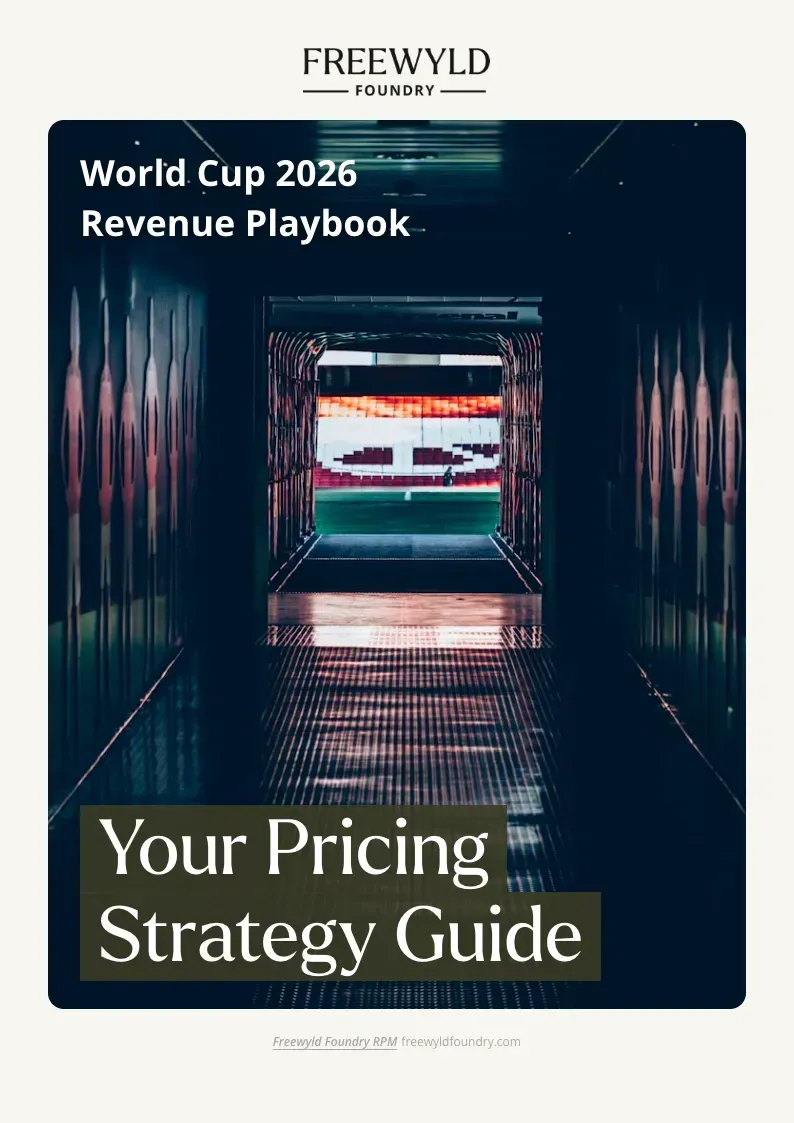
World Cup 2026 Revenue Playbook
Your city-by-city pricing strategy guide for the biggest revenue opportunity in STR history. Demand tiers, team analysis, 5 costly mistakes to avoid, and an 8-step action plan.
Download Free GuideContinue Listening

September RM Update: Best Month in Company History, GuestyVal Takeaways, and an Airbnb Story
Jasper covers September 2026 portfolio performance: Freewyld Foundry up 37% year over year with 27% measurable impact above market, the highest in company history. Plus GuestyVal takeaways on AI in revenue management, the Vrbo commission change, and a personal Airbnb story.

The Javier Effect: A Custom PriceLabs Strategy for Unique STR Inventory
Javier Vasquez, a Freewyld Foundry revenue manager and former PriceLabs employee, walks through the custom Portfolio Occupancy-Based Adjustment strategy he built for a glamping dome portfolio with 97-98% occupancy year-round and 212-day booking windows.
Midterm Rentals with Frank Bosie: The Revenue Strategy Already Happening in Your Portfolio
Frank Bosie of Hostfully joins Jasper to break down the data behind midterm rentals, including why 39% of STR operators already have 30+ night bookings, how the occupancy math works, and when the hybrid approach beats a hard minimum-stay strategy.
The World Cup Demand Crisis Nobody Saw Coming
Jasper: Welcome back to Get Paid For Your Pad. I thought it was about time for an update of the World Cup, which is starting in just a few weeks' time. And there's been a lot of reports coming out that have kind of reshaped expectations. How many people are visiting the States for the World Cup and Canada and Mexico. The amount of rooms that are being booked in hotels. We're seeing demand for shorter rentals in several cities being a lot lower than what we were expecting as well.
And so in this podcast, I'm going to give you an update on what's going on. How do we reset expectations? How do we adjust our strategy? And much more.
Hotel Bookings 80% Below Forecast
Jasper: So I'm going to start with an article that came out in Fortune magazine. Now, if you search for World Cup hotel bookings, World Cup demand, anything like that, you'll see there's a lot of news stories that give perspective on what's happening. But I thought this particular article kind of summarizes it well.
The headline is, U.S. hotels are calling the World Cup a non-event. 80% worn bookings are falling short of expectations. And it gets actually a lot worse than that. It's not just that bookings are falling short of expectations. Bookings are falling way short of expectations. In fact, some cities are seeing less demand than same time last year, which I think nobody was really expecting that.
But anyway, demand is significantly down. There was a report across 200 hotels, across the 11 U.S. host cities. Nearly 80% said hotel bookings are tracking below initial forecasts. And some indicators suggest that demand is even going to be lower than last year for some of the dates.
Why International Travel Collapsed
Jasper: It sounds very strange, right? Like, how could demand be lower if there is such a big event happening, right? Well, I think there's a number of reasons why the demand isn't panning out as much as we thought.
I think number one is, there seems to be a lot of visa issues. This is being cited a lot by international travelers. There's uncertainty around ability to get a visa. There's also uncertainty about how international travelers will be treated at the airport or even in the cities. So there's definitely concerns around that.
I think the second thing is just the cost. If you've been following the news, of course, oil prices have risen a lot in the recent months. And so ticket prices for airplanes are expensive as well. Flights are expensive. Everything is expensive, right?
I've been watching some of the reports and forums in my country, the Netherlands. And I do read that a lot of people are just not traveling because the cost is just too much. If you want to travel to the States and watch maybe one game and spend the week there or so very quickly are going to be spending between five and $10,000.
You have to consider that a lot of countries where people are going to be traveling from, the income are lower than in the States, right? So like, yeah, $5,000, $10,000 is a lot of money. But for people living in other countries where incomes are lower, that's even more costly relatively. There's economic uncertainty. Of course, there's a lot going on in the world right now. So I think that probably has an effect as well.
The Pricing Paradox Driving Regular Travelers Away
Jasper: But I think one of the biggest reasons that we're not seeing the demand as was expected is hosts are generally keeping their prices elevated. We are in a lot of different cities throughout the US that host some games. Talking about Seattle, I'm talking about Philadelphia, talking about Los Angeles, Dallas, Houston, Kansas City, New York. We're just not seeing that hosts are aggressively lowering their prices.
Prices are coming down a little bit, but for the most part, the prices for the entire World Cup period, which is, I think we're starting on June 11th and the finals on July 19th. So that's like it spans across five weeks, across the summer. We're seeing that in most cities, the prices are still very elevated. I'm talking about like 2x, 3x, 4x, 5x sometimes.
And I think what's happening is that, first of all, the international demand is not really there. I mean, there is some international demand, of course, but it's just not of the magnitude that was expected. But then also think about regular travel, right? If you think about a city like Houston, for example, Houston is a huge city. A lot of people travel to Houston for other reasons than the World Cup.
If you were planning to go to Houston and you're looking at the prices of an Airbnb and you're looking at spending like $400, $500, $600 for like a one or two bedroom, you might decide to skip that trip and travel somewhere else. I mean, if you're not coming for the World Cup, then why would you be paying these super high prices, right? If you don't absolutely have to be traveling to the World Cup cities in the summer, you're probably going to travel somewhere else.
And interestingly enough, we are seeing increased demand in some other regions throughout the US. But in the cities that are hosting the games, there's a few exceptions for sure. Like for example, Seattle, that's hosting a couple of the US games. Those games are seeing great, good demand. But for the most part, the demand is really not there. And so in a lot of cases, it's actually lagging last year's pacing. So literally, there's less occupancy on the books in a lot of cases than same time last year.
And I think the non-soccer travel, the non-football travel that is probably diverting to other areas because of the cost is probably a big reason.
How Expensive Everything Has Become
Jasper: Now, just to give one more example of how everything is really expensive. I thought it was interesting that the New Jersey Transit Authority raised prices of a round trip ticket from New York City Stadium, from New York City to the MetLife Stadium, where the games are being held, that round trip typically cost $13. They initially raised it to $150. So it will cost you $150 just to get the train from New York City to the stadium.
Now, they lowered it to $105 now, but it's still seven times the normal price. So it just shows that it's not just the ticket price. It's not just the hotel and the short rental accommodation. That's really expensive. But everyone who's doing anything related to the World Cup is raising their prices or has raised their prices, right? So it just becomes extremely expensive.
FIFA's Potential Embarrassment
Jasper: Now, obviously, knowing that demand is going to be a lot lower, the biggest question is, what's the strategy now? Now, as I mentioned, for the most part, prices are still very, very elevated. People are still looking for significant premiums. What can we do to start driving more bookings?
I don't even know if all the games are going to be sold out. That would be a big disappointment because the FIFA boss and even the president of the States, Donald Trump, they've been boasting about how great this event was going to be. It was going to be the biggest event in the world and the best and the biggest and the largest and all of that stuff. And so if now stadiums are not even sold out, that's going to be pretty embarrassing, especially for the FIFA organization.
So group stage, I'm pretty skeptical about how many people are going to be traveling to see those games. I wouldn't be surprised if FIFA starts lowering more prices. And the last time there was a World Cup, it was in Qatar. And Qatar is not necessarily a big football country, but the World Cup was held there mainly for monetary reasons. But anyway, the demand for the games in Qatar in 2022, it wasn't there. It wasn't there to fill up the stadiums.
And so what the local authorities did is they started giving those tickets away. They just started inviting people to attend the games for free. They would give them shirts of the countries that were playing. So to kind of create a fake image of that, the stadium is completely full of international travelers, which really wasn't the case. So I wouldn't be surprised if something similar is going to happen because it would just be too much of an embarrassment, I think for the organization of this event to see stadiums with empty seats.
Freewyld's Strategy: Get Aggressive Now
Jasper: Freewyld, we have been getting more aggressive with our pricing in the last couple months, just to get ahead of the curve a little bit, because we don't want to gamble on the last couple of weeks. We don't want to gamble on international travel really increasing in the last couple of weeks and just keeping the prices these really high levels in the hope that the demand is still coming, because in my opinion, that's taking a big risk, right? So we want to hedge our risk.
And so we have been lowering our prices quite a bit. And that has driven a lot of bookings. And the bookings are still coming in at good prices. It's not that you're going to have to lower the price all the way to what a regular price would be. We're still getting like 50%, 100%, 150%, 200% premiums in some cases, right?
So we're booking at nice ADRs. It's just not the sort of the crazy premiums that everyone was expecting or hoping for. But we're still getting really good bookings, right? So you could still do well during the World Cup. You could still get higher prices, higher ADRs than what you're used to. But I do think that you have to take action now and really reset expectations and start offering a more attractive rate for your properties, especially for the group stage.
Understanding Group Stage vs Knockout Stage
Jasper: Because the World Cup is really, it's split into two phases. There's the group stage where all 48 countries that are participating already know exactly when and where they're going to play. And those dates have been out for a while, right? That schedule was released a while back. And then also three or four weeks ago, the last of the qualification games were played. It was known exactly what countries were going to be participating and where they'd be playing.
So the schedule is out. I don't see travel for the group stage games taking a huge flight. I just can't imagine that people who travel from across the world are going to make these last minute decisions to fly out to the States. There will be some for sure, but I don't think it's going to be huge. So I do expect that the group stage is going to be probably a little bit disappointing for most people in terms of demand. And maybe even for the FIFA.
Right now, the second stage of the tournament is what we call the knockout stage. Right. So during the group stage, every team plays free matches. And at the end of that stage, the teams that have the most amount of points, the numbers, the numbers one and two in the groups, every group consists of four countries, the numbers one and two, they qualify for the knockout stage. And then the best placed number three teams as well. I think there's like four or six or so. And so that brings the total number of teams that are going to go to the knockout stage to 32 out of 48. So most teams will actually go through the knockout stages, right?
Now the knockout stages, we don't know yet who's going to play who, because that depends on how the rankings are going to pan out in the individual groups. And so that travel, there's probably going to be more last minute travel for those games because there's no point, for example, if I look at myself, I'm not going to traveling. I've got three month year old baby. So I'm staying right where I am.
But if I were to travel to the States to see one of the games that my country, the Netherlands plays, well, I don't know if they're going to make it to the knockout states yet. And even if they do, I don't know what game they're going to be playing because it just depends on the ranking. So there's no point for me booking that travel already because I don't even know where they're going to be playing. So that travel, there might be more or less minutes or there probably will be or most certainly will be more last minute travel for the knockout stage games.
The Two-Phase Pricing Strategy
Jasper: And so that brings me to the strategy that I recommend that everybody consider is I would be very aggressive for the group stage. I mean, at this point, we're like three or four weeks out. I just don't see the last minute demand being enough to really book up all these cities for the group stages. I really don't think there's a few games that might be exceptions. A few of the big games that are attracting larger crowds.
If you're living nearby in a big country like Brazil or Argentina or Germany or Spain is playing, you might decide last minute to go and see it. If the cost comes down a lot, if all the prices are coming down, if the ticket prices are going down, if the hotel prices are coming down, demand will increase for sure. But it's very questionable if that's going to be at super high premiums.
So I do think that people should be expecting to make maybe like 50% more than normal or maybe 100%, 150%. But pretty much it, I think, for the group stage. So if typically, if your unit would go for $100, maybe it'll go for $150 or $200 or $250 or maybe even $300. But I wouldn't expect $400, $500, $600 a night. Again, there's maybe a couple exceptions to this, but that's basically what I'm seeing across our portfolios.
Now, the knockout stages, there's a bit more uncertainty around that. There's a bit more potential, especially for two big countries that are playing each other. If it's going to be like Spain versus Germany or something, I don't even know if that's possible because there is a draw. So there is some indication of who's going to be playing who. If two big countries are playing each other in the first round of the knockout stages, that could still draw a really large crowd, right? So I would protect the knockout stage games, but I would get aggressive with the group stage games, right?
So it doesn't mean that you want to drop everything to your normal rates, but I would just start lowering them and look at where the market is booking. Price Labs has this feature where you can, on the neighborhood data graph, you can actually select an option where you can see the medium book price in the market. So you can kind of see what people are booking at, what kind of prices are people booking at. And so I try to lower your prices to be in that region because that's where you're going to have the best chance of getting booked, right?
Watch for Cancellations
Jasper: Now, another thing to be aware of is, I think we may see some potential cancellations because when the schedule was first released, which was, I believe, in December, early December of last year, there was an initial wave of bookings. And at that point, prices were very elevated. We have a number of bookings in our portfolio too that are at pretty crazy prices. You know, I think the highest I've seen is like $1,700 for like a two bedroom.
Because right now, you can book accommodation at a cheaper rate. There might be people or there probably were people that have booked initially at a very high price that are now going to reconsider, especially if the cancellation policy, if it was booked under a flexible or moderate cancellation policy where people can still cancel for free. I'm pretty sure there's going to be cancellations, right? Because prices have come down and there is a lot more available still than people were anticipating.
So those people who booked early December, who wanted to lock something in, if those people are going to check out the current rates and they're probably following the news reports as well. I mean, if you're going to the World Cup, it's kind of hard to miss the reports on how demand is so much lower than was expected. A lot of people are probably going to think like, hey, maybe we can get a better deal. Let's cancel the one that we have. Let's cancel the Airbnb that we have. And let's see what else we can get.
So I think that's something to pay attention to as well is probably going to be some cancellations. So you want to make sure that the bookings that you already have, make sure you look at those cancellation policies that those bookings came in under and see where people can book, can cancel for free and pay attention on those dates because you might see some cancellations.
And then, you know, you want to, when those dates open up, you want to make sure that you're priced correctly. A lot of hosts are not really paying attention to the prices of the units that are already booked. If those cancel, you don't want your price to be pushed down to your minimum. You know, you might have some aggressive last minute discount setup, probably want to have some elevated minimum prices for this World Cup period. Because even though demand is lower, people are still booking at higher rates than usual, than what's usual.
Final Strategy Recommendations
Jasper: So I think that's more or less the best approach as of right now is just get really aggressive with your occupancy for the group stage phase of the tournament. And then once the knockout stages or the games that are happening in knockout stages, best thing you can do is just pay close attention. Once the World Cup starts, pay close attention to the scores and which teams are expected to go to the knockout stages.
It also depends on where you end in the group. So if you end first in the group, you might play the knockout stage in a different city than if you end up number second in the group. So a lot of these knockout games, they're probably going to be decided on the last game day of the group stage. That's going to be known, a lot of these games are probably only going to be known less than a week in advance, right?
So for those particular games, you probably want to keep your prices pretty elevated until it's actually known what country is going to be playing. But also if you kind of follow the group stages, you can probably make some educated guesses as to who's going to end up where. Like for example, if let's say take Spain, which is the number one favorite to win the tournament, they win their first two games. There's a pretty good chance they're going to be number one in the group. If they're going to be number one in the group, then you already know where they're going to be playing, right?
So you can make some educated guesses as the group stage phase of the tournament progresses. So I do recommend keep a close eye on that because those games and the standings in the group and those knockout games, depending on who's playing where, they could be pretty huge or they could be pretty small, right?
Pay Close Attention to Market Signals
Jasper: So those are kind of my recommendations. Definitely follow news and see what's going on. Look at your neighborhood data areas if you're using Price Labs. Pay close attention to your competitor calendars that you can look at in that section. Pay close attention to pickup. I mean, right now I'm seeing a lot of markets where pickup is lower than same time last year, right? So fewer people are actually booking than last year, which again, is a little crazy to think of.
But I do think it's mostly because the people that are traveling, normally traveling to these cities in the summer, who are not coming because the prices are so high. So definitely in the next couple of weeks, pay close attention to what's going on because missing out on premium bookings during the World Cup can definitely cost you a lot of money. And there's still opportunity to do really well.
I would just tamper the expectations as far as how much you could be doing more than previous years. I do think you could still do better than last year or do quite a bit better, but it's going to require quite a bit of focus on the revenue management side, I think to really maximize the revenue for this event.
Closing
Jasper: So with that said, that's it for today. Thank you for listening. I will probably do one more World Cup update right before the start of the tournament, which is June 11th. So we'll probably do one more episode to give you guys an update on what we're seeing. And until then, I'd say address your strategy. Don't gamble everything on last minute.
Again, I don't think for a lot of these games, I don't think the mark's going to book up completely. So there will probably be inventory that's left empty. Or maybe if everyone's dropping their prices very aggressively, there's going to be opportunistic demand that will scoop up those units. But it's definitely not the best strategy, I think at this point, to just play the last man standing game and hope for the best. Hope that someone's going to pay a really high price last minute because I don't think that's going to happen.
So with that said, thanks for listening and we'll see you next time.
Related Articles
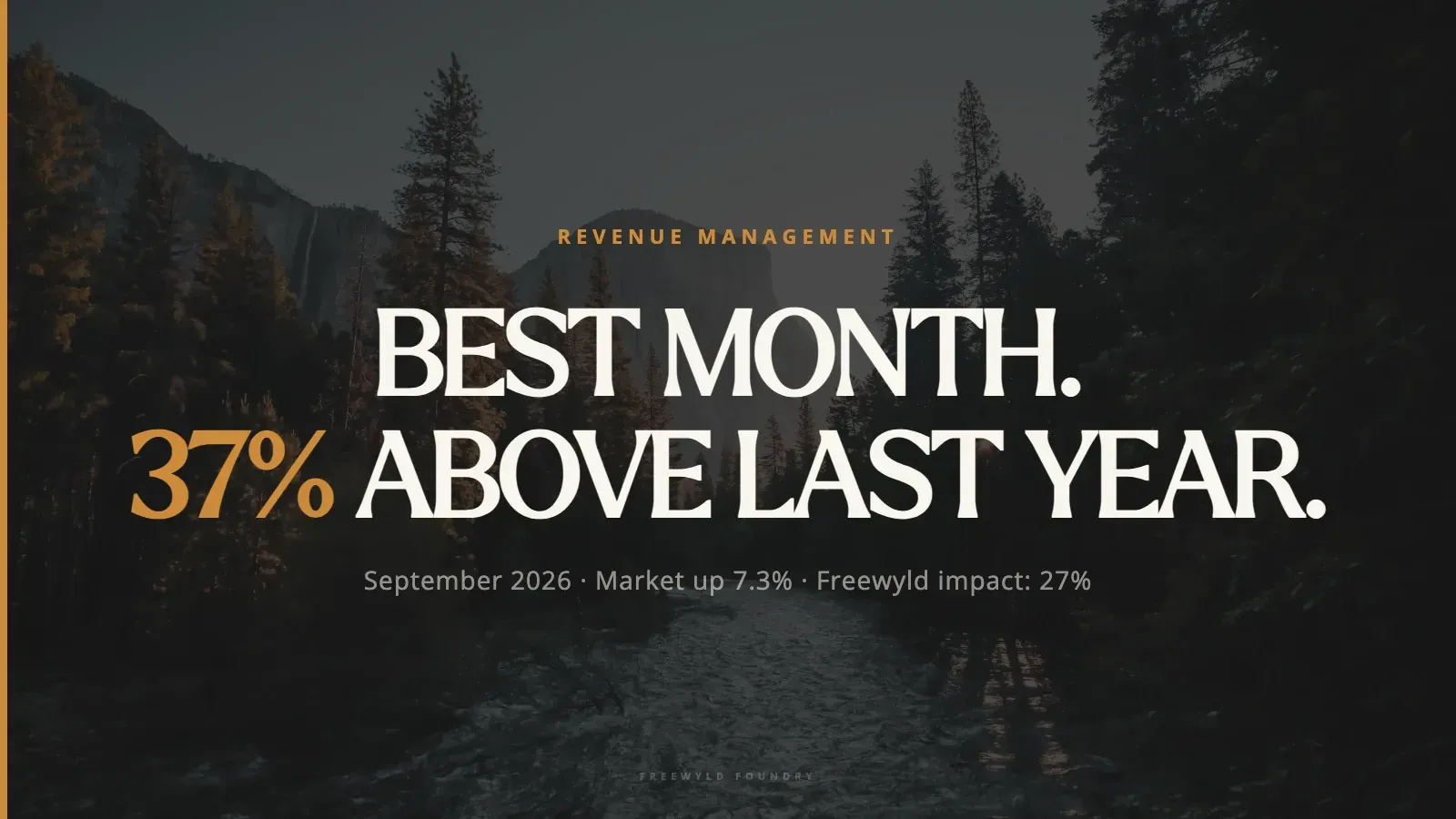
STR Market Update September 2026: Record Month, Vrbo's Commission Shift, and What AI Means for Revenue Management
September 2026 was the best month in Freewyld Foundry's history. Comparable units finished 37% above last September while the broader market grew 7.3%, producing a 27% measurable impact, the highest we have ever recorded. Here is what drove that gap, which markets led and which lagged, what Vrbo just changed about commissions, and what the industry learned about AI in revenue management at GuestyVal in Madrid.
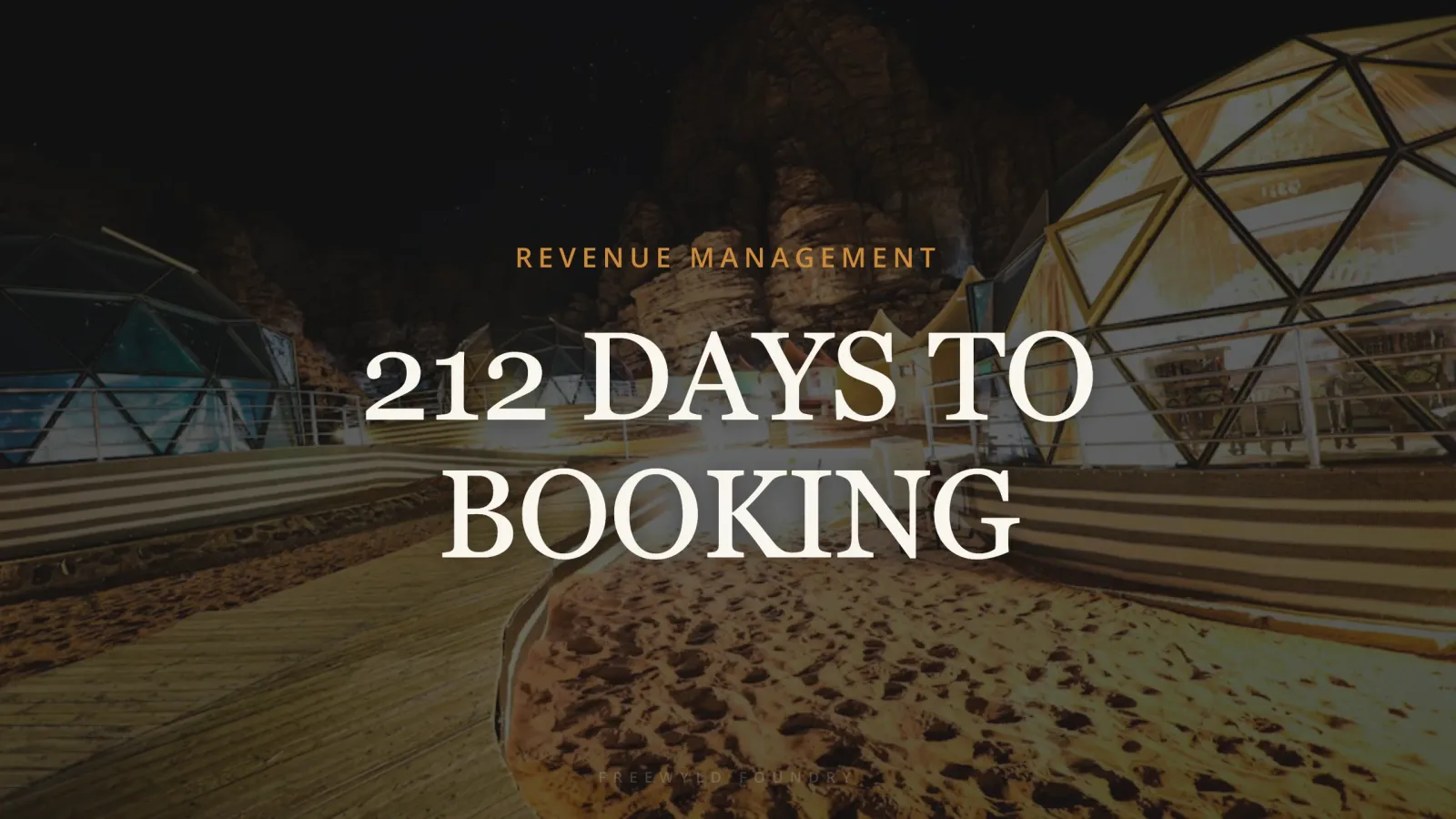
PriceLabs Portfolio Occupancy-Based Adjustment: A Strategy for Unique STR Inventory
When your STR inventory runs at 97% occupancy year-round with a 212-day booking window, standard PriceLabs market factors actively work against you. Here is how to build a custom Portfolio Occupancy-Based Adjustment strategy for destination and unique inventory.
Midterm Rentals for STR Operators: The Data, the Math, and How to Start
Midterm rentals are already happening in most STR portfolios. 39% of short-term rental operators have received at least one 30+ night booking. Here is the data, the occupancy math, and how to be intentional about it without abandoning your short-term rental business.