How to Price Your STR Without Leaving Money on the Table
Connor Schwab
Host of the Outdoor Hospitality Podcast and operator of The Outpost at the Grand Canyon, a 12-Airstream glamping property. Connor oversees four unique stay properties and is a Freewyld Foundry revenue management client.
Want to outperform the market? Freewyld Foundry’s Revenue and Pricing Management service is driving an 18% performance lift for $1M+ STR operators, even in down markets. If you’re managing 10+ listings and want a free pricing audit, apply here
Most operators treat revenue management like a side task. The GM sets some prices when they have time. Maybe they bought a pricing tool and assumed it would handle everything. Meanwhile, they’re leaving five or six figures on the table every year.
Jasper Ribbers has managed $215M+ in bookings across 3,900+ properties. He’s retained clients for 2+ years straight because his service pays for itself through revenue increases. In this episode, he breaks down why revenue management requires dedicated expertise, not part-time attention, and reveals the simple pacing analysis that shows whether your prices are optimal.
You’ll learn:
- Why revenue management extends far beyond setting prices (and the bookability factors that kill your Airbnb visibility regardless of your pricing strategy)
- How to use pacing analysis to know if you’re over or underpriced (comparing your occupancy to market occupancy at the same booking window)
- Why pricing tools don’t equal revenue management (and the daily oversight they require to avoid horrible pricing decisions)
- The three intentional paths for handling revenue management (and why “side task for whoever has time” guarantees underperformance)
- Why higher prices don’t hurt reviews (and the airline example that proves guests determine value, not operators)
We also talk about:
- How one operator left $10,000-$20,000 on the table in nine months by undercharging during holidays
- Why a single one-star review on your Airbnb listing front page can cost 50% of your revenue
- The $200 stock tank cold plunge hack that beats a $10,000 machine (when you factor in maintenance costs)
- How AI is making revenue managers more effective without replacing human judgment
- The future of hospitality experiences as AI devalues digital media
Mentioned in the Episode:
- Freewyld Foundry Revenue Management
- Free Revenue Report
- Price Labs
- Claude AI
- The Outpost at the Grand Canyon
Follow Jasper Ribbers:
- LinkedIn: Jasper Ribbers
- Podcast: Get Paid for Your Pad
Subscribe for new episodes every Monday on YouTube, Spotify, and Apple Podcasts.

The STR Pacing Playbook
A step-by-step guide to tracking and using pacing data to optimize your short-term rental pricing strategy.
Download Free GuideContinue Listening

September RM Update: Best Month in Company History, GuestyVal Takeaways, and an Airbnb Story
Jasper covers September 2026 portfolio performance: Freewyld Foundry up 37% year over year with 27% measurable impact above market, the highest in company history. Plus GuestyVal takeaways on AI in revenue management, the Vrbo commission change, and a personal Airbnb story.
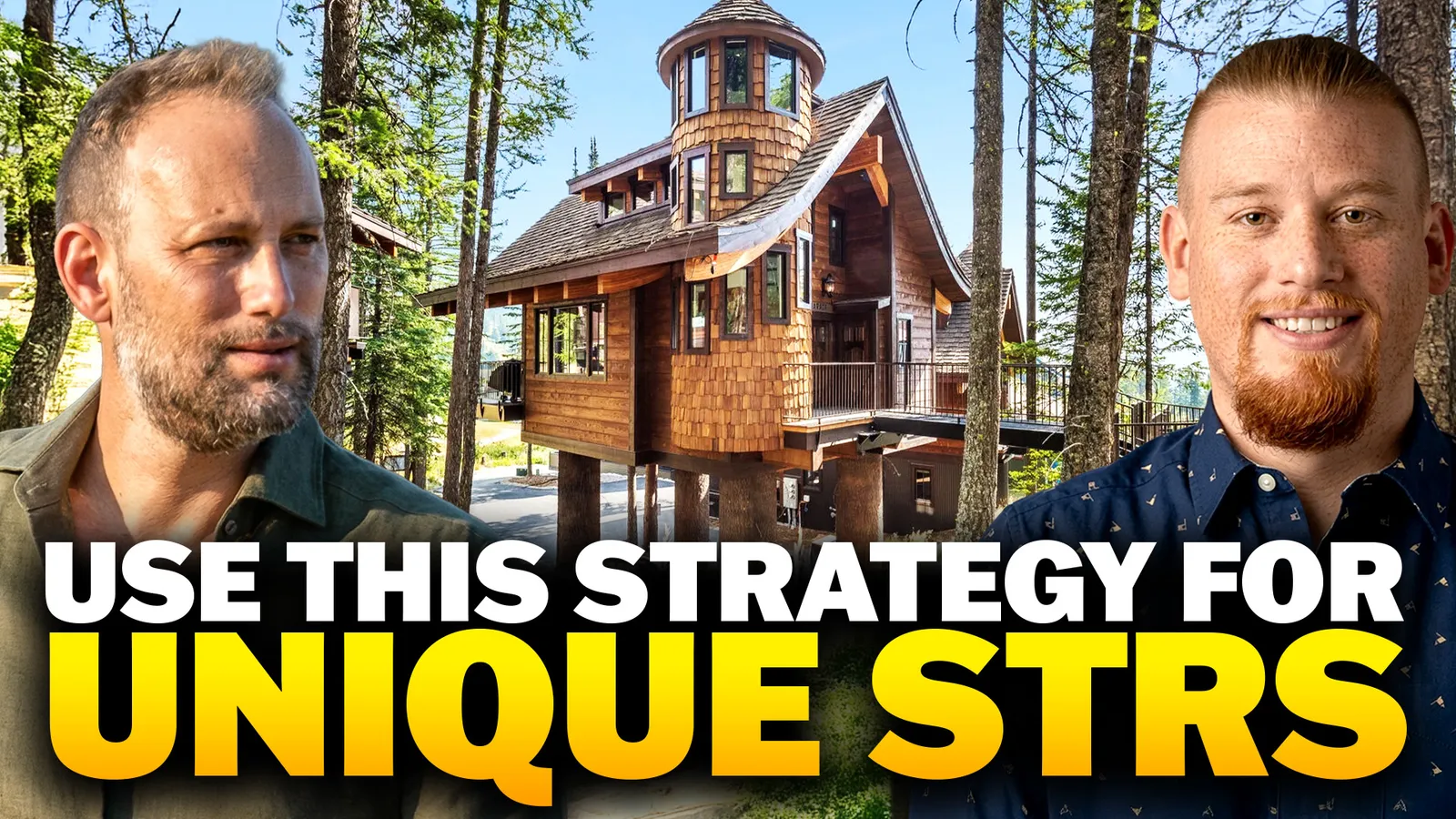
The Javier Effect: A Custom PriceLabs Strategy for Unique STR Inventory
Javier Vasquez, a Freewyld Foundry revenue manager and former PriceLabs employee, walks through the custom Portfolio Occupancy-Based Adjustment strategy he built for a glamping dome portfolio with 97-98% occupancy year-round and 212-day booking windows.
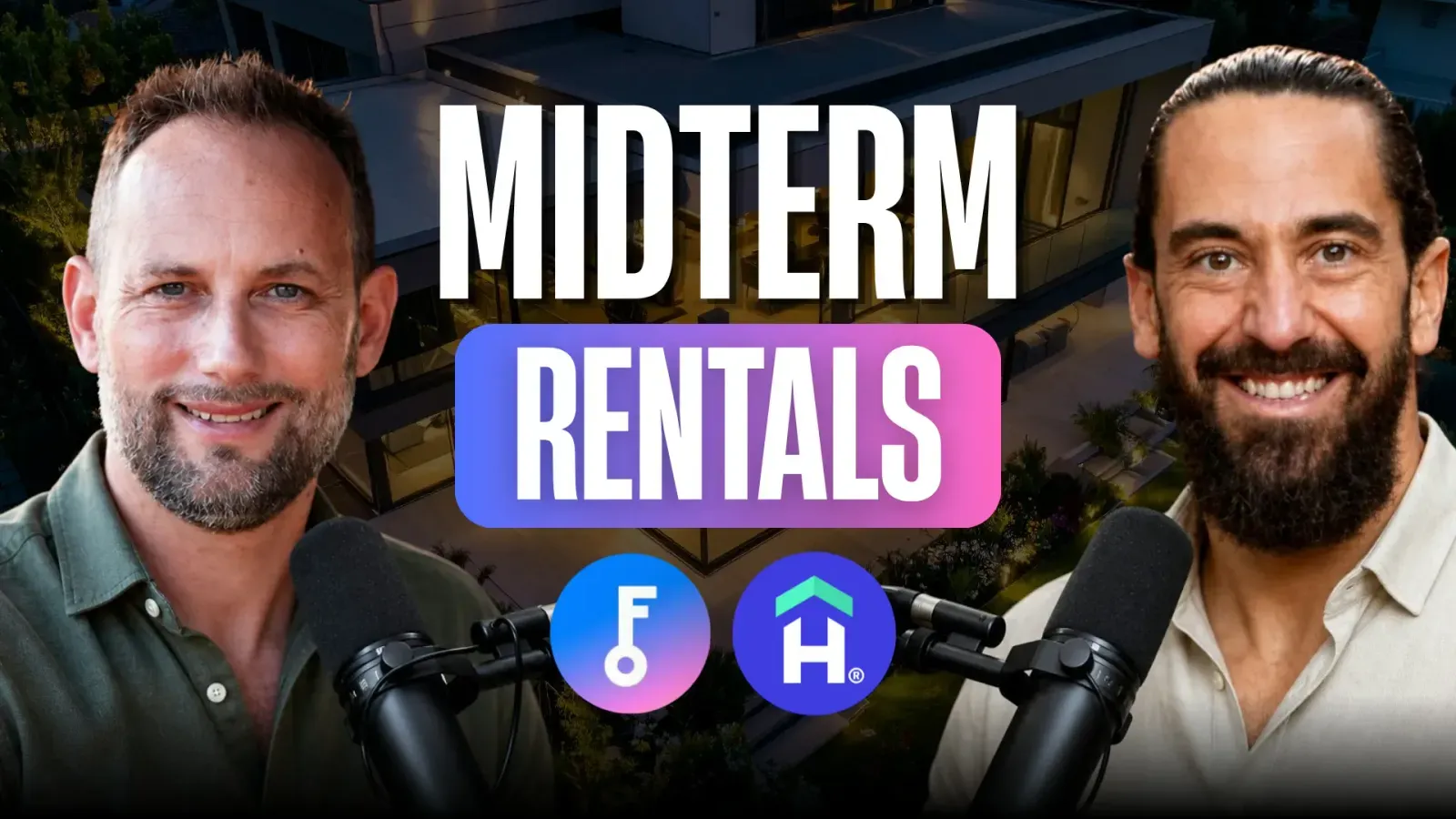
Midterm Rentals with Frank Bosie: The Revenue Strategy Already Happening in Your Portfolio
Frank Bosie of Hostfully joins Jasper to break down the data behind midterm rentals, including why 39% of STR operators already have 30+ night bookings, how the occupancy math works, and when the hybrid approach beats a hard minimum-stay strategy.
The Problem with Revenue Management as a Side Task
Jasper: There was like no information at all about how to do Airbnb. There was no pricing tool. Like you put prices in your calendar manually. What we found is that focusing on the pacing, comparing the occupancy of your own units into the future, that will kind of give you a clue if your prices are optimal or not. If customers have all the information accurately from their listing, and then they make the booking at whatever price they think is acceptable, then you're probably almost always going to be good.
Get paid for your pad. Welcome back to the Outdoor Hospitality Podcast. I'm your host, Connor Schwab. Today, I'm joined by Jasper Ribbers, head of revenue management, and one of the founders of Freewyld Foundry, as well as the Get Paid for Your Pad podcast. And I've been using him as a client for a couple of properties that I'm overseeing and have been extremely impressed with his operation and what they do with revenue management, diving into the data and understanding it. And so I wanted to bring him on to learn to really do a deep dive into something that's so important for all operators, and that is understanding revenue management and dynamic prices. So welcome to the show, Jasper.
Jasper: Yeah, I appreciate you having me on, Connor.
Connor: Yeah, thank you. Well, I want to maybe start with, get right into it, and then we'll learn a little bit more about your background. But what would you say is the number one thing most operators aren't doing that could positively impact their bottom line today?
Jasper: Yeah, I think high level, the number one thing is taking revenue management serious as a part of your business, right? Like what we oftentimes see is that either the general manager or the co-founder or the CEO of the company is doing revenue management on the side. And it's something that, you know, they use their best judgment. They haven't necessarily educated themselves on that. Someone needs to do it. And so it usually falls on their plate.
And you know how it goes in hospitality. Like there's always fires. There's always something urgent to work on, right? And typically, like the revenue management side is not something that people consider to be extremely urgent. So it's kind of done when there's time. So that, I think that's the biggest mistake or biggest problem that I see is like people really need to put urgency and importance on revenue management as a part of their business.
Defining Revenue Management Beyond Pricing Tools
Connor: And maybe we should probably be good for the listeners to define what exactly revenue management is and what exactly dynamic pricing is just so everyone's on the same page.
Jasper: Yeah, no, that's a really good point. Because if you ask 10 operators, what is revenue management? You're probably going to get 10 different answers. So some operators think it's a pricing tool, which it's not. Some operators think it's just setting manual prices. There are so many different definitions around.
But in my perspective, the way I look at revenue management is whatever you do in your business that directly affects the chance that somebody will book and the price that somebody will book at. It's the most obvious part is like setting the prices, whether you do that in your PMS or you use a pricing tool for that. But outside of the setting the prices, it also involves the bookability.
So like, for example, like what cancellation policy do you choose? You can have very attractive prices, but if you put a strict cancellation policy on Airbnb, your listings are just not going to be seen. Then it doesn't really matter what your pricing strategy is. There's minimum night stay settings. There is, there's other type of booking settings. Like do you have your calendars open for 12 months or for nine months? It's like, do you accept same day bookings?
So there's, and what kind of promotions are you using on the OTAs? There's a little bit more than just setting the prices and think there's a gray area where it's like, okay, is this distribution? Is this maybe operations or is this revenue management? Right. But I like to think of revenue management a little bit broader than most operators will think about it. Because if it really directly impacts the price that you can get or the chance that you get booked, I still consider it. Oftentimes I will still consider it revenue management.
Listing optimization is kind of like this other thing where it's like, it's really impacting your revenue, but it's more like that's more marketing. It's still a part of it. We as revenue managers, we don't optimize your listings, but we do give you advice on like, Hey, this listing could use some better photos or this listing, you know, you've got to put the captions or whatever that is. Right. I hope that's, I know that's not the clearest definition, but I hope that's clarity.
Connor: That just made so many more questions pop up in my head of things that I want to dive into. I'm going to pause on that. I want to learn how you got into this space. Like what led you into the short-term vacation rental hospitality management? How did you get here?
From Trading to Airbnb: Jasper's Origin Story
Jasper: Yeah, for sure. It's a long time ago. Actually, I used to be in finance. I was a trader. I worked in first in Europe and Amsterdam, and then in Chicago in the US. Eventually I decided to take some time off and travel the world, owned an apartment in Amsterdam. And this is back in 2011 when I started traveling and I was not looking forward. I had some long-term renters in there, but I was a bit worried about that because it's, it's kind of hard to, well, first of all, you can't use your own house.
So like, as I was traveling, I would come back to Amsterdam and I would stay with friends. And I was thinking, it'd be nice if I could stay in my own house when I'm back in Amsterdam. Right. So then that's one thing. And then I was also worried about the long-term renters because I don't know how it is where you live, but in Amsterdam, if you, somebody that rents your house, you're pretty much lose control of the assets. So that's a bit scary because I thought, yeah, you know what, maybe I'll just want to go back and live my own house next year. Right.
So I wanted to have that flexibility and Airbnb seemed perfect for that. So that was the start of my journey in, yeah, in the short-term rental space. But then also like why I'll answer as well, like the last couple of years I've been focused on revenue management. And the reason that I started to focus on revenue management is that we kind of realized a couple of years ago, yeah, we'd done a lot of courses and we worked with a lot of operators and we realized that like a lot of people are just not taking it serious. Right.
Like I, like I mentioned, since I have a background in econometrics and trading, like I'm always been a numbers person. So I thought maybe on the number side, I can bring more value than in other areas in the short-term rental business. So it kind of makes sense for me to dive into that. So that's what I've been doing for the last three years is look at Price Labs all day, pretty much.
Connor: Yeah, absolutely. And did you say, how long ago did you start Freewyld? How many years ago?
Jasper: Freewyld, there's two parts, right? There's Freewyld Foundry, which is the revenue management side that we started just over two years ago. And then our hospitality side, we actually started that in 2021. So about five years ago.
Connor: Okay. And that's down in Idyllwild, right?
Jasper: That's right. Yeah. That's our first, our first project in Idyllwild.
Connor: Do you have more properties than that one that you own?
Jasper: I own some personal units, but as part of Freewyld, we're still at our first property. We want, we were hoping to have a few other by now, but there was kind of two things that came into play. Number one is the revenue management side. We weren't necessarily planning on scaling that when we first started it, but there was such need for it. That just makes sense for us to really focus on that. So we kind of put the hospitality side on the back burner a little bit.
But also like, I mean, you're investing too, right? Well, we have a very specific niche. Like we have a very specific location that we're going after a specific asset. And so like, they're kind of tough to find, but also the projects that we found that we wanted to acquire, we just couldn't get the seller to come to a price that made sense for us. Those are kind of the two things that are holding us up a little bit, but we're not in a rush, you know, like when you acquire, it takes time and sometimes you have to wait for the right time to expand. So we're always looking now.
The Get Paid for Your Pad Podcast Journey
Connor: Well, I'd love to hear like a little bit more background on the Get Paid for Your Pad podcast. That's obviously very large and well-known podcast, certainly bigger than our little niche glamping one for Idyllwild, the Idyllwild property, just like how many units, what kind, like typical ADR. And then where's Freewyld today in terms of size of employees, number of clients, things like that, just to give people a little bit of context.
Jasper: Yeah, for sure. So, well, let's start with Get Paid for Your Pad. So when I started my Airbnb, it went live in 2012, but I learned about Airbnb in 2011. There was like no information at all about how to do Airbnb. There was no pricing tool. Like you put prices in your calendar manually, right? I didn't know how to build the listing. And so I started doing research and I just couldn't find any info.
And it was actually a friend of mine who was a publisher. He actually gave me the idea. He said like, Hey, you know what there, why don't you write a book about how you're making money with Airbnb? Cause I was crushing it with my apartment. I couldn't believe it. Yeah. I was doing like three times the rent that we would get. So I felt like, wow, this is an insane opportunity here. And I was just shocked to find out that like very few people were talking about it.
So that's really how the podcast came about because I launched the book. I think it was in 2014, which was essentially a collection of all my notes from my journey. And then I really started the podcast to promote the book and never really thought I would build a business on top of it, but it was more of like a, just a fun project for me. So let's Get Paid for Your Pad.
Freewyld. We purchased a property back in the end of 2021 when the short-term rental space was a little bit different than it is now. There was four existing cabins, a studio, one bed, a two bed and a three bed. And there was a large area of land. Well, large relatively. The project is downtown Idyllwild. So it's a small mountain village and there's not a whole lot of available land, like walking distance from the center.
So we had a really good location. Our plan was to build more cabins there, but then COVID happened and, you know, construction became pretty expensive. We ended up turning it into a park actually that our guests could use. We're still in the process of figuring out like how many cabins we can build, talking to the local authorities about that and stuff like that. But yeah, that's where Freewyld is at.
And then you asked about the revenue management side. We're around 70 clients right now. We manage about 150 million in bookings. We're still growing pretty fast. And now that with AI, I don't know if you want to talk a lot about AI, but AI is having a big impact on our business.
Connor: Yeah, definitely. We certainly will get to AI. And then I also see on your LinkedIn overnight success. How does that fit into all this? Is that short-term rental as well?
Jasper: That was our previous education company. So we were doing masterminds. We were doing courses. We were doing live masterminds, virtual masterminds. It was all education. So that's kind of like what we started off with. We ended up closing down that company and now we have Freewyld and we have Freewyld Foundry.
Connor: Got it. Okay. You wrote a book on Airbnb in 2014. Then you started an education business and then you also have a leading podcast. So it's probably safe to say that you're very focused on knowledge, strategy, growth, mindset, education.
Jasper: Absolutely. Yes.
Why Connor Brought Jasper On: Real Results at the Grand Canyon
Connor: All right. We got the right guest on here. Perfect. So I guess what I think would be really curious to do, and maybe I'll give a little bit of context to the listeners as well for kind of why I invited you on the show. And that's because I'm overseeing four properties right now in the kind of glamping RV and landscape resort space. And we use Newbook as a PMS, which I've been really happy with. And then we're on like six different OTAs, which have been hugely successful for us.
We've had at our particular location outside the Grand Canyon that we're using Freewyld on is right outside the Grand Canyon. So it's a lot of international guests. So we get a ton of bookings from Booking.com, a ton from Airbnb, Expedia, Agoda, and Hipcamp. I think like 80% in our first six months was OTAs. Now we're trying to move it more to direct bookings, but it was really helpful for stabilizing the property.
We got 60% occupied in our second quarter in the low season. And I think in our fourth quarter, as we're getting into busy season, we're probably going to be like 85% booked, which was way ahead of projections that I did for the property when I did the feasibility study for it. And so, but what I realized in overseeing these four very different properties was just how complicated learning a new PMS, as well as trying to do revenue management, especially when you bring in six different OTA softwares.
And that's when it gets super complicated because they all have their own algorithm. They all have their own priority. They all have how they do pet fees and how they do upsells and how they do guest communication. They're all different. And so it got really complicated really fast. Even for someone for me, who's been in the industry for a long time, and I feel like I have a pretty good understanding of how dynamic pricing and revenue management works, I simply didn't have the time to sit down and learn how to do the programming in Newbook or how to do it in Price Labs.
And I left so much money on the table in our first nine months, really, when I was just trying to make sure we had cleaners and make sure we had all the faucets open for income. And we filled up on holiday weekends and we're undercharging. We filled up a hundred percent occupied charging way lower than market rates and definitely left probably 10 to $20,000 on the table by undercharging for certain nights. And I just didn't have the time to do it.
So that was, I've kind of vetted a number of different revenue managers and came to Freewyld and was super impressed by their operation. I'm now about five weeks in, we've been working with Adrian. He's great. I've been super impressed so far, and we'll check back in in six months to see that it's going well. But so far it's been great, mostly because it's just taken off my plate as an operator, just to say, Hey, these are, you know, you could say it's two skill sets or you could say it's like eight.
If you think of all the OTAs, these are like eight platforms that I don't have to learn and I don't have to manage. All I need to do is have a weekly or biweekly call with Adrian. And he just gives me the update. I add my input with the GM and then we can move forward.
The Fundamentals: Pacing and Booking Window Strategy
Connor: So maybe we could dive a little bit more into the actual strategy of it. One, this podcast, we try to give as much free tools and education to people. So if they're bootstrapping and scrappy and they want to do it on their own, they have the tools to do that. And if they're more serious and looking to outsource it to a group like Freewyld, they have that option. So maybe you could walk us through just like the basic strategies and principles. If someone's doing it themselves, what can they do to be maximizing their revenue? And maybe it's probably good to maybe delineate between short-term rentals versus a larger quantity property with like 10 plus units. And I don't know if it makes a difference for your answer, if it's a property with less than 10 units or more than 10 units, but yeah, what basic strategies can operators use?
Jasper: In the end of the day, whether it's one unit or whether it's a portfolio, the question is always, it's not so much like about occupancy. Occupancy is easy to get. Like you learned that already. If you put the price really low, you can drive really high occupancy, right? Well, it's really about like, how do you get the maximum revenue? If you think about it in a very simple way, at the end of the day, like your revenue is ADR times occupancy. If you put the price higher, your occupancy is typically going to drop. You know, where's that sweet spot?
If you're 99% occupied, like you might be underpriced, but it gets a bit more complicated because there's a booking window. We're selling right now, like if your calendar is open 12 months, you have 365 days, 365 prices. And so the tricky part of revenue management is to estimate like, what should my price be for each individual of those 365 days? In order to do that, you need to understand when are people booking. You also need to understand what are other competitors in my market? How are they pricing?
Now, typically what short-term rental operators do, especially the ones who are not managers, but they only have one unit, they want to make sure that their unit gets booked. And so when check-in approaches, they're going to drop their prices pretty heavily, right? So you always see like these last minute prices are always very aggressive. And so if everybody else is dropping the prices aggressively two or three weeks out, then you're probably better off getting the bookings a little earlier than that.
You got to look at your booking window and see like, hey, when do people actually start booking? Is that one month out? Is that two months out? Is it six months out? And how do I set my prices throughout the booking window to get the optimal results? The optimal result, that's a little bit, you can't really calculate it. It's not math where it's like, hey, one plus one is two. Right. And no one can argue about that.
I mean, in the end of the day, you never know whether your price was optimal or not. When you get a booking, you may have been able to get a booking at a higher price point. If somebody paid 300 bucks, maybe they were willing to pay 310. Like we'll never know. So like it's, you can't really calculate what the optimal solution is.
But what we found is that focusing on the pacing and so comparing the occupancy of your own units into the future, compare that to like what the market's booked at, that will kind of give you a clue if your prices are optimal or not. I know this is a little bit difficult to understand, especially if people are listening who are not really focused on revenue management. But to explain it in the simplest way, let's say we look at, we're in March now, let's say we look at the month of May, for example.
And let's say your portfolio has 10% occupancy as of right now. If the market's already at like 30%, then that tells us that you're pacing behind, right? So you have a lower occupancy than the market. That could be an indication that maybe you're overpriced a little bit. And as a result, you may have to fill up a lot of your units closer to check-in when the month of May approaches, right?
And so on the flip side, if you're like 40% occupied and the market's at 10, that means that more people are choosing your units versus your competition, right? So like that could be an indication that you're a little underpriced. And so typically what we see is that understanding how am I occupied compared to the market and then making an educated guess as to like, where do I want to be?
And there you want to look at like, what do you expect the occupancy to end up as? So if you're going into high season and you think the market's going to book out almost completely, then in that case, like you're okay pacing with the market or maybe even a little bit behind because you know that even last minute that we can still get reasonable prices because the inventory just sells out.
On the flip side, if you're going into your low season and you think that the market is only going to be at like 30, 40, 50%, that means if you want to get 80% of occupancy, you got to get more of your fair share of the bookings early on, right? So that's kind of how you can think about, you know, setting your pacing targets. And then what you got to do is you got to review that on a weekly basis, at least preferably on a daily basis.
And every day, look at like how many bookings are coming in, what the, how does that affect my pacing compared to the market? If you're getting like a lot of bookings, a lot of pickup in a short amount of time, that's also an indication that your price might be a little low, right? So we got to basically use all the information that we have and try to make the best pricing decisions. So I know that was a lot. I hope it made sense.
Connor: It sounds complicated and in some ways it is, but there also is a way to simplify it and make it simple math, especially if you're focused on the right numbers, which would be what's the average booking window of the customers? How far out are they booking? And once you start getting inside that booking window, say on average customers are booking 30 days in advance of their arrival. Once you get within that 30 days, that's when, well, and you might want to do it a little bit before that, but that's when people typically start to cut prices. And so it's either trying to get the bookings right before that 30 day window or not necessarily scrambling with two weeks left. Is that, I guess, did I say that right?
Jasper: Yeah. You're thinking about it the right way. What I would say is if the average booking window is 30 days, that means that people would typically, the early bookers will probably come in like 60, 70, 80, maybe even 90 days out. Right. But yeah, you're right. Right. Like if you can get most of your bookings before people slash the prices, that's good. However, you don't want to take that too far because let's say, you know, let's just say that two months out, you're looking at prices and you're noticing like, Hey, the competition is at $300.
You don't want to set the price so low that you're going to get booked up completely. There's overdoing it. Cause you know, in the end of the day, you want to get the best price possible. So you got to think about like, Hey, what can I book at last minute? What can I book at like 30 days out? And what can I book at 60 days out and get a little bit of a feel for like those prices. And then you definitely don't want to rely too much on last minute, especially if the market doesn't book out. So if there's a lot of inventory still left at the end, then, you know, the last minute should really be to fill up the gaps. It shouldn't be to fill up the majority of your inventory.
Dynamic Pricing Basics and Common Mistakes
Connor: Yeah. And maybe the easiest way to think about it for an operator, like step one would be just dynamic pricing. And to put things super simply, if you had a property that had 10 units and let's just say, and you should be able to do this with your property management software. If you can't, if you can't do dynamic pricing, you should get a new PMS, but basically the simplest way to think about it. And you can do this quite easily in your software is your first unit might get booked and it's a hundred dollars. And your last unit that's available might book for $200 and everything in between will either be, you know, maybe it's for every unit that you have booked, the price goes up another $10.
And that's like a very easy way to do it that you could set across all your days. And you set the base price, you'd set the max price that it could go to for the last unit. And then that's probably the simplest way to do it. And then of course, trying to go higher prices on holidays, busy seasons, weekends, things like that. And having your base price be higher on those days.
I think there's a lot of operators that have hesitation to doing that for, I don't fully know why, but I know we work with a partner and they don't, they use Price Labs and they got a booking for like $600 one day. And they're like, Whoa, our unit isn't worth $600. So they stopped using Price Labs. And I was like, well, what was the situation? They're like, Oh, it was December 31st. And I was like, well, there's probably nothing left available in the area. So it was one of the last units booked in that whole area.
They're like, Oh, our unit doesn't even have a bathroom. You know, someone shouldn't be paying $600 for a unit without a bathroom. And I was like, well, yeah, I get what you're saying, but also there's nothing else available. So on that day, it is worth it. It is worth it. Maybe on, you know, Tuesday in February, it's probably not worth that because there's tons of other options, but some people have a resistance to charging more on certain days, but it's a huge missed opportunity.
Jasper: Yes. Yes, absolutely. And you touched on a really, a really good point. So sorry to interrupt.
Connor: No, please.
Who Determines Value: Guest or Operator?
Jasper: No, but this is a crucial concept, right? Like who is to judge what something is worth? Is it the person that owns the product or is it the person that's paying for it? I would argue it's the person that's paying for it. Think about flights. Like how much is a flight from New York to Los Angeles worth? Well, it depends on when you book and for what date you're getting the same, right? You're getting five hours in a small seat, you know, you're getting exactly the same, but to your point on Thanksgiving, you're going to pay like $2,000, you know, like on a Tuesday, somewhere in February or something, you might pay $150, right?
So what does that flight worth? It's in Holland, we have an expression, like something is worth what the craziest person will pay for it. Right? Yeah. So that's a very important concept, you know, it's like, don't be the judge of like what you think your product's worth. Like let the market decide what it's worth.
Balancing Pricing with Guest Expectations and Reviews
Connor: How do you manage reviews? At least our location, which is called the Outpost at the Grand Canyon, it's 12 Airstreams. Most of them are pretty nice, but Airstreams in general can be tricky units because they have things break there. They have really small bathrooms. They can be confusing. A lot of people just aren't mentally prepared for like what an experience in that unit will be like.
And fortunately our reviews since we've started have been phenomenal. And I think that's because the units all have a private hot tub, which makes a massive difference. Our GM is super, super friendly. So the service is really good and personal and our pricing was super low in our first year, you know, it was maybe 150 bucks or even less. Now we're trying to get into the 200, 225 ADR range in 2026.
And what I'm most nervous about is as we raise prices, it's going to be a lot harder to meet guest expectation to maintain good reviews. So I'm just nervous about that. I'm just curious if you have any insights on balancing, maximizing ADR while meeting guest expectation and maintaining reviews.
Jasper: It's another really interesting point. And, you know, most people will kind of assume what you're assuming of like, well, if people pay more, they have higher expectations and, you know, the review score is going to come down. And I haven't really seen that. It made sense, but I just haven't really seen it.
In the end of the day, the guest is having an experience. And if they have a great experience, if they pay 200 or 300 or 400 in their mind, it was worth it because they're paying for it. Like if I book a unit for 400 bucks, like the reason I'm booking it is because I think that it's worth $400. You might think, whoa, that's so much money. Like we got to up our game. We got to provide more things and this and that. But in the mind of the purchaser, the purchaser is not going to purchase it if they don't think it's worth at least what they're paying for it. Right.
So like, it's, it's a matter of perspective. I just talked to this company a couple of weeks ago. They're called Cabiner there in Holland. They are completely off grid mobile units that they place in national parks. And there's not even a cleaner. Like people have to bring their own sheets, their own pillows, you know, like they bring all their own stuff and they have to clean after they leave. People are paying like 250, 300 a night.
Why are they paying that? Because you're the only one. There's no accommodation in these national parks. There's no permits for it. Right. So like this company managed to get a permit to place like these really small, very, very super simple units in national parks and the experience of being by yourself in nature and no one around you that has a lot of value to people. So like people are paying a lot of money for that.
So I think to answer your question, like I wouldn't worry about it. You know, what really affects the guest experience is the person that's on the ground. If that person is attentive to the needs of the guests, it's all about like, how do you make people feel right? If people feel welcomed and people feel looked after, they're not going to care that the bathroom is like a little bit small. I mean, they're booking an Airstream. Like they know it's not going to be a massive luxury bathroom. I wouldn't worry about it if I were you.
Connor: Yeah. And actually, as you were talking, it brought up two things. The two main things that lead to bad reviews is when expectation does not meet reality. And when they feel like they were let down or disappointed by the staff or the provider. And I think one thing that's very, very careful for operators is make sure that your website, your photos, and your listings are accurate and not deceiving.
I think it's really tempting to put in photos that might depict, that might show a scene or an image that's not realistic to what's there to try to get more bookings and draw more people in. But that's super dangerous. And it's the easiest way to get bad reviews. Like for example, you might take a photo of one unit, and it looks like it's all by itself in the woods, but there's other units right around it. And you only show photos that show one unit.
So, and then you advertise like a peaceful experience in the woods. And then people show up and they're like, oh, there's another unit 20 feet away. That's kind of deceptive. So like for our property, our units are very close to each other. You know, they're 20, 30 feet apart. So I make sure on all of our listings on our website, we have an aerial photo that shows just how close the units are. Cause I don't want anyone to show up and be like, oh dang, we're right next to our neighbors. It's like, obviously if you looked, you know, five pages in on the listing, you'd see that.
So making sure that expectation meets reality. And then the second piece is making sure that they get the right communication that they need and that the GM is attentive. Like you said, I think if you handle those two things, like you said, if customers have all the information accurately from their listing and then they make the booking at whatever price they think is acceptable, then you're probably almost always going to be good. So yeah, thanks for that.
Jasper: Yeah, yeah, exactly. I mean, think back to the airline, right? If I book my Thanksgiving flight, you know, and it's like five times the usual costs. Am I now suddenly going to complain about the size of my seat? I'm not going to go talk to the flight attendant and then be like, Hey, I paid a thousand dollars. Like why do I have such a small seat? It's like, well, it's economy class. Like it doesn't matter how much you pay. Like the seat's going to be the same, right? As long as like the staff is nice, I'm not going to complain, even though I paid five times more than usual.
OTA Strategy and Channel Management
Connor: What, let's maybe talk about OTAs for a second. What advice do you usually give operators in terms of utilizing OTAs and how does it kind of integrate into your revenue management strategy for your clients?
Jasper: Yeah. I mean, I always say you want to keep your business as simple as possible. And so any complication you add should have a significant impact on your revenue. I would say, let's look at your market. Like where or what platforms are people using? When you start out, like, you know, start simple, right? Like use like one, two, maybe three channels, right?
As you get experience, like you can start looking at adding some other channels, but you know, from what I've seen for a typical short-term rental, Airbnb, Booking.com and VRBO are the main OTAs. You know, there's a lot of other OTAs, but usually they don't get much traction on the other ones. So like you can list there, every channel you list on is more, it makes the business more complicated. So I think
Related Articles
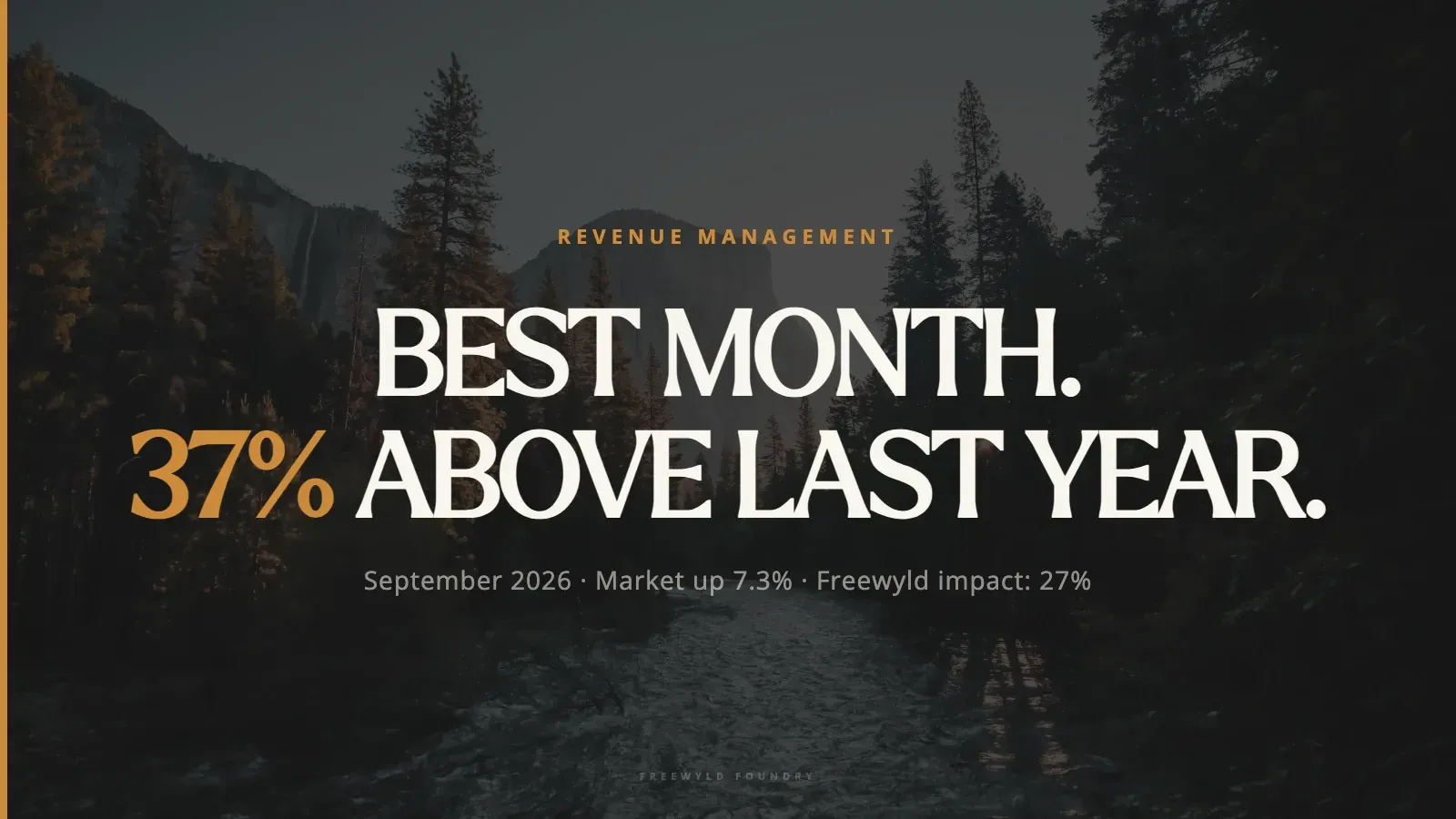
STR Market Update September 2026: Record Month, Vrbo's Commission Shift, and What AI Means for Revenue Management
September 2026 was the best month in Freewyld Foundry's history. Comparable units finished 37% above last September while the broader market grew 7.3%, producing a 27% measurable impact, the highest we have ever recorded. Here is what drove that gap, which markets led and which lagged, what Vrbo just changed about commissions, and what the industry learned about AI in revenue management at GuestyVal in Madrid.
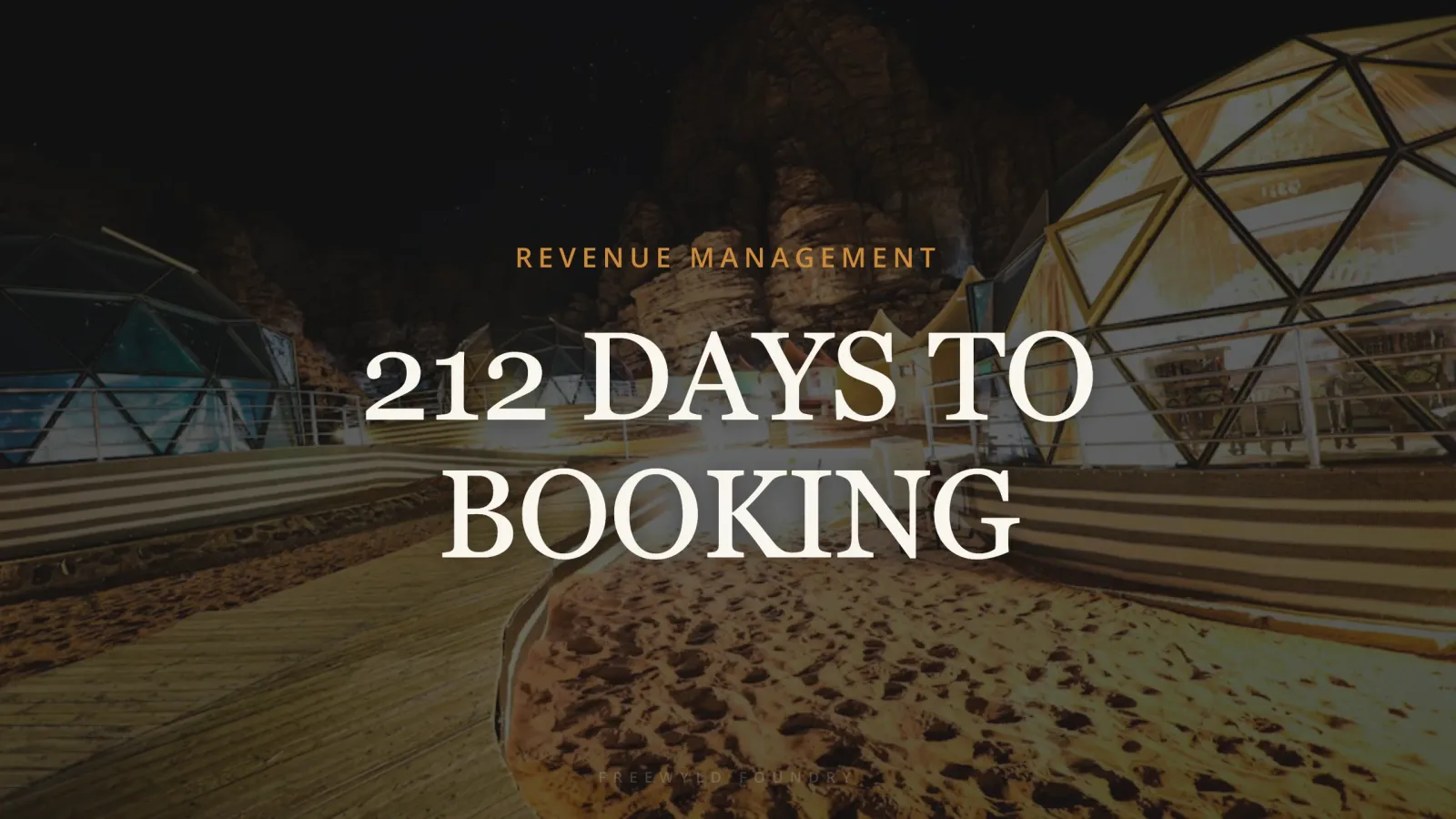
PriceLabs Portfolio Occupancy-Based Adjustment: A Strategy for Unique STR Inventory
When your STR inventory runs at 97% occupancy year-round with a 212-day booking window, standard PriceLabs market factors actively work against you. Here is how to build a custom Portfolio Occupancy-Based Adjustment strategy for destination and unique inventory.
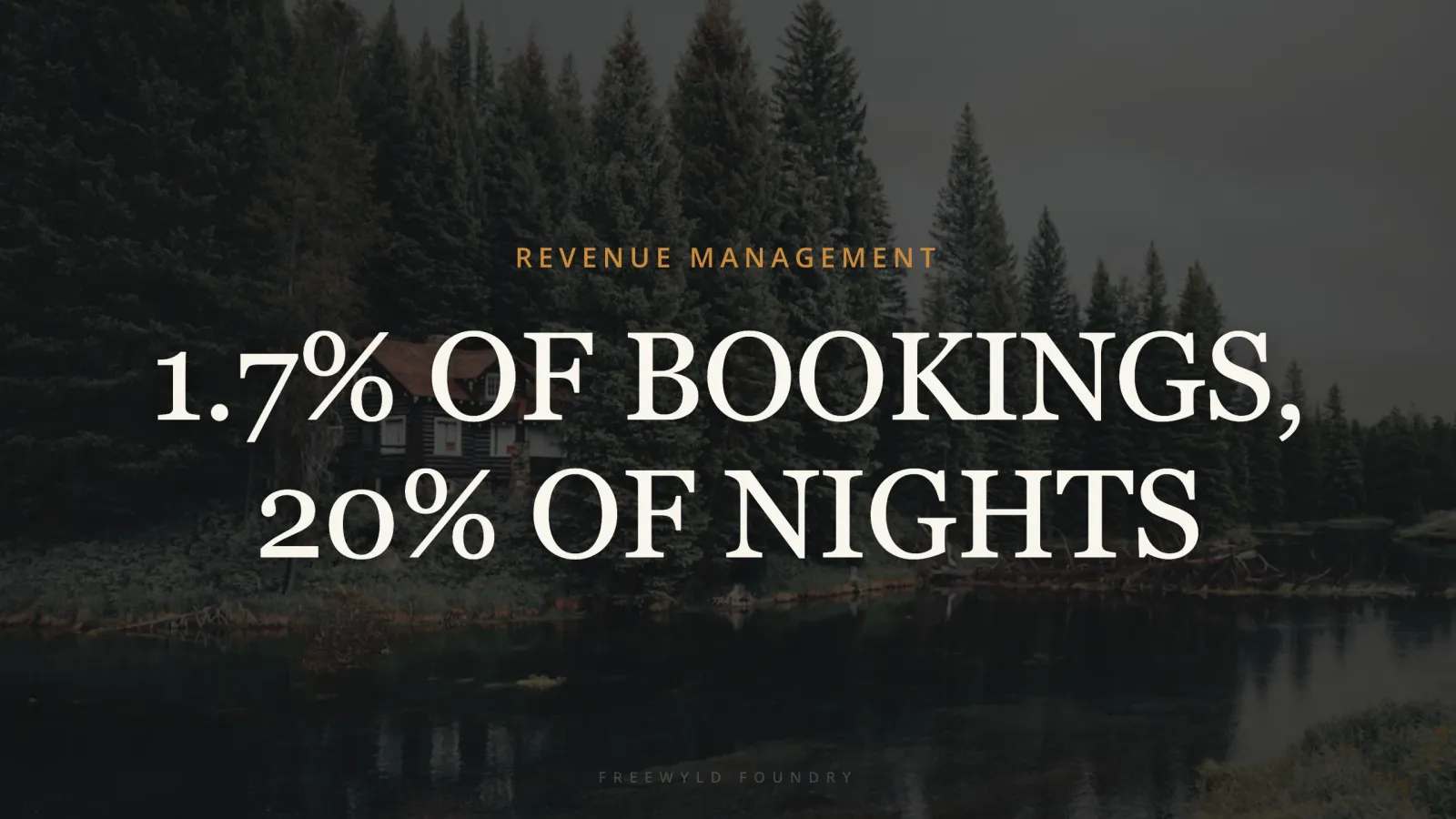
Midterm Rentals for STR Operators: The Data, the Math, and How to Start
Midterm rentals are already happening in most STR portfolios. 39% of short-term rental operators have received at least one 30+ night booking. Here is the data, the occupancy math, and how to be intentional about it without abandoning your short-term rental business.