Why Most Hosts Have the WRONG Cancellation Policy

Want to outperform the market? Freewyld Foundry’s Revenue and Pricing Management service is driving an 18% performance lift for $1M+ STR operators, even in down markets. If you’re managing 10+ listings and want a free pricing audit, apply here
Airbnb just rolled out seasonal cancellation policies, and it’s a game changer. For years, hosts have been stuck choosing between protecting their high-value dates or maximizing bookings during shoulder season. One blanket policy for the entire year meant you were either leaving money on the table or risking expensive last-minute cancellations.
The new feature lets you customize your cancellation policy by date, so you can stay flexible in January while locking down July 4th weekend. But here’s the catch: Airbnb made implementation extremely painful. You have to manually select dates in each listing’s calendar individually. No bulk editing. For a 50-unit portfolio protecting five events per year, that’s hundreds of manual actions.
In this episode, Jasper breaks down the cancellation policy framework he uses with Freewyld Foundry’s 70+ clients. You’ll learn which policies work best for different bedroom counts, booking windows, and risk profiles. Plus, he shares a client story about losing thousands when a guest canceled a two-week booking and immediately rebooked at a lower rate.
You’ll learn:
- Why most hosts use policies that are too strict (and how it costs them bookings)
- The three factors that determine your optimal cancellation policy mix
- How booking window changes everything about revenue protection strategy
- Why property managers should intentionally leave money on the table
- Step-by-step process for implementing seasonal policies in your portfolio
We also talk about:
- The four recommended cancellation policies (and two you should avoid)
- Why flexible policies feel risky but usually generate more revenue
- How bedroom count correlates with booking window and policy choice
- Which specific dates deserve your strictest protection
- The current rollout status and availability of this feature
Mentioned in the Episode:
Subscribe for new episodes every Monday on YouTube, Spotify, and Apple Podcasts.
Continue Listening
Midterm Rentals with Frank Bosie: The Revenue Strategy Already Happening in Your Portfolio
Frank Bosie of Hostfully joins Jasper to break down the data behind midterm rentals, including why 39% of STR operators already have 30+ night bookings, how the occupancy math works, and when the hybrid approach beats a hard minimum-stay strategy.
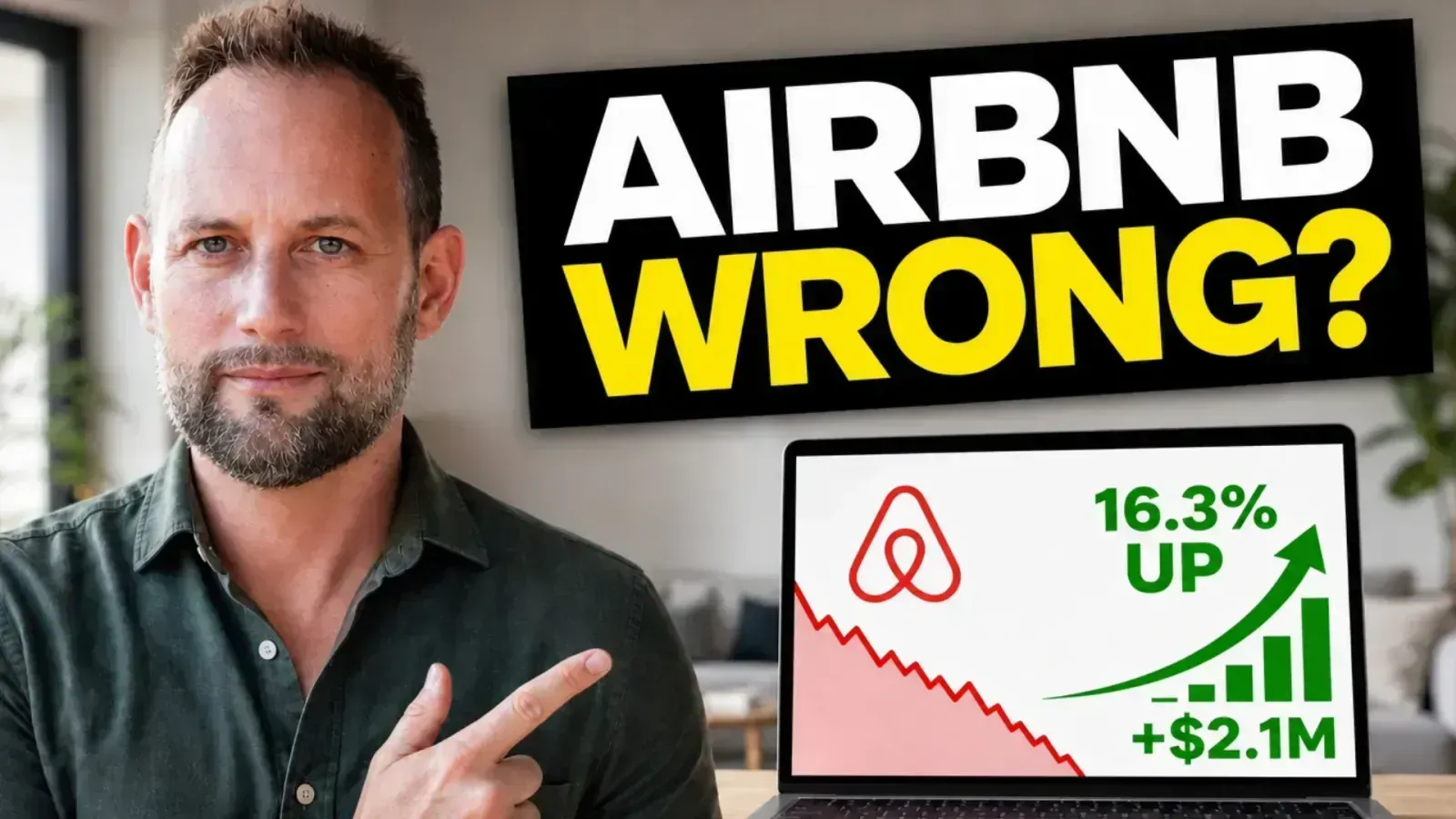
August 2026 STR Market Update: 16% Growth While the Market Declined 2.5%
Jasper shares the full August market update including July portfolio results (16.3% YoY growth vs. a 2.5% market decline, $2.1M in additional client revenue), the top winning and declining markets, the Labor Day weekend shift, Airbnb's AI pricing model and new mobile discount, VRBO sponsored listings, OTA discount stacking risk, and what operators should focus on heading into shoulder season and low season.

Secrets of a Pro STR Revenue Manager to Maximize Your Revenue
Jasper sits down with Patrick Morton, one of Freewyld Foundry's revenue managers, for an inside look at the pricing tactics, listing optimization moves, and team strategies that are moving the needle for STR operators every day.
The Long-Awaited Feature Is Finally Here
Jasper: The conversion and visibility boost that you get from flexible policies, it's not very visible because you don't really know if you would have gotten that booking if you had a more strict policy.
What's up everybody, welcome back to Get Paid For Your Pad. The day is finally here. Airbnb is rolling out seasonal cancellation policies, something that we've been waiting for for a very long time.
This has been a struggle for a lot of hosts choosing the right cancellation policy on Airbnb because it doesn't make sense to have one policy for the entire season. You want to protect your high value dates, but you want to maximize conversion and visibility for your dates that are harder to fill.
So in this episode, I'm going to explain how seasonal cancellation policies work, how you can apply them in Airbnb, and I'm going to give some advice as to how I think you should be applying them.
Understanding the Four Core Cancellation Policies
So first, let's go back to the basics and just talk briefly about the cancellation policies that are available for your listings. There's essentially four cancellation policies that we recommend you may use. These are flexible, moderate, limited, and firm.
Now there's also a thing that's called super strict 30 days and super strict 60 days. Now I don't recommend you use those because Airbnb really, really punishes you on your visibility. Your conversion will drop if you use these policies. So these should be only used under extreme circumstances.
I'm going to focus on 99% of the other listings where you should be choosing from firm, limited, moderate, or flexible.
The Invisible Trade-Off Between Conversion and Protection
Now, how do you choose the right cancellation policy? The biggest thing to keep in mind is there's a trade-off happening here. Essentially, you're trading visibility and conversion versus revenue protection.
Obviously, the more flexible your cancellation policy, the more visibility, the more conversion, the more bookings. But you also have the least amount of revenue protection. Because if you have a flexible cancellation policy, people can cancel up to 24 hours in advance.
Versus on the other side of the spectrum, if you're using the firm policy, then people are partially locked in 30 days out. So firm offers the most revenue protection, but you're also sacrificing the most visibility and conversion.
Why the Benefits Are Invisible But the Pain Is Unforgettable
Now, here's where it gets tricky. The conversion and visibility boost that you get from flexible policies, it's not very visible. Because you don't really know if you would have gotten that booking if you had a more stricter policy.
On the flip side, the revenue protection is extremely visible. I had a client that I talked to this week. He had a booking that was booked about four months ago and it was at a really nice value. It was a two-week booking.
The guests could cancel seven days in advance for a full refund. Now, what they did is they canceled eight days in advance and then they rebooked at a lower price. It happens, right? And when it happens, it sucks.
And that's why a lot of hosts, in my opinion, they probably have a too strict cancellation policy in general because of that very reason. When it hurts, you feel it, but the benefits, you don't really notice them.
Four Factors to Consider When Choosing Your Policy
There's four things that you should consider when you choose your policy.
Number one is the booking window. The longer the booking window, the more you want to protect your revenue. If people only book three months out and somebody cancels in the last 30 days, you're not going to be able to rebook. So you want to have a more firm cancellation policy there.
The second factor is bedroom size. Generally larger homes, more bedrooms means larger groups. And larger groups tend to book earlier in the booking window. So essentially, larger homes typically have larger booking windows, and thus you want to protect your revenue a little bit more.
The third factor is rate. It makes more sense to protect a higher rate than to protect a lower rate. If you're in January and your prices are at the minimum, you might as well just maximize conversion and visibility. But if somebody books for New Year's night at $1,000 a night, there's much more revenue that you want to protect.
The fourth factor is risk. Flexible cancellation policies typically lead to more revenue, but also more risk. Maybe on average you'll make $100,000 with flexible, but the range might be from $80,000 to $120,000 based on how many cancellations you get. Versus if you use limited, your average might be $90,000 but the range might be smaller.
If you're an owner-operator, you can decide your own risk tolerance. But if you're managing for owners, you probably don't want to take as much risk because your owner is not going to be happy if you get that last-minute New Year's cancellation.
How Seasonal Cancellation Policies Work
Now let's get into the fun stuff. In the low season, if occupancy is going to be 20%, 30%, there's no revenue to protect. So no matter how big your house is, you probably just want to put it on a flexible or moderate cancellation policy.
The high season, you want to be more strict. And the strictest policy should be on your highest value dates that have the longest booking window, which are typically college football games, Thanksgiving, Christmas, 4th of July, any type of events that happen in your market.
Those are the dates you want to protect the most. And now with seasonal cancellation policies, we can actually do that.
The Implementation Challenge Nobody Warned You About
The only problem is Airbnb made it extremely cumbersome to implement. You can't just take your portfolio and say, hey, these dates, I want to have this cancellation policy for my entire portfolio.
You actually have to go into your calendar, click on an individual listing, select the dates, and then you'll see something pop up that says custom settings. You click on the custom settings and then there's an option that says cancellation policy. And then you can select the cancellation policy just for those dates.
So this is a major pain to implement. Because if you have 100 listings and you want to protect five different events throughout the year, you're going to spend a lot of time implementing this directly on Airbnb. And as far as I know, there's no way to do it in bulk.
Airbnb has just literally just rolled this out and they haven't rolled it out everywhere yet. So when you look at your Airbnb listing calendar and select the dates, this option might not even pop up for you because it hasn't been rolled out everywhere.
The Strategy: Default Plus Strategic Overrides
First, you decide what's the best policy to use for the majority of your dates. Maybe you want to have the default as limited or moderate. But then for Labor Day weekend, Memorial Day weekend, and June, July, and August, you want to set it to firm.
So basically what you do is you go in your listing and you set moderate as a default. Then you go in your calendar and you select Memorial Day weekend, the entire summer, and Labor Day weekend. And you set the policy to firm just for those dates. But then you have to do that for every single of your listings.
So definitely a lot of work. But having said that, it is useful because you want to protect your high value dates while staying flexible during the shoulder season.
Next Steps
Go check your Airbnb listing. See if this functionality is already available to you. If not, you might just have to wait until it's available.
If you are interested in working with us on your revenue management, we do offer a free revenue report. You can go to freewyldfoundry.com/get-started. We'll look at your pricing strategy, understand your portfolio, and let you know how much opportunity we think you have to increase your revenue.
Related Articles
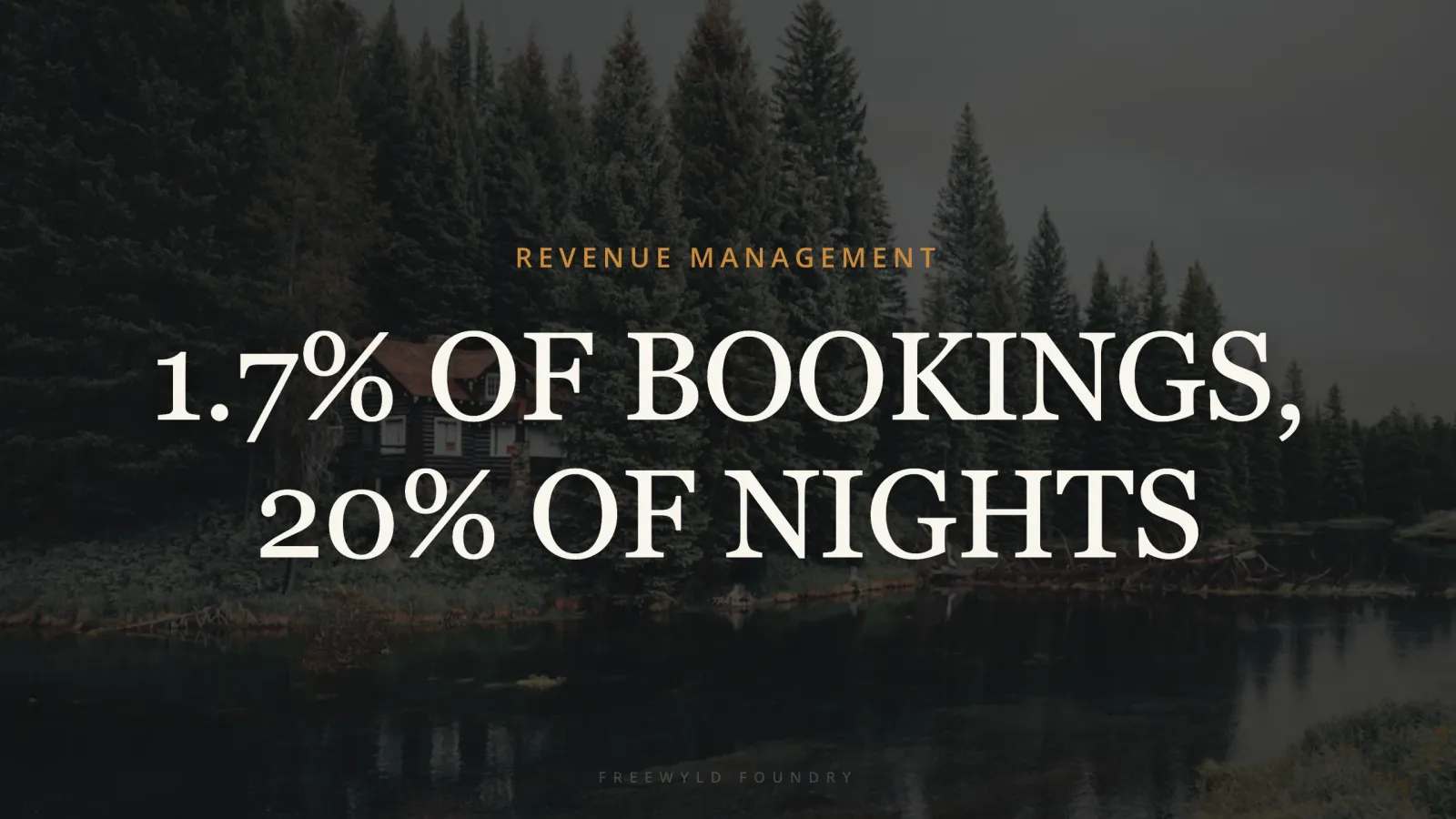
Midterm Rentals for STR Operators: The Data, the Math, and How to Start
Midterm rentals are already happening in most STR portfolios. 39% of short-term rental operators have received at least one 30+ night booking. Here is the data, the occupancy math, and how to be intentional about it without abandoning your short-term rental business.
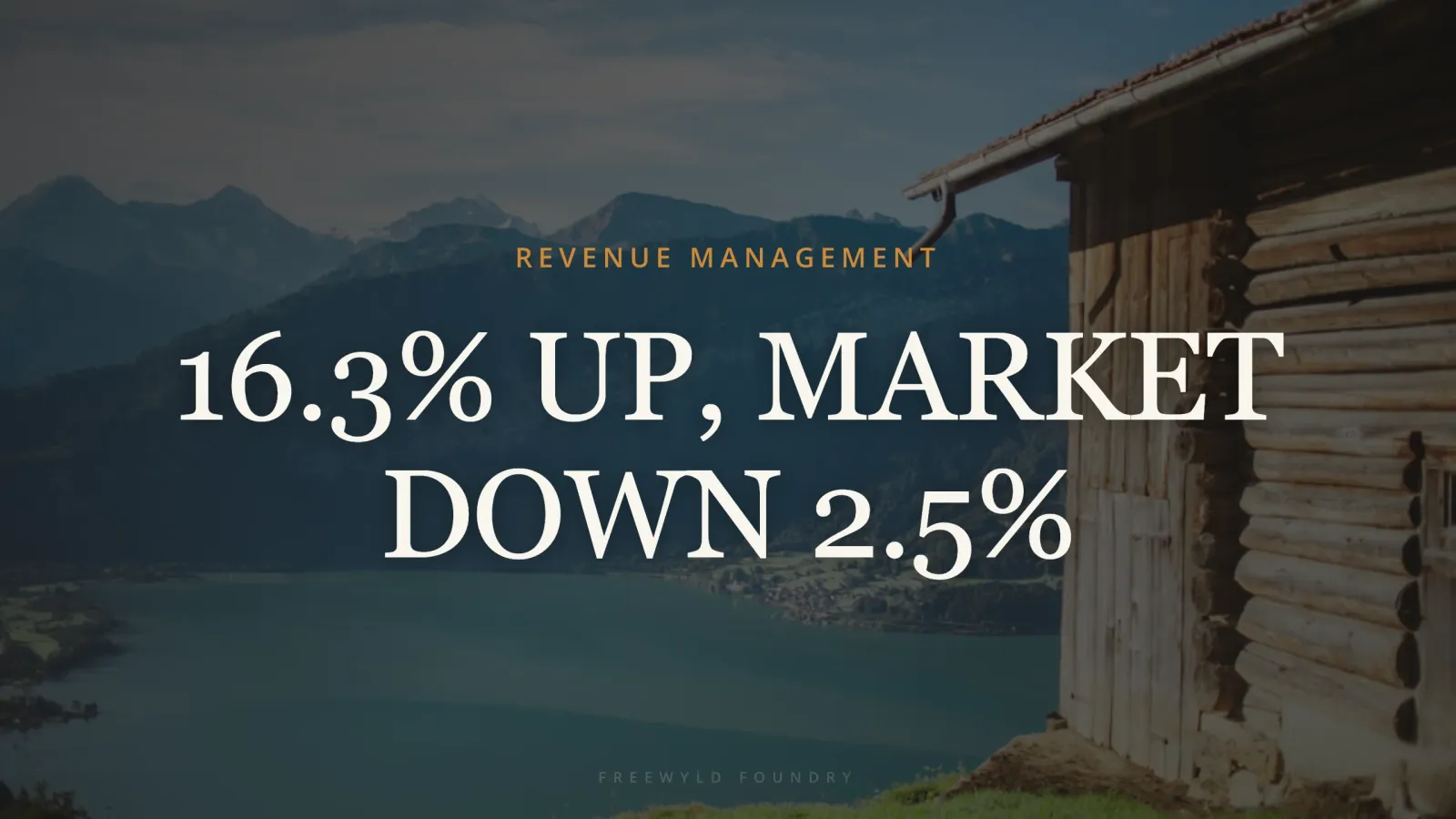
STR Market Update August 2026: 16.3% Growth While the Market Fell 2.5%
August 2026 was the highest-impact month in Freewyld Foundry history. Comparable client listings grew 16.3% year over year while the broader market fell 2.5%. Here is what drove that gap, which markets won and lost, what Airbnb and VRBO just changed, and what every STR operator should be doing right now heading into shoulder season.

How to Increase Airbnb Revenue: 5 Tactics From a Full-Time STR Revenue Manager
Most operators cap their prices, skip amenity audits, and discount when bookings slow down. A professional STR revenue manager does the opposite, and the results show it.