Castle on Airbnb? Building a Profitable STR Business in Ohio
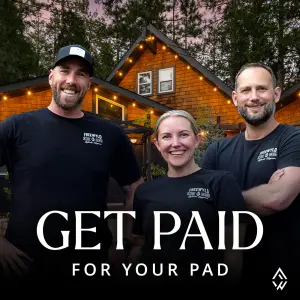
Want to outperform the market? Freewyld Foundry’s Revenue & Pricing Management service is driving an 18% performance lift for $1M+ STR operators, even in down markets. If you’re managing 10+ listings and want a free pricing audit, apply here.
In this episode of Get Paid For Your Pad, Eric Moeller sits down with Dave Stokley and Mark Vondrak from Host Pros, a property management company that scaled from 2 Airbnb units in 2017 to 77 listings across Ohio while maintaining a 4.8+ guest rating and proving that Airbnb is far from dead.
If you are an STR operator who wants to build a scalable business through unreasonable hospitality, understand how to dominate a single market instead of chasing hot destinations, and learn why small experiential details drive premium rates, this episode is a must listen. Dave and Mark share their 10-year partnership journey, the wizard-themed castle that changed their business, and why focus beats expansion every time.
You will hear:
- How Host Pros went from renting spare rooms to managing 77 properties
- Why they chose property management over passive real estate investing
- The AI wizard portrait system that creates unforgettable guest experiences
- How they print and frame personalized guest portraits before arrival
- Why their number one company value is “we don’t compete, we dominate”
- How knowing one market deeply creates more opportunity than chasing 10 markets
- Why they turned down a California property to stay focused on Ohio
- The Vivid Vision exercise that aligned their partnership and team
- How shared values create 10-year business partnerships that work
- Why success means living your company values, not just hitting revenue goals
We also talk about:
- How they bought a wizard-themed castle with 5% down and owner financing
- Why they invested heavily in design and hospitality over passive income strategies
- How cleaners handle the AI portrait printing process seamlessly
- Why they employ 10 full-time staff plus dozens of cleaners and VAs
- How they reject the “set it and forget it” STR mentality
- Why every stay is a promise to create lifelong memories
- How they navigate disagreements and success as business partners
- Why moving goalposts prevents entrepreneurs from celebrating wins
- How focus and discipline allow them to say no to shiny objects
- Why expertise comes from solving the same problems deeply over time
🎯 Mentioned in the Episode:
- Host Pros property management
- School of Sorcery wizard castle
- AI portrait generation for guests
- Vivid Vision by Cameron Herold
- The Psychology of Money by Morgan Housel
- Freewyld Foundry Revenue & Pricing Management
- Ohio STR markets (Cleveland, lakefront properties)
- PriceLabs and revenue management tools
- Partnership equity deals with existing clients
🔥 Favorite Takeaway: “We don’t compete, we dominate. We don’t want to have competition. We want to be totally different in everything from the way we treat our guests to our employees and everything in between.”
📍 Want us to audit your pricing strategy? Get your free personalized revenue report at FreewyldFoundry.com/report
Continue Listening
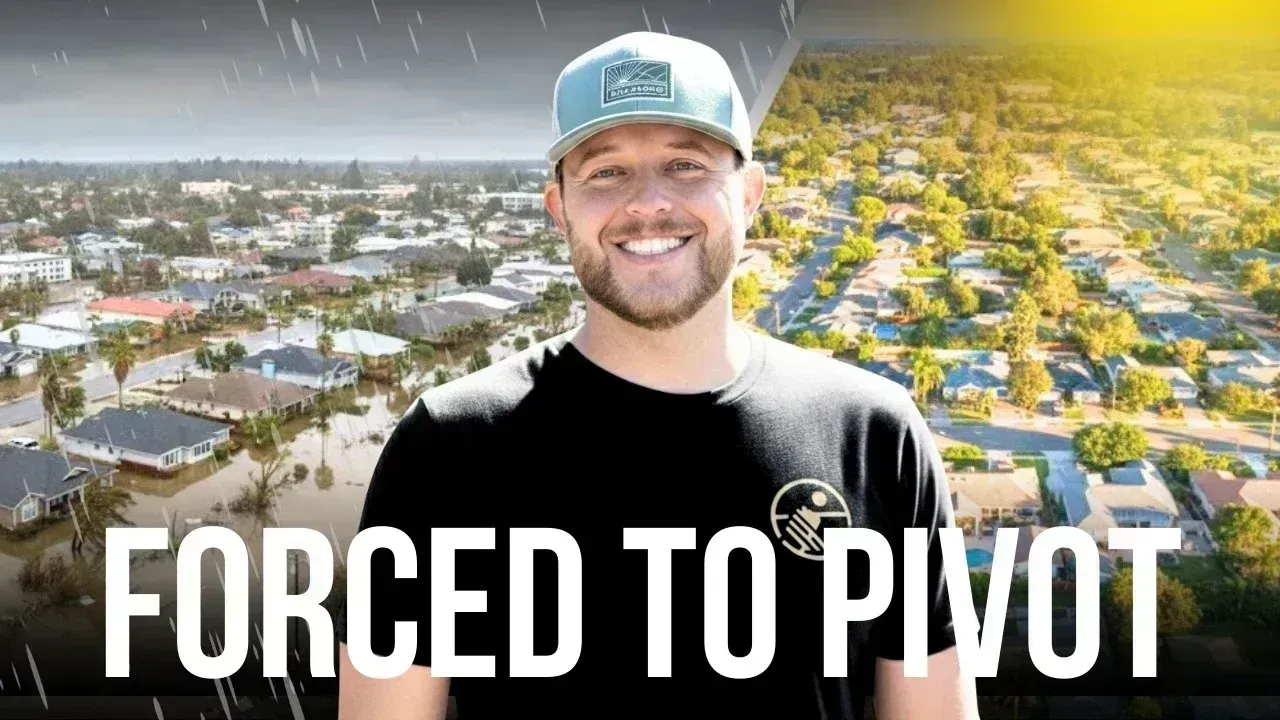
From Hurricane Loss to 70 Rentals: Scaling STR Business
In this episode of Get Paid For Your Pad, Kaye Putnam (Head of Marketing at Freewyld and Freewyld Foundry) sits down with Joe Prillaman, co-founder of Host Help, to unpack how a sudden hurricane wiped out nearly one-third of his STR portfolio in just two weeks, and why that crisis became the catalyst for scaling a professional short-term rental management company to nearly 70 properties. Joe shares the real story behind losing properties, facing fixed mortgages and team overhead, and making the hard decision to pivot from self-managing his own portfolio to managing homes for other owners. This conversation dives into the operational, emotional, and strategic realities of scaling an STR management business under pressure, without sacrificing quality, reviews, or long-term vision. If you are an STR operator or property manager navigating growth, team expansion, operational complexity, or unexpected disruptions, this episode offers practical insight into what actually breaks as portfolios scale, and what systems matter most to rebuild stronger.
Scaling to 100+ STR Units Without Compromising Quality
In this episode of Get Paid For Your Pad, Kaye Putnam (Head of Marketing at Freewyld and Freewyld Foundry) sits down with Troy Daily, CEO of Elevated Stays, to unpack what it actually takes to scale a short-term rental portfolio past 100 units without losing quality, control, or brand integrity. Operating in a highly seasonal market like Traverse City, Troy shares the operational decisions, leadership shifts, and system investments behind his growth from a small portfolio to managing more than 100 STR units. If you are an STR operator scaling quickly or planning to grow beyond 20, 50, or even 100 units, this episode is essential. Troy walks through the real challenges of growth: hiring the right people, building operational structure, maintaining quality standards, aligning with the right owners, and knowing when to say no to properties that don’t fit the brand. This conversation goes far beyond surface-level growth tactics and into what sustainable scale actually looks like. Get your free, personalized revenue report at FreewyldFoundry.com/report.
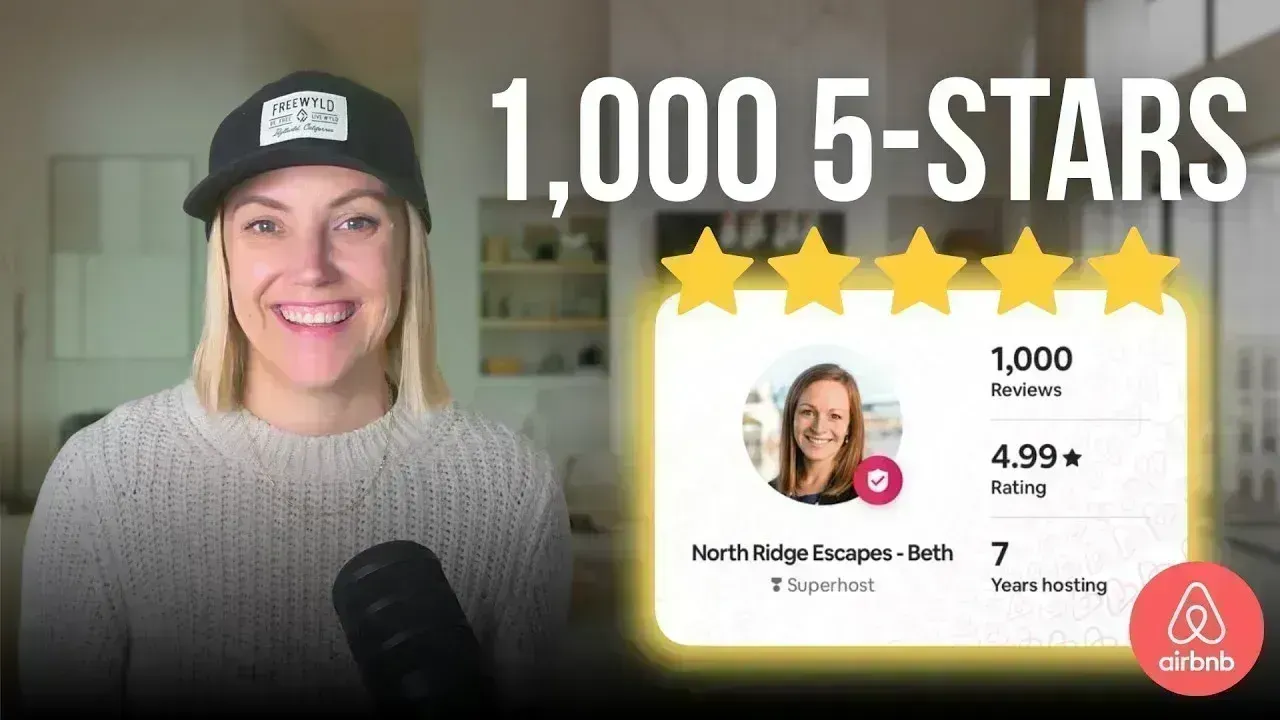
1,000+ 5-Star Airbnb Reviews: What It Took
In this episode of Get Paid For Your Pad, Kaye Putnam (Head of Marketing at Freewyld and Freewyld Foundry) sits down with Beth Palmer, co-owner of Northridge Escapes, a portfolio that holds a 4.99 average rating across three different markets and more than 1,000 five-star reviews. If you are an STR operator who wants to raise guest satisfaction, improve review scores, and understand the mindset that creates exceptional experiences, this episode is a must listen. Beth shares the three-part formula behind her results: communication, quality, and amenities. She explains how small decisions executed consistently create a five-star engine that guests remember long after checkout. They review based on how they feel. Get your free personalized revenue report at FreewyldFoundry.com/report.
Eric Moeller: All right, cool. So I'll do a little intro here. If you guys
turn on Instagram, TikTok, YouTube, one thing that you'll see a lot of the
real estate influencers screaming and writing in their headlines is that
Airbnb is dead. That it's too complicated, oversaturated, and no one's making
money on this platform anymore.
The two individuals I'm interviewing today prove that headline wrong. And they are not only growing a thriving short-term rental business, but they're not even doing it in markets that you would expect. Not Miami, not San Diego, where short-term rentals are part of the culture. They're doing it in Ohio. And this is why I'm freaking pumped to interview these guys, get to know them, their business, what they're going through, how they're overcoming challenges as they scale, and then most importantly, celebrate their wins.
So welcome to the podcast, Dave and Mark from Host Pros. Guys, welcome to Get Paid for Your Pad.
Dave Stokley: Hey, thanks for having us. Excited to be here.
Mark Vondrak: Thanks, Eric.
Eric Moeller: Yeah, of course. So let's get into it. I freaking love watching your business. We've been working together for a little bit in RPM, and we get to see behind the curtain of what's happening in your business and just watching your revenue grow. It's been amazing to be along that ride with you. But maybe we can start from the beginning. Why don't you guys give us a little background of how you got into short-term rentals and what the journey has looked like to get you to where you're at now with your business?
Dave Stokley: Yeah, sure. I'll take that one, I guess. So Mark and I met in, I think 2015. We had both just bought our first investment property. Mark bought a duplex. I bought a triplex. We both moved into them. And we were just talking and realized we had the same goals in real estate. And the goal at the time was to purchase about 80 doors, generate enough cash flow from those long-term rentals to quit our day jobs and just be landlords or whatever.
So Mark and I bought a four-unit apartment building together in 2017. It was a cosmetic rehab type of thing, new paint, new floors, new kitchen, new bathrooms. And while we were going through that rehab process, we were just kind of like, hey, let's throw a couple of these on Airbnb and see what happens. Mark had been Airbnb-ing rooms in his apartment at the time. Old school OG Airbnb, right?
Eric Moeller: Yeah, OG. I love it.
Dave Stokley: And so yeah, we had two Airbnbs in that four-unit building. Still have them today. But at the time, Mark and I were doing everything. We hired one of the tenants in that building to be the cleaner and do all the other stuff there. And it was successful, especially back then in 2017. There wasn't nearly as much competition. So we were doing well financially, but as y'all know, it was a lot of work, a lot of headaches.
And so we just started building systems, implementing technology like smart locks and stuff to make that a little bit easier. And we got to the point in 2019 where we felt really good about our systems and we were kind of like, hey, we think we could offer this to other people as a solution to all those headaches.
So 2019, we started offering our services as a management company. We were charging 15% at the time, 25% now. I did all the setup and receiving for one guy's apartment for 500 bucks. You do what you have to when you're getting started. You hustle. That was a lot of work for 500 bucks. So I probably got paid like a dollar per hour on average.
But yeah, so that's 2019. Got our first couple clients and have just been growing. Some people are like, why have you grown so fast? To us, it's felt kind of slow and deliberate because we've been selective, especially in the past couple of years about what type of properties we take on.
We're at the point now we've got four or five full-time local employees. Dozens of cleaners, right? We've got four employees in the Philippines who handle all the behind-the-scenes stuff and a bookkeeper in Costa Rica as well as obviously RPM Foundry handling all the revenue management for us. So yeah, that's the origin story.
Eric Moeller: Love it. Yeah. No, I appreciate that. So it started with renting out a room, which is amazing. I love that. Fast forward eight plus years or so. You guys are currently at 77 listings and that's a mix. How many do you guys currently own versus what you manage?
Dave Stokley: What is it like 15, 16 something like that?
Mark: 15 of those listings we own, yeah.
Eric Moeller: Okay. And is the ownership model still something that you guys are exploring?
Dave Stokley: Totally.
Eric Moeller: The reason why I asked this is someone just sent me a video that's going viral right now with a real estate influencer. He's very credible. He's got a great podcast, great business. And he used to be in Airbnb and moved out of Airbnb. And the headline is that Airbnb is dead. We see behind the curtain in so many different companies all around the world, and that's not the case. A lot of companies are thriving, a lot of companies generating a lot of revenue, creating a lot of profit, growing. We see it day in and day out.
But the one thing that I find really interesting about you guys is you started as real estate investors and then you moved into the service side, which is the cashflow business, right? It's the complete opposite of what you would think the real estate investor mindset is about. Because if you're a real estate investor, you're thinking, hey, I want to invest in properties. The goal is to grow equity and cashflow and be kind of hands off. But property management is the complete opposite of that.
So I guess I'm curious, what was that motivation to move in? And is that still the focus of scaling the operational side? Do you look at those businesses separately? I'm just curious how that shows up for you guys.
Dave Stokley: Yeah, I mean, we definitely still want to own more. In fact, that's our long-term goal is to have some sort of equity in all of the properties we manage. When you own the property, it's better than 25%. It's 100%, right? You also have greater freedom in decision-making. Anyone who manages properties for other people knows that you're serving two masters in a sense, right? The guest, but also the owner. Those shouldn't be competing interests, but sometimes they are. Sometimes there are things that need upgraded and you can meet resistance to that.
We have a lot of awesome clients. I mean, I don't think we ever will really stop managing for some of our really awesome clients that we love. We definitely want more ownership. We want to increase the size of our portfolio. We want to increase the quality of our portfolio too. We're not taking on small one, two, even in most cases, three bedroom properties at this point. So looking for higher end. And there are a lot of reasons behind that we can get into.
Eric Moeller: Yeah. I noticed too that you guys have a castle in your portfolio. I didn't know Ohio had castles. Tell us about that one.
Dave Stokley: Yeah. Mark, you can take this one.
Mark: Sure, yeah. We actually have two castles. So the original castle is a co-hosting client that we were managing his property and it's a really unique kind of urban castle in the city of Cleveland proper. And we were just blown away on how the bookings were coming in. The booking metrics on Airbnb were insane. It was getting a ton of views, a ton of bookings and this is in a very average area in the city, but the property is so unique. And I think our team did a really good job in marketing it and staging it and everything, because the photos just look awesome.
And we were just blown away in terms of how many people were attracted to this castle. And so over a couple of months, we're talking about different projects and just how things go. And this is a relationship business, 100%. And Dave's cousin is a realtor and he happened to have a castle come up on his radar. Someone in his wife's family had this thing. They put it on the market to sell. It didn't sell in six months. So they took the listing down.
And he's like, hey, I know this, it's an old church that kind of turned into a castle in pretty rural Ohio. Would you guys want to take a look at it? The owner wants to sell, but didn't really have any success. So yeah, we took a look at it and immediately we were just like, this place is awesome and we have to do something here.
And so long story short, we were able to get that property off market, work directly with the seller. And it was owner financed. We put, I don't know, what, 5% down, something like that. 5% down, very low interest rate. And so that was last spring in April, 2025 that we closed that deal.
We did a lot of investment in design and made it into a what I will call a wizard themed castle. I think maybe you may know what that means, but we're going to call it wizard themed. And we invested a lot of money into the design and into the theme and everything. And it took about four months to get that ready. And we launched in September, 2025. So it's been about four months and yeah, it's been really awesome and kind of changed the game for us in terms of how we're approaching new properties, the design aspect, and also from a hospitality sense, we're doing some cool things for our guests there.
Eric Moeller: What are you doing?
Mark: So one of the things, when the guest books, we reach out to them. Everything in the messaging is as if they are staying in a medieval wizard castle. Everything. It's all...
Eric Moeller: Let's go. Love it.
Dave Stokley: Let me just interrupt and show Eric what we're doing. Can I share a screen with you?
Eric Moeller: I don't know. I've never shared a screen before on this podcast. Oh, you can. All right, sweet.
Dave Stokley: Can you see that? Do you recognize that guy?
Mark: Who's that?
Eric Moeller: That's amazing. So for everyone who's listening, Dave just pulled up a photo of me in a wizard, what would you call that? What is that? A wizard robe.
Dave Stokley: Yeah, wizard robe. You're like straight out of, I think we can say it, straight out of a Harry Potter movie. You've got all the wizard robes on and stuff.
Eric Moeller: Yes, I look like I'm in a Harry Potter movie and my hair looks amazing in this photo. So thank you. How, all right, so what are you doing? Obviously this is AI. How are you using this in your customer journey?
Mark: Yeah, so message goes out to the guests. Thank you for booking. Again, all wizard themed. And the next message is, hey, Eric, thank you so much for booking. We do something a little special for our guests. And if you're open to it, we do self portraits of you and your friends and family and whoever's coming with you as wizards in their house robes, looking the part. And if you're open to it, all we ask is send us a photo or a headshot of you and whoever in your group would want one. We'll create them. They'll be there at the door waiting for you when you walk in and they're yours to take home.
Eric Moeller: Wow. So you're actually making this as they're heading to the property and then you're printing these out?
Dave Stokley: Yeah. Yeah, there's a printer there. The cleaner prints them, frames them, and actually hangs them on the wall in the property.
Mark: The first thing you see when you walk in is you on the wall in this robe and you're just like, this is going to be a fun time.
Eric Moeller: Dude, that is amazing. I love that. Walk me through, well, first off, how is that being received from guests? And then is that a difficult thing for you guys to implement and maintain or is it pretty simple through your systems right now?
Mark: Yeah, so the response from guests has been phenomenal. People love it. There's been surprises where significant other books this for their other significant other for their birthday and they have no idea and they walk in like, oh my gosh, this is awesome.
We had a guest recently who, it was a whole family that came and one of the girls in the group was pregnant with her first child and did the baby reveal that she was pregnant. She actually sent us a photo of her ultrasound and we did the best we could to make it wizard with the ultrasound. So the whole family sees this, they see that and they're like, what? Are you pregnant?
It's just giving people that experience that they couldn't get anywhere else. And so as far as implementation goes, honestly, for what it's worth, I think people would sound like, man, this sounds kind of complicated. Really not. Obviously it took a little effort to get it up and running, but now that it's up and running and we have the messaging going out, we have the process, the team knows, okay, message is going out to the guests, the guest is gonna respond, they're gonna send the photo. Our team puts it right into our prompt that we use. We use a special AI that's designed just for this type of photo generation. They put it right in the prompt, they then send it directly to the cleaner who will be there the next turnover and the cleaner then when she's at the property sends it to the wifi printer and prints it out. We have the frames there already. She puts it in the frame. It's pretty seamless.
You always run into something where a month or two ago, we're like, we ran out of ink. Kudos to Ashley, who's our cleaner there. She ran right out, ran to the store, grabbed it, had it ready to print those. So those are things like, oh wait, yeah, we need to have ink stocked, right? But it's all a learning process. And now that we've kind of been doing it for a couple of months, it's just routine.
Eric Moeller: Freaking love it. Freaking love it. Shout out to Ashley for crushing it. We need team members like that. Boots on the ground that care and want to obsess over those details. Guys, congrats. This is freaking awesome. I'm curious, how many guests percentage wise are actually sending you the photos and all of that? And then do they just take it off the wall and walk home with it?
Dave Stokley: Yeah, we encourage them. Take the framed photo home with you. It's just a little eight by ten, so take it home as a souvenir. It costs us the frames are maybe seven bucks a piece, less than 10 bucks a person. So it's worth it for this property where we're really charging premium rates for the experience.
Eric Moeller: And a majority of guests actually send you photos and the whole thing?
Dave Stokley: Yeah, definitely. Yeah, we encourage it for their kids usually. I think that's how the message is really worded like as a gift for your young wizards or something like that. We've done it for people's dogs. We did portraits of ourselves and hung them in the house, too. And we did my dog and Mark's cat. So that's pretty funny. I'll show them to you later.
Eric Moeller: Yeah. I love that. This is the one thing that I think when real estate investors think of short-term rentals and hospitality, or they think of real estate, they think of very hands off as much as possible cashflowing assets. And I get that. I come from that world. But the individuals that are really thriving on the platform are doing exactly what you guys are explaining as far as the unreasonable hospitality, thinking through the experiences, thinking about the customer, the traveler and creating an experience that's going to blow their mind.
That's a whole different part of the business that you have to one, want to do and get excited about. And then develop the systems and the discipline to implement that and maintain that. And that's where, to me, all the companies that we work with, I mean, we're at about 2,500 listings right now in a handful of different markets around the world. The ones that are thriving, they have great brands, they have great properties, they approach their business like professionals, but they always do these little small things to make the experience just a little bit better for the guests.
And that to me is the delta between the individuals that just put properties on Airbnb and just hope to make money and try to do the hands off type of approach and what you guys are doing. And I mean, I'm looking at your numbers, it's showing your revenue grew quite a bit since we started working together, your listing count. You guys are doing millions of dollars in revenue on Airbnb and it seems like there's no signs of it hitting a wall in any way, especially if you guys are finding properties like that. Who knew that there was castles in Ohio, which is freaking awesome.
But then thinking through that and implementing that, it's freaking awesome. So I love that. How else is that showing up in your business right now?
Dave Stokley: Yeah. Well, it's fun too, right? We're not just renting properties, right? We're creating lifelong memories for people. So I get excited about that aspect of it, which we try to talk to our team about that stuff too. And not everything, sometimes we just have business travelers. We have had business travelers at this property, but we have apartments in downtown Cleveland or whatever, and people are just in town for a conference or something.
And we haven't scaled this to all of our properties by any means, but we talked to our teams about how important their work is to other people's lives, right? Someone rents a house, a lake house from us for a week in the summer. They might've been saving up their money for an entire year to spend a week at our house. And if they show up and it's dirty or the AC doesn't work or the hot tub doesn't work or something like that, that sucks. I don't want to ruin someone's vacation like that. When we put a property on the market, it's a promise to someone that they're going to have a great time.
The flip side of that is we host people all the time who are in town for a funeral or their mom is in hospice at the local hospital and same thing. They rent this place from us so their family can all be together during a tough time. And the last thing they want to have to deal with is a place that isn't being taken care of, right?
So we try to talk to our team a lot about why it's important that every single stay is perfect. Even if we don't know why people are there because sometimes they don't tell us and it's fine too. But stuff like this is fun, man. I filmed an episode of a TV show with a local reporter at this property. And I did one of these portraits for her. I didn't tell her about it. And so she was just wandering around the house and she walked up to it and she stopped and she's like, what is this? Do you recognize that person? She's like, oh my God.
That was the only person I've actually seen other than you seeing their portrait unexpectedly for the first time. And it was just priceless. I'm like, that's why we're doing it.
Eric Moeller: Yeah, I love that. I love that. So I'm curious too, one thing that we know from working with you in RPM, it's like you guys really run your business very, very well. And it seems like you value systems and you approach it with a disciplined approach within your business, at least from the outside, that's what we see. I'm really curious, the two of you, how do you guys approach being business partners, developing this business? It's hard to start any company. You guys have been at it for a while. You're seeing success. How do you guys navigate being business partners and building this company?
Mark: Yeah, I mean, I think first of all, it starts with values and shared values. And I look at a business partnership very similar to a marriage. Dave and I spend a lot of time together. We talk all the time. We're friends as well as business partners, which helps.
But when we met, I guess it was about 10 years ago, we didn't know each other at that time. And it was a similar process. We both wanted to own real estate. We both wanted to have businesses. We didn't know each other. So we got to know each other, learned about each other's values, what we wanted to achieve in our lives. And it was pretty clear from the beginning that we had similar types of interests, similar ways we viewed the world, viewed business, viewed our families, viewed what we wanted to get out of life.
And as we kept talking about it, we're like, yeah, it made sense to go into business together. Whereas I think I hear a lot of people when they hear, wow, you have a business partner and you've been with this business partner for going on 10 years. That's crazy. I had a business partner and it didn't work out and so and so.
And when I talk with that person, usually they became business partners for the wrong reason. Same as somebody gets into a marriage or relationship for wrong reasons. And a lot of times with business, I hear it's because somebody or you bond over money.
Eric Moeller: Yeah. You bond over, sorry to interrupt, you bond over money. I see a lot too, people don't have confidence in themselves. So they see confidence in somebody else. They kind of marry that and then they move forward and they realize that they chose the wrong partner at the end of the day.
Mark: Yeah. One business partner has money, the other doesn't. So it's like, okay, we're a good match because I can do this stuff and you can do the money. And that makes sense. But if you don't have an agreement on how you run business, how you approach your team, how you handle conflict, how you handle success, you're going to come to some pretty tough instances where it's gonna be hard to resolve that.
And so Dave and I don't agree on everything. There's a lot we don't agree on. But we're able to have conversations, approach, share both of our opinions, share why we think maybe one way is better than another or what we see and we both listen to each other. I don't discount anything he says. I don't think for the most part he discounts much of what I say, but it's a back and forth. It is a partnership. And it just takes both being on the same page.
So yeah, I think that's the first thing, getting into business for the right reasons with the right people. And usually you can figure anything out. There'll be disagreements about certain deals or clients or employees and stuff like that, and that's fine. But if you have a set of shared values, it makes it a lot easier to navigate those issues.
Eric Moeller: 100%. You know, one thing that you said that really stood out that's connecting with me is most people, when they think of partnerships, they think of the tough times and challenging times and disagreements and how do you show up when things are going bad? But you just said how do we show up together in times of success as well? And I think a lot of people, business owners, we don't talk about that. And I think anyone who's an entrepreneur knows that it's insanely difficult to start a company and get it going and keep it in business, especially seven, eight, nine, 10 years.
I have this philosophy, I guess you will, or way of looking at business that an overnight success takes 10 years in the making, right? And before you guys know it, you're at 77 units, but your business is compounding and all the things that you're doing and working and you guys grind every day at this thing. And eventually it's going to continue to just compound, right? And you're going to get those results.
But I would love for you guys to touch on that a little bit because Jasper and I are going through the same thing. We've been partners for about seven years and it's been up and down trying to start, we started a handful of companies, some we love, some we didn't. And we ultimately ended up in our two passions. We have this revenue management company that we absolutely love. Jasper is this revenue management genius. And that's all he wants to do is stay in that lane. And it gives me all the freedom to be the entrepreneur that I am and the CEO that I am and build a business around it, right?
And now we're in a part where we're asking ourselves that question. How do we, what do we do with this success, right? And I guess it's good that we're mature and we've been through the journey of entrepreneurship and we're not 20 years old and buying Lamborghinis and all that stuff. But how do you guys touch on it? What does that mean to you? How do you navigate success between the two of you?
Mark: Good question.
Eric Moeller: You buy castles?
Dave Stokley: Yeah.
Mark: Yeah, yeah, yeah, we just buy castles in middle of nowhere. Yeah, I mean, handling success, I think we're both very upfront and clear about what each of us want. And so when it comes to salaries, when it comes to future salaries, when it comes to just what we want to do in the business, there's no secrets.
And so I think being supportive of each other in that. But one of the things we both want is to be the best company in our market bar none. And so that fuels us in decision making. That fuels us in the type of people we hire. It fuels us in the type of properties we take on.
We did an exercise at beginning of last year. You may have heard of the vivid vision. And so we took a lot of time to really focus on that and write that out. And we wrote out the full vision for us and for our company and what that looks like. And we included the team in that. And that is where we're heading. And there's a lot of really big goals there, but going through that, you ask yourselves a lot of questions.
And so you kind of upfront are dealing with some of the things like when we make a million dollars in profit, what does the company look like? What are you doing? What am I doing? Who's on our team? What do they do? Where do we go for retreats? What do those look like? How much do our employees get paid? What are their benefits? All those things.
So kind of you're doing the work upfront and then you kind of set the vision out there. And then it's just working to get to that. And it's not one straight line. It's not a direct path. It's up and down and around and everything. And you go backwards and then you go forwards and backwards again. It's an up and down journey, but it's not about how you get there. It's about setting course and going for that. And figuring out along the way.
One of our values is just being curious and figuring out stuff. And so we push that on the team as far in their individual jobs. Each and every person needs to have some independence in how they navigate issues and challenges. As business owners and founders, that's our, that's where we need to be, navigating all these different things that come up as a business owner. Macro economic trends, micro trends, regulation, the whole thing, political environments. That's part of stuff as a business owner. You just navigate and you can't really say today exactly how it's going to look in terms of getting there, but setting course.
If you put in your GPS, I need to go from New York to Los Angeles. You don't know every single turn from New York to Los Angeles, but you figure it out on the way. And it's the same thing with the business. You just set course and then turns come, you take them. And sometimes you have to detour, but that's part of the journey.
Eric Moeller: Part of the journey. I love that. And the exercise that you were mentioning, Vivid Vision, that's by Cameron Herold, correct?
Mark: Yeah.
Eric Moeller: So for everyone who's listening, highly recommend it. It's something that we've implemented, my wife has implemented into her business. I have so many friends that have built incredible businesses and lives and just all of that through that exercise. One thing that we've been asking ourselves a lot recently is what does success look like? And we share kind of similar vision that you have of we want to be the absolute best in the world at revenue management in the short-term rental space. Bar none. Us between us and our competitors. There's no competition there. That's just the energy that we're going towards.
And that's trickling down to number one result or number one goal is to always drive a positive result to our clients. And then we have to hire people that get freaking excited about that. They want to be the best revenue managers in the world and get those results.
But then we get into the goal planning and the discussion of what does success even look like to us? And you start throwing numbers out there and all this other stuff that doesn't really matter. And we came down to the fact of for us, we want to be the best in the world. How do we measure that? How do we measure that against the results that we get for our clients, the happiness level of the founders all the way down to the virtual assistants in our company. And we have our vision and what that means to us, but I'm curious, what does that mean to you guys? How do you measure success? How do you measure you being the best in your marketplace at what you do?
Dave Stokley: Good question. I think it's a moving goalpost for one thing. The short-term rental space is still a rapidly evolving industry for sure. And success for us is always changing and it's always a higher bar. Our number one value, I think similar to yours, our number one value is we don't compete, we dominate.
And that's the vision for the company. We have it on our t-shirts and stuff. We don't want to have competition. We want to be totally different in everything from the way we treat our guests to our employees and everything in between. And the expression of that is other people thinking about that and saying, you guys do things differently.
The School of Sorcery Portraits is definitely one example of that, but we need more examples of that. I don't know, I would say I'm not very good at celebrating success.
Eric Moeller: Sure, most entrepreneurs aren't.
Dave Stokley: My standards and goals are always going up. It's something I need to be better about. Remind myself that we've created full-time employment for 10 people. We employ dozens of cleaners. We help those people accomplish their dreams. So that's pretty awesome. And I am proud of that. And yeah, I mean, I'm always pushing us and the team to be better. But I definitely, there are times when I'm driving and I'm going to meet three different clients all over the freaking state. And I just think to myself like, this is awesome. I love this. I'm happy I get to do that.
Eric Moeller: Yeah. And that's success, right? It's the enjoyment of the build. It's in the process. It's the corny saying, it's not about the destination. It's about the journey, right? And that to me, that is the definition of happiness and success for entrepreneurs. It's like, is your business growing? Yes. Are you employing people, creating jobs, are you creating value? Are you creating a product that people actually want and enjoy? Are you enjoying the process and the hustle and the problem solving? Like that's the game that we're all in.
And I think for many years, I set goals and visions and what success means to me is like when we sell a company for a hundred million dollars and then it's like anything short of that is failure. It's like, what are you talking about? Like that doesn't matter, right? Like those numbers don't matter. And at the end of the day, it's how are you showing up and how is your business showing up? And are you guys at the end of the day, happy with the journey?
And one thing, have you guys read The Psychology of Money?
Dave Stokley: Yeah, Morgan Housel. Yeah.
Mark: Yes.
Eric Moeller: Love that book. I'm rereading it now again. He talks about, and it's funny cause we were talking about this in our offsite yesterday, how do we stop moving the goalposts, right? So Dave, you just mentioned that and it's like Morgan Housel talks about how financial happiness and discipline comes from when you stop moving the goalpost and you are satisfied with where you're at in the journey, right? And building the discipline around that. But it's hard as business owners to do that.
And I relate with you on that because as a CEO, once you start accomplishing something, it's so funny. Once we hit a certain goal, we celebrate and then immediately we're like, okay, well next month we're going to push it to here. And it's like, enjoy the journey. Keep obviously keep grinding, keep pushing, but there's gotta be a level of satisfaction of where you're at and what you're building.
Mark: Yeah. And I think for us, and to me, success is, are we living our values? Are we truly, we have five company values. Are we living that out in what we do? And maybe we're not right now. So what are we doing to get to that? And maybe we are right now. And if we are, that's success. And I guess always working through those values. As long as we're doing that, I feel like we are successful because then the numbers, the money, everything will come from that. If we're living those values out. So yeah, to me that's success and just embracing what you set out as your value and going towards it.
Eric Moeller: Yeah. Yeah, I agree with that 100%. And Jasper said that to the team yesterday is like, if we become the best at what we do and we hire the best people and we create a culture inside of our company that people really enjoy and they're excited to show up, the money and the results will come. That's the equation to it, right?
And I think so many people, especially in the short-term rental space, they focus on the money first. They focus on like, all right, I'm just going to get, we were interviewing a potential client yesterday who had over 400 listings, massive, massive company, but you look at their Airbnb profile and they're at a 4.3, right? And you read the reviews and it's just like, you know, they don't care. They are just focused on the money side of the business.
And I was telling them, no matter what we do on the revenue side, we're never going to be able to turn your business into one of these outliers and we'll never be able to maximize revenue if you keep showing up the way that you're showing up with operations and hospitality. You gotta care about the journey. And he's like, well, we do, but it's very difficult. And my clients or my guests always complain about things and the homeowners. And you just start seeing the wheels spin trying to find the excuse.
Dave Stokley: Yeah, welcome to short-term rentals.
Eric Moeller: Yeah, exactly.
Dave Stokley: I mean, that's what we do.
Eric Moeller: Everyone solves those problems. It's like, how good are you at solving that problem? So yeah, I'm pumped for you guys. You guys are just absolutely crushing. I mean, I love watching what you're building. I love the fact that you're in the markets that you're in as well, right? Cause I started this. It's like, people are talking about short-term rentals and travel high destination travel markets, but you guys are in Ohio. You're in markets that you don't think of being high destination spots, but the numbers are proven that if you build a beautiful brand, you meet it with hospitality driven, you meet it with values, you build it with a great team, you guys are disciplined, you're not giving up, you're pushing forward, you're gonna get the results that you're getting.
And yeah, I think 2026 is gonna be a freaking awesome year for you guys and so happy to be part of that journey and play the small role that we play.
Dave Stokley: Yeah, well, you guys play a big role. I mean, first of all, you guys made a huge difference in our business. Just a comment on the market thing, honestly, because I try to preach this. I know a lot of people, I hear about a lot of people who are managing in 10 different markets or they own properties in 10 different markets and they're always looking for the next hot market.
And my philosophy has always been and I think our business proves this is that if you know one market well enough, there's so much opportunity out there. But you really have to be an expert in it. Every day, I get on Zillow, Realtor.com, whatever, and I see 10 houses we could buy that would absolutely crush it. It's just like, because I know, I don't know a better way to say this without sounding like a jerk, but I know what I'm talking about here. I know my stuff better than frankly anyone else does.
Eric Moeller: Good. Yeah, love that. Yeah. I mean, you guys have the blinders on, you know your market. And also within your markets, you're discovering these new types of assets, right? And new types of running your business and yeah, I mean, 100%, you know what you're talking about. You've been in the business for a long time and you've gone through solving a lot of different problems and that's where expertise comes from. It's the being in the trenches, solving problems.
And I always say that business is a game of problem solving. You're always solving problems. You're never ending solving problems for your clients, for your product, for your business, for your finances. And it's just, that's the game and you got to enjoy that experience. And that's where the expertise and the knowledge comes from.
Dave Stokley: Yeah. And focus. We're operators. People are always telling us like, oh, you should start a course or a mastermind or something. You've got 10,000 reviews on Airbnb. Why aren't you selling a course? I'm like, well, maybe I should, maybe that makes financial sense, but we're trying to stay focused on what we do. And that's operating short-term rentals in Ohio.
Eric Moeller: Love it.
Mark: Yeah. I mean, I was just going to say, in front of that focus comes with opportunity then to, we talked about that castle. We bought another partnership we started and closed on another short-term rental in a lakefront town in Ohio with an existing co-hosting client. We closed on that in August and that came from, we had been managing his property for about three years, done an awesome job with it. He's just like, man, you guys are crushing it.
Dave found a property right down the road from where we were managing his other property. He's like, Dave sent him the link, said, hey, this place would kill it. What do you think about going 50-50 on it rather than your traditional co-host deal? Essentially he brings money. We bring the operation.
And we closed that deal in August and it's up and running and it's a beautiful property. It's absolutely gorgeous. So those are opportunities that come to you when you're the expert, when you are the best at what you do. Because if we are doing a so-so job on his place and we said, hey, here's an opportunity. He's like, you know, my money's good right now. But when we came in, he barely even blinked an eye. I think it was that day or the next day he said, yeah, let's do it. And just let me know what I need to do.
And we worked on the whole design. We got all the documents together for the partnership, all that. We handled it. And he's just there. He knows we got it taken care of. He doesn't have to worry about what's going on with maintenance at the property or who's cleaning it or what kind of TVs were installed. He has no idea and he doesn't want to because he or need to because he knows the experts and the pros are handling it and his money is safe and his money is going to make a return.
Dave Stokley: Well, he also, about a year before that, he asked us to manage a property for him in California, and we said, no, that's not what we do. So even more focused.
Eric Moeller: Love it. Yeah, I love that. And I love the discipline to say no to the shiny objects, right? Creating a course. I've been down that path. We've created a whole educational company and coaches and the whole thing. It's like the moment that you do that, you're creating a different company and you're creating a different focus and it's pulling you away and say no to the California market. It just shows me you guys are living up to your brand of being host pros and you know your market, you're in it. And it's like, just keep staying on path cause it's working and it's going to compound and it's going to continue to compound.
It's very exciting. We're hiring a lot of people at Freewyld right now and we get the opportunity to talk to just some really talented human beings from all around the world who want to join what we're building. And one thing that we're noticing now is the people that really thrive in our company are the ones we used to call this, we used to call them snipers back in the day. So people that are highly, highly talented in one thing and they just want to be the best at that. And they just want to be in that lane.
And the moment that someone's like, yeah, I can do this, but then I'm also interested in this. And then maybe this in the future. And it's like the moment that starts happening or they have their hands in a handful of different things. You know, Elon Musk is building multiple multi-billion dollar companies and solving many different problems all at once. It's not impossible, but to be the best and to develop a company from the ground up, you got to focus. You got to say no to shiny objects and you got to hire the people that want to just be the absolute best at what they do and keep it in the lane.
So you guys are doing all the right things. I'm seeing it. It's freaking awesome. Congratulations on the success and thanks for being on the podcast. This is a lot of fun. I wasn't sure where it was going to go, but I'm happy we got to pull out a lot of your philosophy and just how you're building your business. If people want to check out your properties, want to get in touch with you, what's the best way to do that?
Dave Stokley: Yeah, our website is hostproscle.com, like Cleveland. So you can find us there. I'm super active on all the socials, LinkedIn, Facebook, Instagram, so you can find us there too.
Eric Moeller: Amazing. Say when you Mark.
Mark: Yes. Yeah. I'm not as active on social media. Dave's a social media butterfly. I kind of stay off social media for the most part, but yeah, people connect with me through email. My email's mark@hostproscle.com. And yeah, through our website, just send us a contact form and we'll be happy to touch base.
Dave Stokley: And the wizarding castle, by the way, is called the School of Sorcery. So if you Google School of Sorcery, you'll find it. It's got an Instagram page and the website is stayatschoolofsorcery.com.
Eric Moeller: Can't wait. One day I'll be out there and experience it. That's freaking awesome. And so thanks for listening to the podcast, everybody. If you guys do need help on revenue management, check us out at freewyld foundry.com. And we are hiring. We're hiring a ton of people, revenue managers, business development, all of that. So go to our website. We've got our hiring page up there as well. But appreciate you guys. Thank you so much.
Dave Stokley: Thank you, this was awesome.
Mark: Thanks, sir.
Related Articles
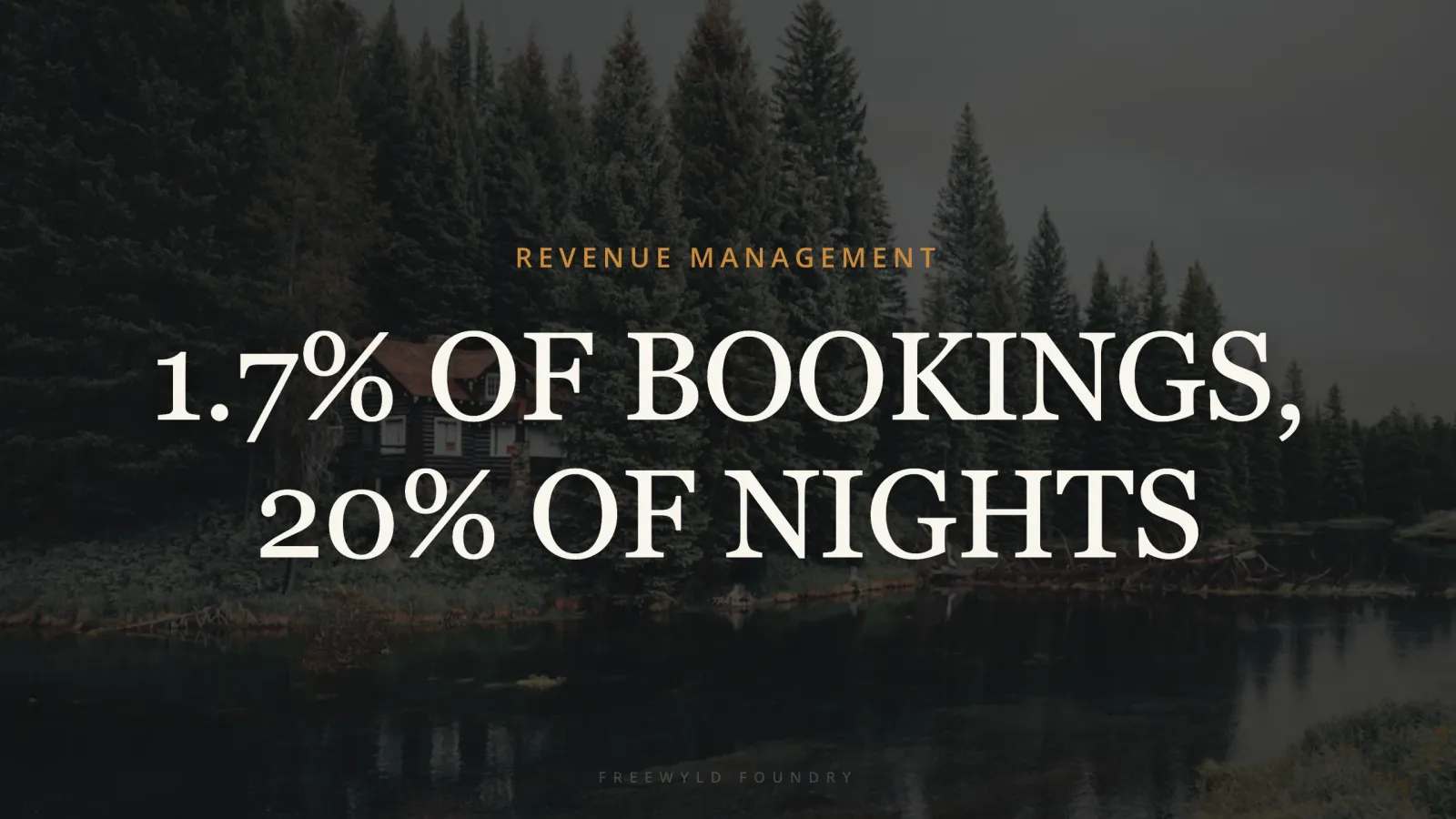
Midterm Rentals for STR Operators: The Data, the Math, and How to Start
Midterm rentals are already happening in most STR portfolios. 39% of short-term rental operators have received at least one 30+ night booking. Here is the data, the occupancy math, and how to be intentional about it without abandoning your short-term rental business.
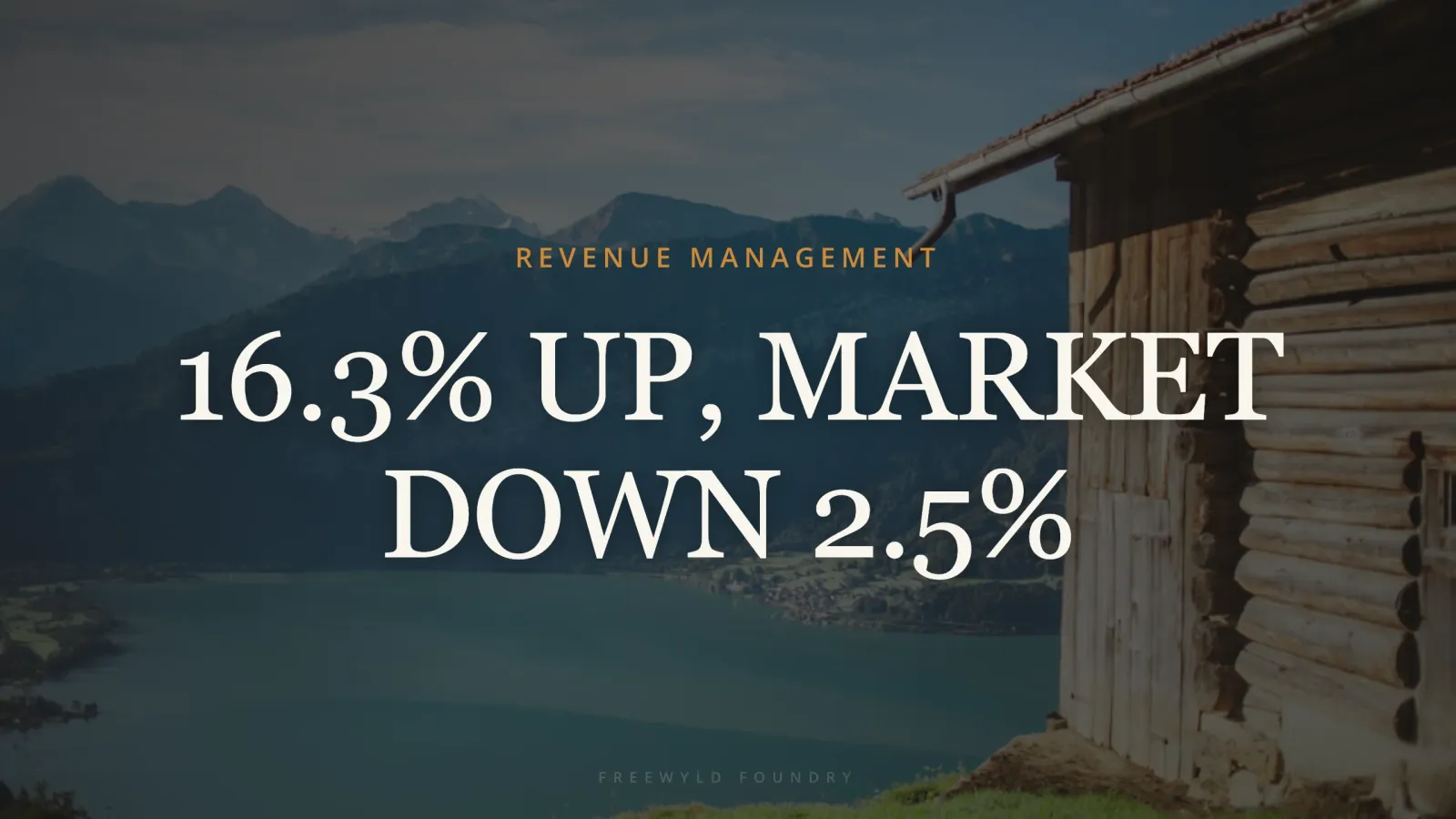
STR Market Update August 2026: 16.3% Growth While the Market Fell 2.5%
August 2026 was the highest-impact month in Freewyld Foundry history. Comparable client listings grew 16.3% year over year while the broader market fell 2.5%. Here is what drove that gap, which markets won and lost, what Airbnb and VRBO just changed, and what every STR operator should be doing right now heading into shoulder season.
How to Increase Airbnb Revenue: 5 Tactics From a Full-Time STR Revenue Manager
Most operators cap their prices, skip amenity audits, and discount when bookings slow down. A professional STR revenue manager does the opposite, and the results show it.