The Real Revenue Opportunity Behind “Small” Holidays

Want to outperform the market? Freewyld Foundry’s Revenue & Pricing Management service is driving an 18% performance lift for $1M+ STR operators, even in down markets. If you’re managing 10+ listings and want a free pricing audit, apply here.
In this episode of Get Paid For Your Pad, Jasper Ribbers breaks down one of the most overlooked revenue levers in short-term rentals: how minimum stay settings quietly determine whether holidays become high-performing periods or missed opportunities. While most operators focus on pricing Thanksgiving and Christmas, Jasper explains why the real upside often sits in smaller, less obvious holidays and how booking rules shape demand far more than nightly rates.
This episode is designed for STR operators and revenue managers who already use pricing tools but want to make smarter decisions around availability, flexibility, and length of stay. Jasper walks through the logic behind holiday demand patterns, explains how drive-to and fly-to markets behave differently, and shares how minimum stay rules can either protect revenue or create unfillable gaps without operators realizing it.
You will hear:
• Why minimum stay settings matter more than price on many holidays
• How “hidden holidays” create demand most operators under plan for
• When three-night minimums increase revenue and when they limit it
• How drive-to markets benefit from flexibility during holiday periods
• Why shorter stays often support higher ADR on high-demand nights
• How booking patterns change around federal and observed holidays
• Which days should carry restrictions and which should remain flexible
• How to adjust minimum stays as holidays approach without panic
We also talk about:
• How to think about holiday strategy months out versus last minute
• Why owner expectations change risk tolerance around peak dates
• How operational constraints like cleaning schedules affect decisions
• Why messy pricing tool setups reduce learning and create mistakes
• Manual overrides versus seasonal profiles in pricing tools
• How to avoid rolling minimum stay rules that restrict demand unnecessarily
• Why simplicity and transparency outperform complex rule stacking
🎯 Mentioned in the Episode:
- Hidden Holidays: How to Maximize Revenue on Long Weekends for Short-Term Rentals
- 5 Revenue Management Mistakes Costing STR Operators Money (And How to Fix Them)
- World Cup 2026 Revenue Playbook
• Minimum stay and availability strategy
• Holiday demand patterns in STRs
• Drive-to vs fly-to market behavior
• PriceLabs and Wheelhouse setup considerations
• Seasonal profiles vs manual overrides
• Owner communication and revenue risk
• Freewyld Foundry Revenue Management
🔥 Favorite Takeaway: “On holidays, revenue is rarely lost on price. It’s usually lost on the rules that decide who is allowed to book.”

World Cup 2026 Revenue Playbook
Your city-by-city pricing strategy guide for the biggest revenue opportunity in STR history. Demand tiers, team analysis, 5 costly mistakes to avoid, and an 8-step action plan.
Download Free GuideContinue Listening

September RM Update: Best Month in Company History, GuestyVal Takeaways, and an Airbnb Story
Jasper covers September 2026 portfolio performance: Freewyld Foundry up 37% year over year with 27% measurable impact above market, the highest in company history. Plus GuestyVal takeaways on AI in revenue management, the Vrbo commission change, and a personal Airbnb story.

The Javier Effect: A Custom PriceLabs Strategy for Unique STR Inventory
Javier Vasquez, a Freewyld Foundry revenue manager and former PriceLabs employee, walks through the custom Portfolio Occupancy-Based Adjustment strategy he built for a glamping dome portfolio with 97-98% occupancy year-round and 212-day booking windows.
Midterm Rentals with Frank Bosie: The Revenue Strategy Already Happening in Your Portfolio
Frank Bosie of Hostfully joins Jasper to break down the data behind midterm rentals, including why 39% of STR operators already have 30+ night bookings, how the occupancy math works, and when the hybrid approach beats a hard minimum-stay strategy.
Jasper Ribbers:
What’s up everybody. Welcome back to Get Paid For Your Pad. It’s the second week of January, which usually means the holidays are behind us and most people are fully back in business. I hope 2026 is off to a strong start for you.
Here at Freewyld Foundry, we’re starting the year with a lot of momentum. We’re now working with over 50 revenue management clients, expanding into new markets, growing the team, and continuing to learn every single week. As always, this podcast is where I share what we’re seeing behind the scenes in real portfolios, across real markets.
Every Monday, I talk about lessons from revenue management, and today I want to focus on something that doesn’t get nearly enough attention: hidden holidays.
When people think about holidays, they usually think about Thanksgiving and Christmas. Most operators already know those dates matter. But throughout the year, there are many other holidays that quietly create spikes in demand and require a different approach, especially when it comes to minimum stay settings.
I’m talking about long weekends and observed holidays. In the US, these are often federal holidays, and while not everyone has the day off, enough people do that demand patterns change. That shift creates opportunity, but only if your rules allow guests to book.
For this episode, I’ll focus on the United States since most of our listeners are based here. That said, the principles apply anywhere. Every country has its own version of hidden holidays, and the thought process is the same.
The key question is always this: what happens when a regular weekend suddenly becomes a long weekend?
In most markets, Friday through Sunday is already the highest demand window. When you add a holiday Monday or Friday, the stay patterns shift. Some guests want to travel Friday through Monday. Others may want shorter stays that still overlap the holiday. That’s where minimum stay decisions become critical.
Let’s walk through some of the major US holidays this year. Coming up first is Martin Luther King Jr. Day in January. Then we have Presidents Day in February, which is typically very strong and often overlaps with Valentine’s Day. After that, Memorial Day, Juneteenth, Independence Day, Labor Day, Columbus Day or Indigenous Peoples Day, Veterans Day, and then of course Thanksgiving and Christmas.
Most operators pay close attention to Thanksgiving, Christmas, July 4th, Memorial Day, and Labor Day. Where I see the biggest gaps in strategy is with the other holidays. Those are the ones that quietly underperform simply because nobody planned for them.
The biggest question I hear is whether you should force a three-night minimum over a holiday weekend. The answer is always, confirming: it depends.
Let’s take Labor Day as an example, since it’s far enough out that most people are planning well in advance. In many markets, the ideal stay is Friday check-in and Monday checkout. From a revenue perspective, that’s attractive because those are high-value nights.
But forcing a three-night minimum comes with risk. If someone books part of the weekend, you might struggle to fill the remaining nights. Whether that’s a problem depends entirely on your market.
One of the most important distinctions is whether you’re in a drive-to market or a fly-to market. In fly-to markets, guests are more likely to consider longer stays. In drive-to markets, especially those within a couple hours of large cities, short stays are very common, even on holidays.
In markets like Idyllwild, where many guests are driving in from nearby cities, we often see strong one-night and two-night demand on holidays. In those cases, forcing a three-night minimum can actually reduce total revenue. Shorter stays often come with higher ADR, and guests are willing to pay more per night because the total trip cost is lower.
A guest might happily pay $400 or $500 for a one-night stay on a holiday Sunday. That same guest may hesitate to spend close to $2,000 for a three-night trip once cleaning fees and other costs are included.
This is why minimum stay rules matter so much. The more restrictive you are, the fewer booking options you offer. More flexibility usually means better visibility in search results and more chances to capture demand.
There is no universal rule that works everywhere. You have to understand who your guests are, where they’re coming from, and how easily you can fill shorter gaps.
Another factor is how far out the holiday is. When you’re many months out, it can make sense to aim for longer stays. As you get closer, flexibility becomes more important. At some point, you want to loosen restrictions to make sure the calendar fills.
This is especially true when managing properties for owners. Owners pay close attention to holidays. If a unit sits empty, or if you have to drop rates sharply at the last minute, that creates friction. The goal is usually to secure a solid booking at a good price with high probability, rather than chasing a perfect outcome and risking a big adjustment later.
If you do decide to use a three-night minimum, the next question is where to apply it. Not every day around a holiday should be treated the same.
Midweek nights before a holiday often benefit from two-night minimums. Wednesday and Thursday can be harder to fill, so allowing flexibility there can actually help overall performance.
Friday and Saturday are usually the most critical nights to protect. If someone books just Friday and Saturday, Sunday can be difficult to fill. That’s why, in many cases, Friday and Saturday are the days where longer minimums make the most sense.
Sunday is different. A Sunday-to-Tuesday booking is often perfectly fine, even on a holiday weekend. There is usually enough demand for Friday through Sunday that allowing a shorter stay starting Sunday doesn’t hurt overall revenue.
As a general guideline, many markets perform well with two-night minimums earlier in the week, three-night minimums on Friday and Saturday, and more flexibility again on Sunday. But this should always be validated using your own booking data and length-of-stay insights from your pricing tool.
Operational constraints also matter. Some teams don’t want to do turnovers on a holiday Monday. In those cases, you might allow checkouts but block new check-ins on that day. That operational decision should directly influence your availability rules.
How you implement all of this in your pricing tool matters just as much as the strategy itself. You can use manual overrides, group-level rules, or unit-level rules. The challenge with manual overrides is that they’re static. They don’t adjust as you get closer to arrival.
Seasonal profiles offer more flexibility. They allow you to define when restrictions should loosen and how gaps should be handled automatically. They also reduce the amount of manual work required year over year.
I’m a big fan of keeping pricing setups clean and simple. Over time, I’ve seen many operators build overly complex rule stacks that are hard to understand and even harder to manage. When pricing setups become messy, transparency drops, learning slows down, and mistakes become more likely.
One thing I generally don’t recommend is pushing minimum stays beyond three nights for holidays. Four-night minimums are usually too restrictive and tend to backfire.
I also see many operators using rolling minimum stay windows, where stays become more restrictive the further out you go. In practice, this often limits demand without delivering better outcomes. A seasonal approach is usually more effective.
Low season should be flexible. High season and key holidays deserve intentional rules, not blanket restrictions.
To wrap this up, I encourage you to review your holiday strategy now. Look at the upcoming holidays in your market. Review your minimum stay settings, your booking patterns, and your operational constraints. Small adjustments here can unlock meaningful revenue.
If you want help reviewing your setup, you can go to freewyldfoundry.com/report. We’ll create a free report, review your portfolio, and give you clear feedback on where we see upside and where you’re already doing well.
Thanks for listening. If you prefer watching instead of listening, we also publish video versions of this podcast on our YouTube channel, Freewyld Foundry. I hope you have a great start to 2026, and I’ll see you next week.
Related Articles
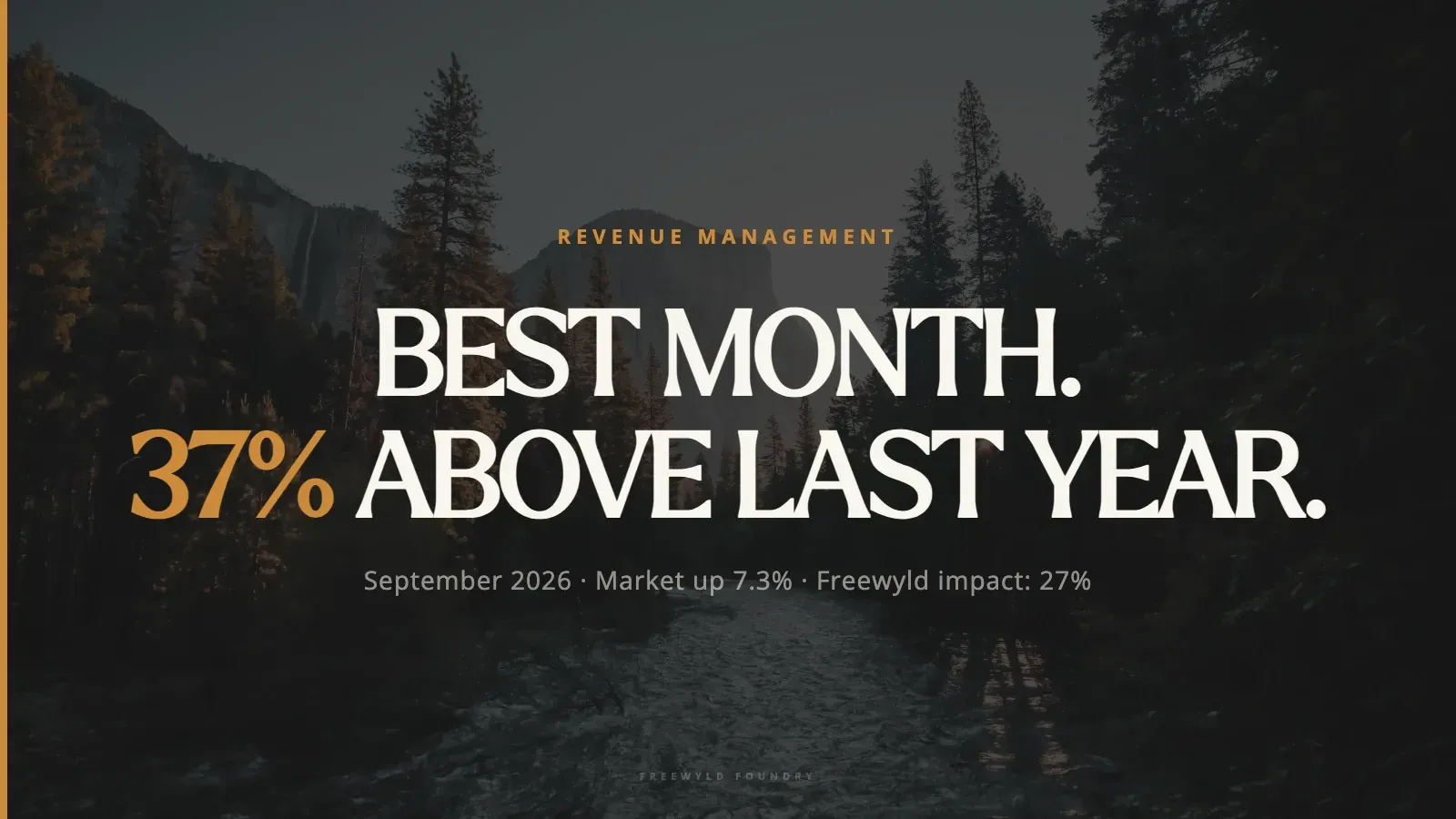
STR Market Update September 2026: Record Month, Vrbo's Commission Shift, and What AI Means for Revenue Management
September 2026 was the best month in Freewyld Foundry's history. Comparable units finished 37% above last September while the broader market grew 7.3%, producing a 27% measurable impact, the highest we have ever recorded. Here is what drove that gap, which markets led and which lagged, what Vrbo just changed about commissions, and what the industry learned about AI in revenue management at GuestyVal in Madrid.
PriceLabs Portfolio Occupancy-Based Adjustment: A Strategy for Unique STR Inventory
When your STR inventory runs at 97% occupancy year-round with a 212-day booking window, standard PriceLabs market factors actively work against you. Here is how to build a custom Portfolio Occupancy-Based Adjustment strategy for destination and unique inventory.
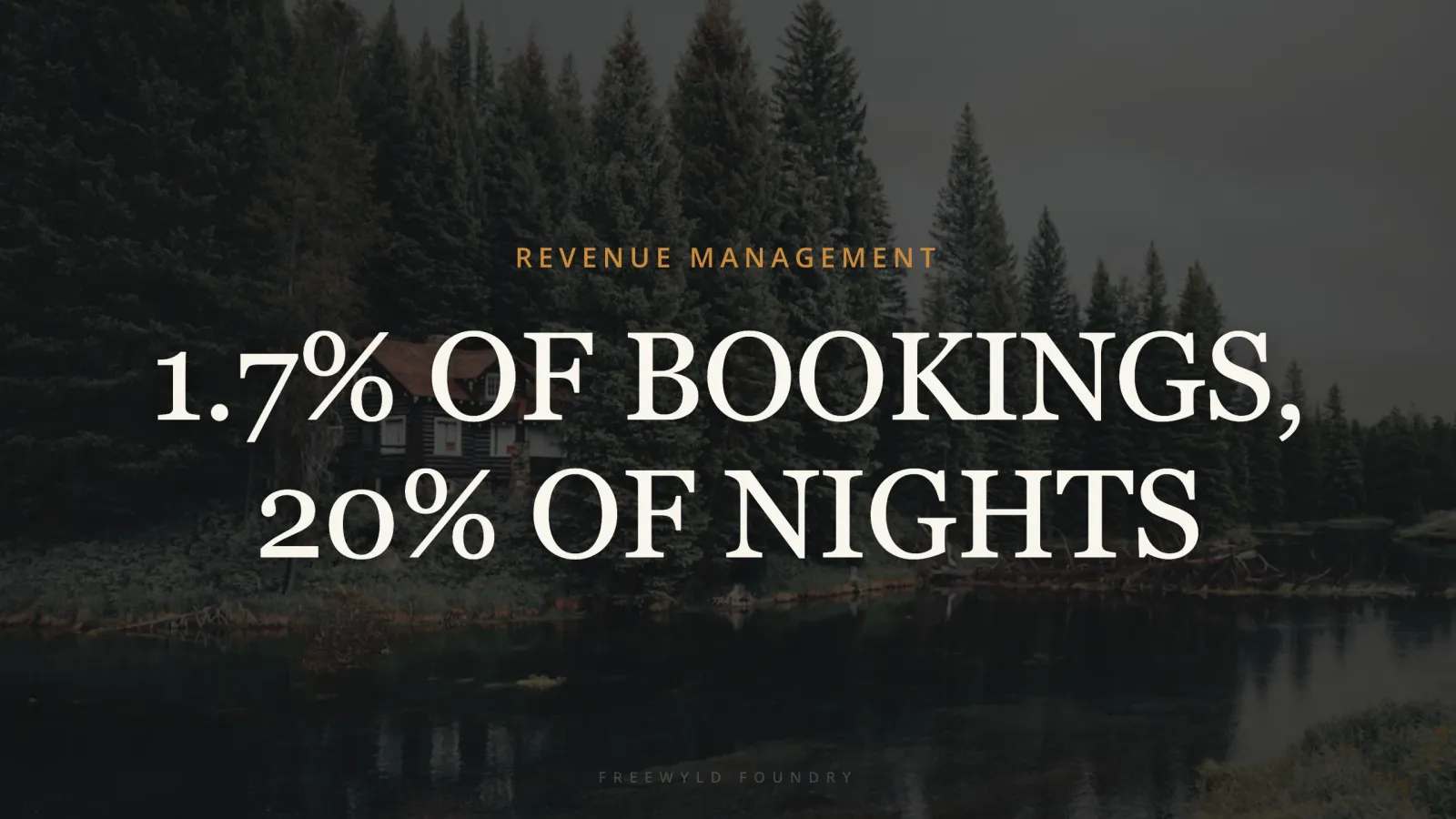
Midterm Rentals for STR Operators: The Data, the Math, and How to Start
Midterm rentals are already happening in most STR portfolios. 39% of short-term rental operators have received at least one 30+ night booking. Here is the data, the occupancy math, and how to be intentional about it without abandoning your short-term rental business.