From Hurricane Loss to 70 Rentals: Scaling STR Business

Want to outperform the market? Freewyld Foundry’s Revenue & Pricing Management service is driving an 18% performance lift for $1M+ STR operators, even in down markets. If you’re managing 10+ listings and want a free pricing audit: apply here.
In this episode of Get Paid For Your Pad, Kaye Putnam (Head of Marketing at Freewyld and Freewyld Foundry) sits down with Joe Prillaman, co-founder of Host Help, to unpack how a sudden hurricane wiped out nearly one-third of his STR portfolio in just two weeks, and why that crisis became the catalyst for scaling a professional short-term rental management company to nearly 70 properties.
Joe shares the real story behind losing properties, facing fixed mortgages and team overhead, and making the hard decision to pivot from self-managing his own portfolio to managing homes for other owners. This conversation dives into the operational, emotional, and strategic realities of scaling an STR management business under pressure, without sacrificing quality, reviews, or long-term vision.
If you are an STR operator or property manager navigating growth, team expansion, operational complexity, or unexpected disruptions, this episode offers practical insight into what actually breaks as portfolios scale, and what systems matter most to rebuild stronger.
You will hear:
• How losing one-third of a portfolio forced a complete business pivot
• Why managing your own STRs is very different from managing for owners
• What Joe learned about scaling during extreme stress and uncertainty
• Why “cute, clean, comfortable” still drives five-star reviews at scale
• How guest experience systems prevent small issues from becoming disasters
• Why onboarding quality determines long-term operational success
• How pricing becomes the highest leverage activity once operations stabilize
• Why ego must be removed as teams grow and roles evolve
We also talk about:
• The operational difference between 30 and 70 short-term rentals
• Why hurricanes and floods exposed hidden business risks
• How to build disaster preparedness into STR operations
• Why systems break every time you scale, and why that’s normal
• How Joe structured his leadership team to support growth
• Why marketing too early can damage service quality
• How AI is being used to reduce workload without replacing people
• What it takes to remain profitable in seasonal beach markets
• Why most STR managers underestimate the staffing required to scale
🎯 Mentioned in the Episode:
• Host Help property management
• STR onboarding checklists and SOPs
• Guest experience and five-star review systems
• Pricing and revenue management workflows
• AI tools for guest messaging and operations
• Hurricane and flood preparedness for STRs
• Freewyld Foundry Revenue & Pricing Management
🔥 Favorite Takeaway: “Sometimes going slow is actually fast. Quality done upfront saves years of problems later.”
The STR Operator's Scaling Checklist
A tactical checklist for scaling your short-term rental business from 15 to 100+ listings. Covers team, systems, revenue management, guest experience, owner relations, and financial controls.
Download Free GuideContinue Listening

Castle on Airbnb? Building a Profitable STR Business in Ohio
In this episode of Get Paid For Your Pad, Eric Moeller sits down with Dave Stokley and Mark from Host Pros, a property management company that scaled from 2 Airbnb units in 2017 to 77 listings across Ohio while maintaining a 4.8+ guest rating and proving that Airbnb is far from dead. If you are an STR operator who wants to build a scalable business through unreasonable hospitality, understand how to dominate a single market instead of chasing hot destinations, and learn why small experiential details drive premium rates, this episode is a must listen. Dave and Mark share their 10-year partnership journey, the wizard-themed castle that changed their business, and why focus beats expansion every time. We don't want to have competition. Get your free personalized revenue report at FreewyldFoundry.com/report
Scaling to 100+ STR Units Without Compromising Quality
In this episode of Get Paid For Your Pad, Kaye Putnam (Head of Marketing at Freewyld and Freewyld Foundry) sits down with Troy Daily, CEO of Elevated Stays, to unpack what it actually takes to scale a short-term rental portfolio past 100 units without losing quality, control, or brand integrity. Operating in a highly seasonal market like Traverse City, Troy shares the operational decisions, leadership shifts, and system investments behind his growth from a small portfolio to managing more than 100 STR units. If you are an STR operator scaling quickly or planning to grow beyond 20, 50, or even 100 units, this episode is essential. Troy walks through the real challenges of growth: hiring the right people, building operational structure, maintaining quality standards, aligning with the right owners, and knowing when to say no to properties that don’t fit the brand. This conversation goes far beyond surface-level growth tactics and into what sustainable scale actually looks like. Get your free, personalized revenue report at FreewyldFoundry.com/report.
1,000+ 5-Star Airbnb Reviews: What It Took
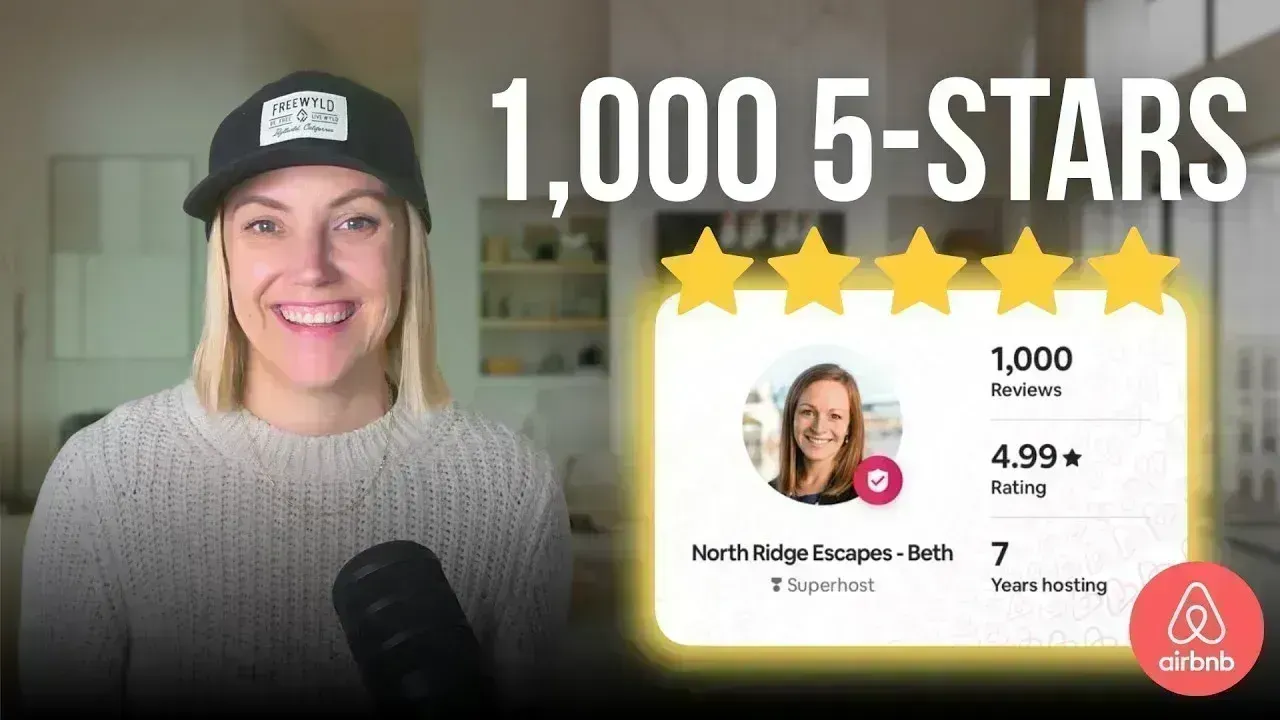
In this episode of Get Paid For Your Pad, Kaye Putnam (Head of Marketing at Freewyld and Freewyld Foundry) sits down with Beth Palmer, co-owner of Northridge Escapes, a portfolio that holds a 4.99 average rating across three different markets and more than 1,000 five-star reviews. If you are an STR operator who wants to raise guest satisfaction, improve review scores, and understand the mindset that creates exceptional experiences, this episode is a must listen. Beth shares the three-part formula behind her results: communication, quality, and amenities. She explains how small decisions executed consistently create a five-star engine that guests remember long after checkout. They review based on how they feel. Get your free personalized revenue report at FreewyldFoundry.com/report.
Kaye Putnam: Welcome back to the Get Paid For Your Pad podcast. I’m Kaye,
and today I’m excited to be interviewing Joe Prillaman from Host Help, one of
our Revenue and Pricing Management clients at Freewyld Foundry. Joe operates
primarily in the Wilmington, North Carolina area, and today we’re going to
talk about his growth journey, what he’s learned along the way, and how his
business evolved through some major challenges. Joe, welcome to the podcast.
Joe Prillaman: Thanks for having me, Kaye. I’m honored to be here.
Kaye Putnam: You have a partner in the business. You and Grant run Host Help together. When did you two get started?
Joe Prillaman: Grant is actually one of my best friends from college. We’ve been working together for a very long time, even before getting into short-term rentals. Before that, we sold industrial equipment together, which was quite a journey. We covered 13 states and drove everywhere. We would spend three to four thousand miles at a time in the car together.
We realized after all of that time that we didn’t hate each other, so we figured we might as well become partners and keep hanging out.
**Kaye Putnam:**That’s honestly one of the best ways to stress-test a partnership before committing.
**Joe Prillaman:**Exactly. As far as what we each bring to the table, I’m the visionary. I’m the chaotic, idea-driven person. I love starting new ventures, networking, sales, and connecting with people. Grant is the integrator. He takes all of my chaos and breaks it into individual steps that actually get accomplished, keeps people accountable, and keeps everything moving forward. It’s been the perfect balance for us as we’ve grown and scaled.
**Kaye Putnam:**You’re at around 68 properties now. What has that growth trajectory looked like?
**Joe Prillaman:**Originally, we were only managing properties that I personally owned. We had built the company around about 30 units, mostly in North Carolina. That included Carolina Beach, Kure Beach, and Banner Elk. We also had a couple of midterm rentals in Winston-Salem and Chapel Hill, but we ended up selling those.
Then Hurricane Helene hit Banner Elk. Two weeks before that, we had some major flooding in Carolina Beach. Within a two-week span, I lost about a third of my portfolio because of those events. That was the moment we went headfirst into property management for other owners.
That was about a year ago. We went from around 30 units, down to closer to 20 after the losses, and now we’re close to 70 properties. We’ve signed a few more recently, and that pivot completely changed the trajectory of the business.
**Kaye Putnam:**That’s an incredible example of turning a catastrophe into an opportunity. What was your mindset in that moment when everything happened?
**Joe Prillaman:**It was awful. At the same time, we had always planned on building a management company eventually. The disaster just poured fuel on the fire. We still had mortgages. We still had a team. We had no option but to figure it out.
Grant and I spent a lot of time in whiteboard sessions asking ourselves how we could add as much value as possible to as many people as possible. Managing your own portfolio is very different from managing for homeowners. We went from being great self-managers, with strong reviews and systems, to helping homeowners get their properties up to that same standard while being accountable to them.
There was a lot of stress, anxiety, and pain during that time. But a year later, I can honestly say we’re in a better position than I ever imagined. That crisis launched us forward by what feels like ten years compared to where we would have been otherwise.
**Kaye Putnam:**Once you made that decision, how did you start attracting and onboarding management clients?
**Joe Prillaman:**I had already built a reputation in Wilmington as the short-term rental guy. I had started a meetup group, posted on BiggerPockets for years, and worked as a high-producing real estate agent focused on short-term rentals. I had a large network of people in the industry.
I literally sat down with a pen and paper and called everyone I knew. For years, I had told people I wouldn’t manage their properties, but I’d teach them everything I knew. That part didn’t change. The only difference was that instead of saying no, I finally said, “If you want us to do it for you, we can.”
There’s no magic behind what we do. It’s just good work, done consistently.
**Kaye Putnam:**What does your playbook look like? What really drives success?
**Joe Prillaman:**I always say it’s the three C’s: cute, clean, and comfortable. It’s about fighting for five-star reviews and bending over backwards for guests. We built our standards early on Airbnb, where you either perform at a very high level or you disappear.
Fighting for five-star reviews means setting expectations properly, having great photos, being responsive, and building systems for when things inevitably go wrong. Door locks fail. Internet goes down. Guests don’t know how to use things. We prepare for all of it.
For example, every property has multiple backup lockboxes and keys. We build redundancy into everything so guests are never stuck. It’s about setting the property up for success and putting yourself in positions to get lucky.
**Kaye Putnam:**What are the biggest challenges when it comes to getting other people’s properties up to your standards?
**Joe Prillaman:**It really comes down to onboarding. Quality is free in the long run. The more work you do upfront, the easier everything becomes later.
We didn’t have that luxury at first. We were onboarding properties quickly to save the business. That taught us, through trial and error, what actually needed to be standardized. Now we use massive checklists built from years of experience.
Every property is different. Some owners are completely dialed in and just want to hand over the reins. Others need full restaging, professional photos, systems, and equipment just to be operational. There’s no one-size-fits-all approach.
**Kaye Putnam:**Let’s talk about pricing. What has it been like working with Miles on revenue management?
**Joe Prillaman:**Miles is a monster, in the best way. Pricing was my bread and butter. Letting someone else take that over was humbling, but he’s simply better at it.
At 30 properties, pricing is manageable. At 70 or more, you need someone full-time who knows your portfolio better than you do. The biggest win for me has been the freedom. I can focus on serving homeowners and guests, knowing pricing is being handled at an elite level.
**Kaye Putnam:**What does your team look like today?
**Joe Prillaman:**We have about ten team members. Grant and I lead as visionary and integrator. We have directors for operations, communications, cleaning, maintenance, and technology. We also have quality control specialists and someone focused specifically on AI and automation.
With our current structure, we can comfortably manage around 150 properties. When we hit that point, systems will break again, and that’s normal. Then we’ll go back to the whiteboard and rebuild.
**Kaye Putnam:**What does your day-to-day look like now as an owner?
**Joe Prillaman:**I’m no longer the person in the field fixing things or winterizing properties. My role is oversight, leadership, marketing, and sales. We spent the last year building the machine before turning on marketing. Now we’re confident enough in our systems to start putting our name out there.
**Kaye Putnam:**How do you prepare for weather-related risks, especially in coastal markets?
**Joe Prillaman:**You don’t really appreciate fundamentals until life hits you with a shovel. We built detailed policies for hurricanes, floods, and winterization. We made sure insurance coverage is aligned across owners, guests, and our management company.
We also require guest insurance policies. You hope to never use them, but preparedness matters.
**Kaye Putnam:**How do you stay profitable in a beach market?
**Joe Prillaman:**You need scale. Around 65 to 70 properties is where you can finally afford the team you actually need. Before that, founders are doing five or six jobs at once. After that, the business becomes sustainable.
**Kaye Putnam:**How do you balance work and family?
**Joe Prillaman:**It’s possible, but it’s not easy. My wife and I committed to the grind early. We house-hacked, cleaned properties ourselves, and did the work. Now she gets to stay home with our kids, and I get to build something meaningful.
**Kaye Putnam:**What advice would you give yourself two years ago?
**Joe Prillaman:**Build stronger habits and prepare for stress. It’s going to be hard, but it’s worth it.
**Kaye Putnam:**What advice do you give other property managers most often?
**Joe Prillaman:**Delegate sooner. Trust people. Build systems. Remove ego. That’s how real scale happens.
**Kaye Putnam:**How are you using AI in the business?
**Joe Prillaman:**AI handles about 55 to 60 percent of our guest messaging through HostBuddy. It reduces workload but doesn’t replace people. It amplifies the team so they can focus on higher-value work.
**Kaye Putnam:**Joe, this was an incredible conversation. Thank you so much for sharing your journey.
**Joe Prillaman:**Thank you so much for having me.
Related Articles
Midterm Rentals for STR Operators: The Data, the Math, and How to Start
Midterm rentals are already happening in most STR portfolios. 39% of short-term rental operators have received at least one 30+ night booking. Here is the data, the occupancy math, and how to be intentional about it without abandoning your short-term rental business.
STR Market Update August 2026: 16.3% Growth While the Market Fell 2.5%
August 2026 was the highest-impact month in Freewyld Foundry history. Comparable client listings grew 16.3% year over year while the broader market fell 2.5%. Here is what drove that gap, which markets won and lost, what Airbnb and VRBO just changed, and what every STR operator should be doing right now heading into shoulder season.
How to Increase Airbnb Revenue: 5 Tactics From a Full-Time STR Revenue Manager
Most operators cap their prices, skip amenity audits, and discount when bookings slow down. A professional STR revenue manager does the opposite, and the results show it.