Stop Guessing Prices: Build a Real Revenue Management Routine

Want to outperform the market? Freewyld Foundry’s Revenue & Pricing Management service is driving an 18% performance lift for $1M+ STR operators, even in down markets. If you’re managing 10+ listings and want a free pricing audit: apply here.
In this episode of Get Paid For Your Pad, Jasper Ribbers breaks down one of the most overlooked drivers of STR revenue performance: revenue management routine. Instead of chasing tactics or obsessing over tools, Jasper walks through what professional operators actually do on a daily and weekly basis to stay ahead of their market.
If you are an STR operator managing your own pricing, or responsible for revenue across a portfolio, this episode is essential. Jasper explains why most hosts underperform not because of bad tools, but because they lack a consistent process. He outlines a practical, repeatable routine for reviewing bookings, spotting demand signals, adjusting last-minute inventory, and using pacing data to make smarter pricing decisions over time.
You will hear:
• Why revenue management must be a scheduled daily habit, not a reactive task
• How reviewing every booking reveals pricing signals you would otherwise miss
• Why early bookings can indicate underpricing or upcoming market events
• How to spot mistakes in minimum stays, pricing rules, and PMS settings
• What to look for in your last seven days of inventory
• How small daily price changes improve visibility and booking momentum
• Why weekends require closer attention than weekdays in many markets
• How booking behavior teaches you more than market data alone
We also talk about:
• How pacing and Market Penetration Index (MPI) guide weekly pricing decisions
• Why changing prices too aggressively can create a revenue yo-yo effect
• How to diagnose underperforming listings beyond just lowering price
• When to adjust base price versus date-specific pricing
• Why peak demand dates require higher minimum prices, not just higher rates
• How portfolio-level pacing reveals seasonal pricing problems
• Why experience and repetition matter more than any single pricing rule
🎯 Mentioned in the Episode:
- 5 Revenue Management Mistakes Costing STR Operators Money (And How to Fix Them)
- 5 Revenue Management Strategies to Crush Your Short-Term Rental Revenue in 2026
- World Cup 2026 Revenue Playbook
• Market Penetration Index (MPI)
• Booking windows and pacing
• PriceLabs booking reports
• Airbnb, Booking.com, PMS tools
• Last-minute pricing adjustments
• Peak demand dates and minimum pricing
• Freewyld Foundry Revenue & Pricing Management
🔥 Favorite Takeaway: “Revenue management isn’t about finding the perfect price. It’s about building a daily and weekly process that helps you make better decisions over time.”

World Cup 2026 Revenue Playbook
Your city-by-city pricing strategy guide for the biggest revenue opportunity in STR history. Demand tiers, team analysis, 5 costly mistakes to avoid, and an 8-step action plan.
Download Free GuideContinue Listening

September RM Update: Best Month in Company History, GuestyVal Takeaways, and an Airbnb Story
Jasper covers September 2026 portfolio performance: Freewyld Foundry up 37% year over year with 27% measurable impact above market, the highest in company history. Plus GuestyVal takeaways on AI in revenue management, the Vrbo commission change, and a personal Airbnb story.

The Javier Effect: A Custom PriceLabs Strategy for Unique STR Inventory
Javier Vasquez, a Freewyld Foundry revenue manager and former PriceLabs employee, walks through the custom Portfolio Occupancy-Based Adjustment strategy he built for a glamping dome portfolio with 97-98% occupancy year-round and 212-day booking windows.
Midterm Rentals with Frank Bosie: The Revenue Strategy Already Happening in Your Portfolio
Frank Bosie of Hostfully joins Jasper to break down the data behind midterm rentals, including why 39% of STR operators already have 30+ night bookings, how the occupancy math works, and when the hybrid approach beats a hard minimum-stay strategy.
Jasper Ribbers:
What’s up, welcome back to Get Paid For Your Pad. Today we’re diving into a RevUp episode, and we’re talking about revenue management cadences. You can call them routines, rhythms, or processes. What matters is what you should be doing daily, weekly, and monthly to manage your revenue properly.
This episode is for anyone managing revenue, whether you’re a dedicated revenue manager or you’re handling pricing for your own portfolio.
I want to start with a bit of context. Through our Freewyld Foundry Revenue & Pricing Management service, we review a lot of portfolios. We create free revenue reports and speak directly with operators about how they currently manage pricing. Because of that, we have a very clear view of what most hosts are actually doing.
What we consistently see is that most operators are not spending enough time on revenue management. The main reason is simple. They don’t have a process. They don’t know exactly what to do, when to do it, or how to structure their time. There’s no rhythm. There’s no calendar block. And without that, revenue management always gets pushed aside.
Today, I want to give you a very simple process you can follow to establish that cadence in your business.
Before we get into tactics, the first step is making time. Revenue management is not something you do only when everything else is quiet. In this industry, there is always something coming up. If you don’t intentionally block time in your calendar, it won’t happen.
For an average portfolio, somewhere between 20 and 50 listings, the absolute minimum is about 15 to 30 minutes per day. If you have a larger portfolio, that number should be closer to 30 to 60 minutes. Even for smaller portfolios, 15 minutes a day is the minimum if you want to have any kind of control.
Open your calendar and block that time. Label it clearly as revenue management. If it’s not scheduled, it won’t become a habit.
Now the next question is what you actually do during that time.
The first thing you want to do is open everything you need. Your pricing tool, Airbnb, Booking.com, your PMS. You want all of it open before you start, because reviewing bookings often leads you to check settings, rules, or pricing configurations.
Once everything is open, you start by reviewing bookings that came in since the last time you checked.
Every single booking matters. Revenue management is full of uncertainty. You never know the perfect price. Because of that, booking data is one of the most valuable sources of information you have. A booking represents a real person who chose your listing over all others in the market. That decision tells you something about your pricing.
Not all bookings are equally informative. For example, if you see several two-night weekend bookings coming in close to arrival, that’s expected. There’s usually less to learn from those.
But when you see bookings far in advance, early in the booking window, those are much more interesting. An early booking can indicate that you are priced too competitively too far out, or it can signal upcoming demand.
I recently saw bookings coming in for early September, which was unusual. It turned out a music festival had just been announced. There is no perfect system to track every event in your market. One of the best indicators that something is happening is an unexpected early booking.
When that happens, you should investigate. Use Google. Use ChatGPT. Look up what’s happening on those dates. If nothing obvious is going on, then you look deeper at the booking itself. Is it a repeat guest? Is it a longer stay? Over time, this daily review builds real intuition about your market.
Bookings can also reveal configuration mistakes. For example, if you receive a one-night booking two months out, and you don’t want those, that means something is wrong in your setup. Pricing tools, PMS settings, and OTA rules interact in complex ways. It’s easy to accidentally allow bookings you didn’t intend to allow.
If you don’t catch those bookings early, entire peak weekends can fill with suboptimal stays before you even realize there’s an issue.
That’s why reviewing every booking, every day, is so important.
The time this takes will vary. Some days it’s five minutes. Other days it’s thirty. It depends on how many bookings you have and how much information they contain.
The second daily check is looking at booking concentration. If you receive many bookings for a single unit in a short period of time, that’s a strong signal. Often, it means you’re underpriced. In some cases, it could also indicate a pricing mistake.
Bookings will always show you when something is off.
Next, you look at last-minute inventory. Review the next seven days. Are there gaps? Are your prices already at minimums? Do you need to make small temporary adjustments to improve visibility?
Weekends deserve special attention. In many markets, weekdays are hard to book, but weekends still carry opportunity. If it’s early in the week and your weekend is still empty, small price adjustments can help trigger visibility on OTAs.
Your pricing tool already applies last-minute discounts, but tools don’t understand nuance. Some weekends are weaker than others. By reviewing this daily, you learn when price changes actually move the needle and when they don’t.
Over time, this builds experience. There is no shortcut for this. You cannot replace daily observation with dashboards alone.
At a minimum, these two daily tasks matter most: reviewing bookings and checking last-minute inventory.
On a weekly basis, pacing becomes the priority.
The most important KPI to review is Market Penetration Index, or MPI. MPI compares your occupancy to the occupancy of comparable listings in your market.
If your occupancy is 30 percent and the market is at 15 percent, your MPI is 200 percent. That means you’re pacing far ahead.
In low season, that can be acceptable. In high season, it usually means you’re underpriced.
You should review MPI for every unit over your relevant booking window. That could be 30, 60, or 90 days, depending on your market and how far out guests typically book.
You want to choose an MPI range that reflects real demand, without distortion from owner blocks or unavailable dates.
When you review pacing, the goal isn’t to immediately lower prices if a unit is behind. Pricing is not always the problem. It could be reviews, listing content, distribution, or even outdated information in the description.
I once found a unit underperforming because the description still mentioned nearby construction that had already finished. That single line was killing demand.
When a unit is pacing ahead, the reason is almost always pricing. The question then becomes whether that’s intentional.
If you decide to adjust prices, make small changes. Five to ten percent is usually enough. Give it time to see the effect. Overcorrecting creates a yo-yo effect where calendars fill too quickly and then stall.
Once a week is the right cadence for pacing adjustments. Daily changes at that level create noise.
On a portfolio level, you should also review pacing. Look at how the entire portfolio is pacing across upcoming months. You may be ahead in one period and behind in another. That helps guide broader strategy without blindly changing every unit.
Peak demand dates deserve special attention. Events, holidays, graduations, and seasonal peaks require higher minimum prices, not just higher rates. If a cancellation happens close to arrival and your minimum price is too low, last-minute discounts can destroy revenue.
Minimum prices on peak dates should be significantly higher than normal. This protects you from late cancellations and preserves upside.
If you follow this daily and weekly process consistently, you will learn faster than any course or tool can teach you. Over time, this experience compounds into better decisions and higher revenue.
Block the time. Follow the routine. Let the data teach you.
That’s it for today. If you’re looking for help with revenue management, we offer free revenue reports at freewyldfoundry.com. We’ll review your portfolio, walk through your current process, and show you where improvements are possible.
Thanks for listening, and we’ll see you next time.
Related Articles
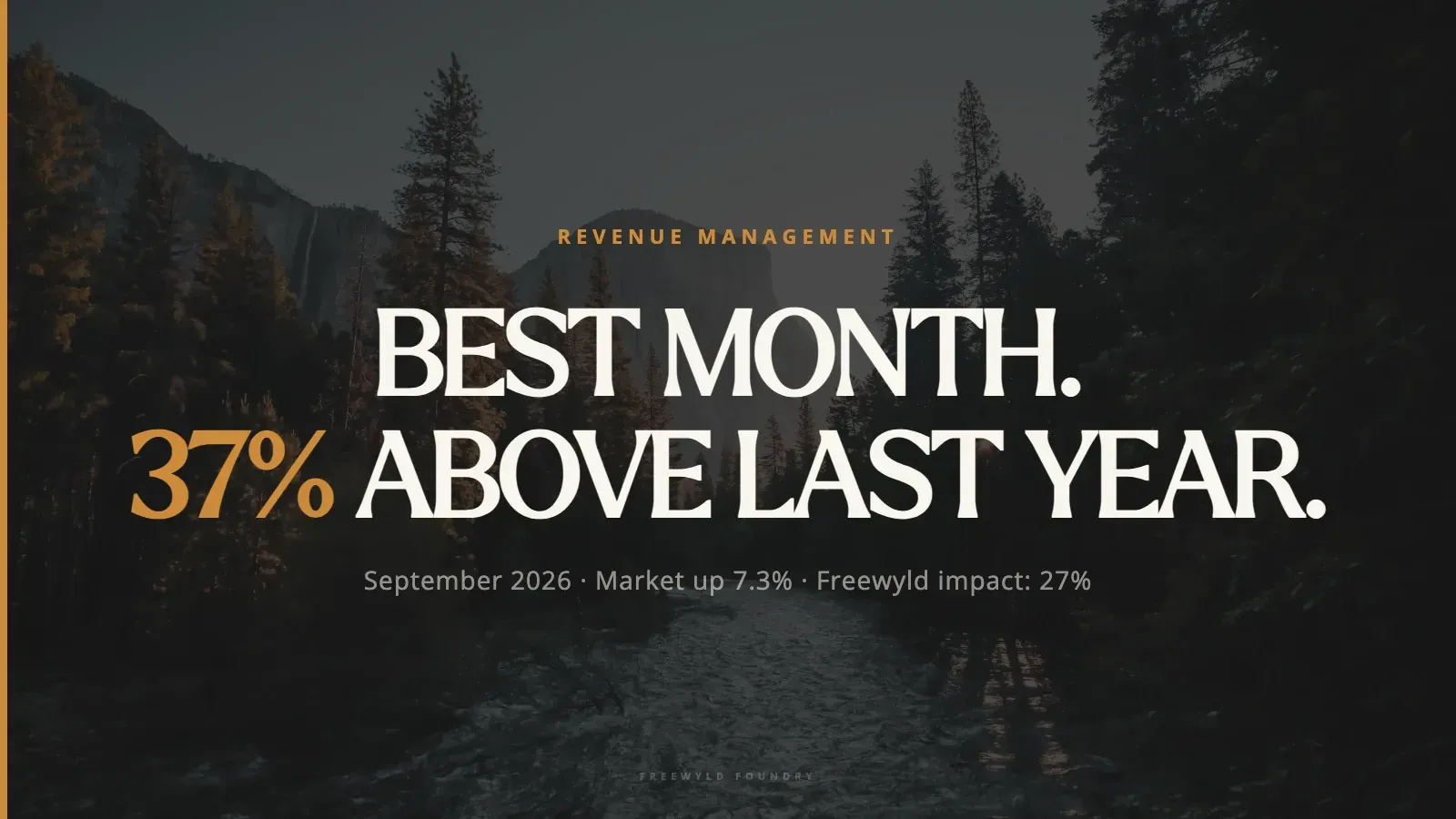
STR Market Update September 2026: Record Month, Vrbo's Commission Shift, and What AI Means for Revenue Management
September 2026 was the best month in Freewyld Foundry's history. Comparable units finished 37% above last September while the broader market grew 7.3%, producing a 27% measurable impact, the highest we have ever recorded. Here is what drove that gap, which markets led and which lagged, what Vrbo just changed about commissions, and what the industry learned about AI in revenue management at GuestyVal in Madrid.
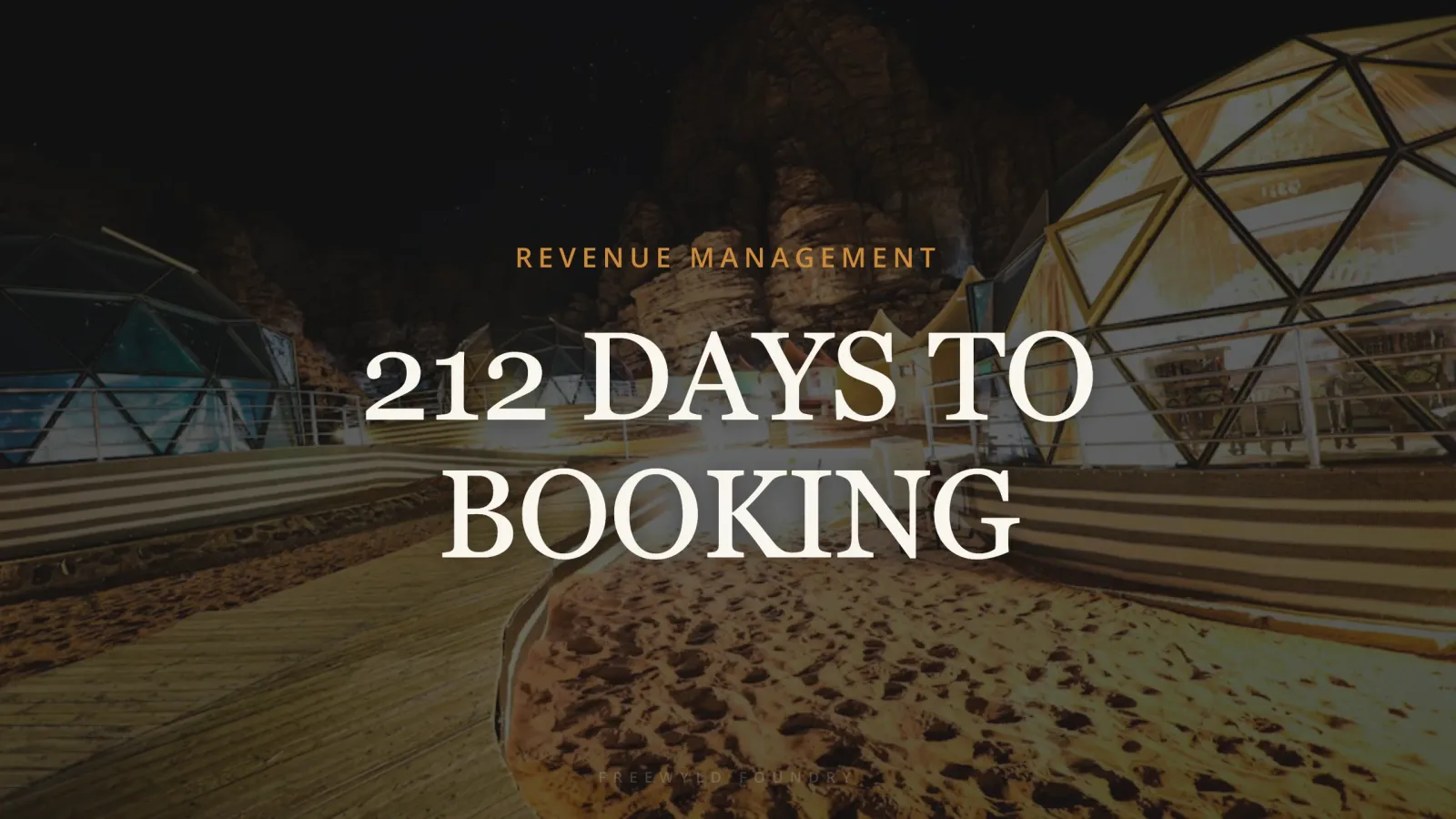
PriceLabs Portfolio Occupancy-Based Adjustment: A Strategy for Unique STR Inventory
When your STR inventory runs at 97% occupancy year-round with a 212-day booking window, standard PriceLabs market factors actively work against you. Here is how to build a custom Portfolio Occupancy-Based Adjustment strategy for destination and unique inventory.

Midterm Rentals for STR Operators: The Data, the Math, and How to Start
Midterm rentals are already happening in most STR portfolios. 39% of short-term rental operators have received at least one 30+ night booking. Here is the data, the occupancy math, and how to be intentional about it without abandoning your short-term rental business.