How to Make Your STR Pet-Friendly (Without the Risk) with John Bradford


Most vacation rental hosts are making one of two costly mistakes with pets. Either they ban all animals (losing bookings to competitors), or they accept every “emotional support animal” claim without verification (waiving pet fees when they shouldn’t).
The reality? 60% of ESA claims don’t meet federal standards. That’s pet revenue you’re leaving on the table.
John Bradford built Pet Screening into a nine-year-old company with 200 employees managing pet policies for one out of every seven rentals in America. His platform helps hosts navigate the confusing world of service animals and emotional support animals while capturing legitimate pet revenue. The solution isn’t banning pets. It’s having the right verification process.
You’ll learn:
- Why 60% of emotional support animal claims are fraudulent and how to verify them legally
- The two questions you can ask when someone claims a service animal (and how to challenge the answers)
- How post-reservation pet screening captures revenue without slowing down bookings
- Why visiting pets create liability even when your guest doesn’t have animals
- The difference between ADA service animal requirements and Fair Housing ESA rules
We also talk about:
- How Pet Screening’s human review team handles millions of verifications per year
- Why hosts using verification tools become more pet-friendly (not less)
- The legal differences between service animals, emotional support animals, and regular pets
- How to protect yourself from service animal fraud without risking discrimination claims
- Why there are more pets than children in American households and what that means for your rental
Mentioned in the Episode:
- Free Revenue Report
- Pet Screening: petscreening.com
Subscribe for new episodes every Monday on YouTube, Spotify, and Apple Podcasts.
Continue Listening

AI & Hospitality Risks to Pay Attention To
Ela Mezhiborsky shares how a Christmas Eve police raid on her STR property revealed a four-month fraud pattern and $20,000 in losses. Now, as AI makes fraud tools accessible to amateur criminals, she explains why traditional gut-feeling screening has become dangerous and which objective data points still protect operators.

AI Gives STR Hosts Unfair Advantage Over Competition
The future of Airbnb is AI-powered. Learn how to integrate artificial intelligence into your operations to move faster, make smarter decisions, and scale efficiently.
What 4.9-Rated Properties Do Differently (Based on Real Guest Reviews)
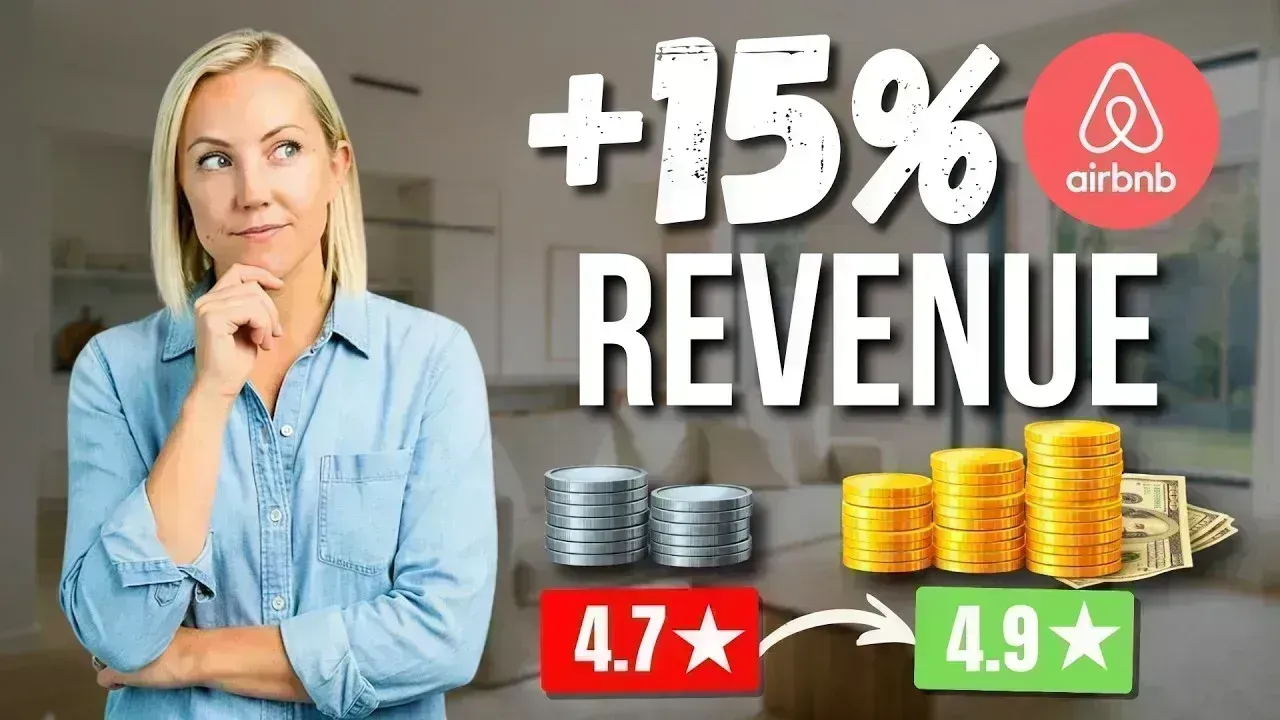
In this episode of Get Paid For Your Pad, Kaye Putnam (Head of Marketing at Freewyld and Freewyld Foundry) sits down with Eric Moeller, CEO of Freewyld and Freewyld Foundry, to break down what separates 4.9-star portfolios from the rest of the market. After Brian Chesky announced at the Airbnb Host Summit that the platform is moving toward incentivizing high-rated professional hosts and devaluing operators below 4.9, the stakes have never been higher. If you are an STR operator who wants to scale without sacrificing guest experience, earn higher ratings across a large portfolio, and understand exactly what drives five-star reviews at scale, this episode is essential. Kaye analyzed hundreds of 4.9-rated Airbnb listings to identify the four core attributes guests consistently call out after their stay. Eric shares real examples from Freewyld, their RPM clients managing hundreds of properties at 4.97, and the systems that make unreasonable hospitality scalable.
Discovery Traffic vs. Search Traffic on Airbnb
Jasper: What's up, everybody? Welcome back to Get Paid For Your Pad. Today, we're doing a special episode. We're not going to talk about revenue management. I invited Mr. John Bradford on the podcast here. He's the founder of Pet Screening. And he's essentially helping the industry be more pet-friendly, if I can say it that way. So, John, welcome to the show.
John: Hey, Jasper. Thanks so much for having me. I'm excited to be here. And congrats on everything you've done. I did my homework on you. So, congratulations. I love your entrepreneurial spirit, man.
Jasper: Yeah, I appreciate that. Yeah, the podcast has been running for a while now. I think it's been 12 years or so.
John: Wow. It's been around. Amazing.
Jasper: But yeah, I'm excited to learn a little bit more. As I mentioned to you, as we were chatting before we started recording, I have a dog myself. And it's always challenging to travel with a dog, especially if you travel internationally with all the paperwork. But then even domestically, sometimes I forget to turn on that filter on either Airbnb or booking.com. And then I think this year I already booked two hotels where we showed up and then they were like, oh, we're not pet friendly. And I was like, oh, damn, I forgot to turn on the filter again. And so, yeah, anyway, it's definitely a personal challenge for myself traveling with a dog. But yeah, why don't you give us a quick background context on what pet screening is and how you help?
What Pet Screening Does
John: Yeah. So, I mean, pet screening is a platform that hosts and property managers use to just make sure that their policies relating to pets are understood by their guests. And of course, if you have a pet and you're a guest and you want to stay at a particular property, we're making sure that that guest fully understands what are the rules before they ever get there.
We want the owner of the property, the host, the property management company to make sure that they have very important information. They should have like a picture of the pet, the name of the pet, the size of the pet, the sex of the pet. Is the pet vaccinated, for example?
And so we're really just a software platform. We call it pet policy management. And one of the big things that we do, Jasper, is there are a lot of Americans that have disabilities and some of them have service animals, but there's a lot of bad actors that are trying to take advantage of that. And they will slap a vest on their dog they bought from Amazon and try to pass their dog off as an emotional support animal or a service animal.
And our platform, we understand the law, we understand the regulations really well. And we're the ones that make sure that they actually meet the ADA standard or the Fair Housing Act standard if that applies. Because sometimes in vacation housing, it can apply, Fair Housing, depending on the length of stay.
But a lot of hosts don't know that. They don't want to deal with it. And we're the platform that helps make that happen.
Understanding Service Animals and ESAs
Jasper: Can you explain a little bit what those policies really are? The Fair Housing and those sort of things that you mentioned?
John: Yeah. So, I mean, a service animal is a trained animal, typically dog, maybe a miniature horse. I'm not talking about a pony, but I'm talking about a miniature horse, very, very small horse, but they're very strong for their size. And people who have disabilities, mobility issues may need a small miniature horse versus a dog because they're just stronger for the size.
But all that said, there is a framework of review processes that individual can go through to determine if in fact that service animal meets the standard. So is this, does this person have a disability? Is this dog or animal trained to do a task? And then what is the task?
And someone has to actually review that and make sure that the task meets the standard. And there's really no checklist. You can't even really go to AI and say, well, what are the infinite number of tasks that someone would have to meet? There is no what I'd call finite list, but you have to know how to take the information and apply the law.
And so, you know, we've been doing this for nine years. I used to be a legislator. I was in the House of Representatives, Jasper, for almost a decade in my state. And these are federal laws. So states have to follow federal law. So even though I was a state legislator, I had to understand federal law.
And on emotional support animals, which is different than a service animal, these animals don't have to necessarily be trained. There are some shifts going on within HUD right now, just with the new administration. Of course, my company is all over that. And it's our job to know these shifts.
But ESAs don't necessarily have to be a dog. It could be a cat. It could be a bird. It could be a bunny, but they need a healthcare type letter. It doesn't have to be from a doctor, Jasper. It could be from a therapist, a psychiatrist. It could be from a nurse, someone who's in the healthcare industry.
But there's, again, a set of rules that can be followed. You can actually call the healthcare provider and make sure the document's authentic. We do all that at Pet Screening. We've done millions of these.
I mean, we're a nine-year-old company, have almost 200 employees at Pet Screening, and we're nationwide. So we really know what we're doing. And it's complex. Like I won't even pretend like it's not because it is. And this is exactly why we exist.
A lot of property managers have one. Even hosts have one property. They don't want to mess with this. And that's what Pet Screening is.
Who Pet Screening Serves
Jasper: And so like, are you servicing both the host and the guest or just the host?
John: So I feel like we're a double-sided marketplace. I mean, the host is the one that we like to say we work for in the sense that it's going to be their property that we work to protect, right? We want to make sure that your pet policies are conveyed to a guest.
And if you don't allow a pet or don't allow pets, we can still convey your no pet policies. Meaning, believe it or not, guests may not bring a pet with them. But while they're staying there, they might have friends that live within an hour of the rental itself. And they want to come over and do the cornhole and use the hot tub and use the grill. And then someone brings their dog.
And then that dog now creates risk for that host, even though the guest doesn't have a pet, but someone else is bringing a pet. So our platform makes sure that even guests who are not bringing pets still understand there's a set of rules they still have to follow, which includes no visiting pets.
And then I think about Jasper, I mean, you know, because you're in the business, people always, I see them at trade shows. I go, John, I see these dogs on the camera and they're not even supposed to be there.
And so our platform helps try to keep everybody accountable and responsible. I will say we work for the host, but we want the guests to still have a very good experience. So we have a very user-friendly product.
And so pet owners seem to really love our product because it's portable and they can use it in other ways of their lives with their pets. They can share it with doggy daycares and dog groomers because once you've uploaded your vaccination records, it's good to have.
But the point is we really work for the hosts and the property managers to enforce their policies. But we understand that the guests are the ones actually go through the motions to go through our process.
How the Process Works
Jasper: So if I'm a host and I want to start using your services, like what does the process look like?
John: Yeah. So we are, first of all, we want to be zero friction. So we're post-reservation. We live after the reservation is made. So that way we never have to worry about slowing because we know time is money and we don't want to slow anything down from a booking standpoint.
But once the booking is made, Jasper, we live in between the time of booking and then the actual time of check-in. And sometimes those can be months difference. Sometimes it can be a couple of days. Sometimes it can be even the next day, but our process literally takes minutes to complete.
So what happens is when a customer is using our product, as soon as the booking is done, we have a link that just has to get to that guest for them to click and complete. Now we do have integrations built with Owner Rez, Guesty, Hospitable, Hostfully. I want to make sure I get them all. I feel like there's one more.
And then, you know, we're working on a bunch of others. There's a lot of PMSs that are out there. So we do have some integrations to help trigger those initial links.
But even someone that maybe isn't using a PMS, there's a lot of small, you know, kind of onesie property managers that own their own assets and they're managing it themselves. Even if they don't have an integration, we just provide a custom link that's built around their policies. And all they have to do is make sure that link gets to that guest and the guest completes it.
And because it takes literally minutes to complete, they just have to make sure it's done before the guest gets the access to the property.
Jasper: Got it. So that's on the host side, right? You're not just servicing the vacation rental industry, right? You're serving all industries as well. Is that right?
John: We are. Yeah, we are. Yeah, correct. Yeah. I mean, we're in over 8 million rentals. If we think about the rental industry, there's, of course, the vacation rental industry, but then there's also the long-term rental industry and people want to live with their pets and apartments.
The Scale of Pet Screening
So like the United States military, our platform is used at several bases. We're in apartments, we're in student housing, affordable housing, senior housing, manufactured housing, single family housing. About one out of every seven rentals in the country trusts pet screening.
So we're nothing new. We're a nine-year-old company, but we've been in vacation rentals for a little less than a year now. And the reason, Jasper, we came into vacation rentals, it's really two reasons.
First of all, pets are everywhere, right? You have a pet. I have a pet here in the United States. Now pets are everywhere across the globe, across the world. But in the U.S., the numbers are staggering. There's more pets in American households than children under the age of 18.
So that just shows you the population of pets. And people want to take their pets anywhere they live, workplace, stay, or travel. They, just like, you know, we talked a little bit before we actually started recording and, you know, you like to take your dog places. I take my dog places. We want to be the platform that enables them to not only live with their dog, but if they go on vacation, take their dog with them.
And a lot of our clients, Jasper, in the long-term space, sometimes have a portfolio of vacation rentals as well. And they were experiencing challenges with pet policy management, people saying their dog was a service animal, to not pay a pet fee.
And so we went and made a version of our product for the vacation rental industry. And that's how we got into this space.
State vs. Federal Law
Jasper: So you mentioned before that there's people that try to cheat with the emotional support animal thing. I've noticed that. So let's say we have a number of cabins that we rent out in Idaho, California, because I think the rules also differ per state, right? There's different rules in different states.
John: They can, but the answer is yes, they can. But states cannot make the laws more restrictive. They can really only relax a standard. So California, for example, service animals are not designated as dogs only in the state of California versus in the federal law under the ADA, they are limited to dogs and miniature horses only.
So that would be an example where California is relaxing a standard, but largely the federal law, it always usurps the state law from a restrictive nature, but states could relax it.
So to your point, depending where you live, things may look a little different, but even still pet screening, we know the state laws and our platform manages to the state laws.
Jasper: So for example, so we are actually, we've done both sides. We used to allow pets that we didn't allow pets for a while because we ran into some challenges. So we've been on both sides. But I do remember, or even now, whether you allow pets or not, if somebody brings a service animal, you have to allow that, right?
John: If it meets the standard, just because they say it's a service animal, Jasper doesn't always make it so. You just have to be confident to know the law and to be able to ask the right questions and then be able to analyze the answers they give you to make the determination.
And I would say that most hosts are scared to do that. They just don't, they're not equipped with the tools to do that. But we have three attorneys that run a group of fair housing and ADA specialists, and that's all they do every single day. And we've done millions of these.
What You Can Ask About Service Animals
Jasper: Right. Just to give you an example, right? Because we've dealt with this. We get a message from an Airbnb guest, books with us. You know, after they book, they tell us, hey, just want to let you know that, you know, we'll be bringing a service dog. Okay.
Now Airbnb has very specific questions that you're allowed to ask in that situation, which is like, you're allowed to ask like, hey, what kind of task is the dog going to perform? And I think there's maybe a couple more questions.
As far as I know, we cannot ask them like, hey, can you prove, send us like proof of it? You're not allowed to ask that, correct?
John: That is correct. Yeah. For service animals, believe it or not, no evidence or proof is needed or even allowed to be asked for. That's an ADA thing. That's not an Airbnb thing. That's the law. That's the federal law. So Airbnb is just, I'm sure, making sure their customers know that.
But even still, the questions you ask and their answers is so meaningful. And the task that they type that they say, you know, at pet screening, they have to type their task in. So we get it in writing. And then our team reviews it.
And you would be surprised how many types of tasks actually don't meet the standard. Like they'll say something like, my dog provides me emotional support for my anxiety. And then we know, well, that's not a service animal. That's not a trained task.
The difference is we're the ones handling the interaction with your guests to help determine if it meets the standard or not. And we're not punitive. We are not trying to create more people with service animals or less people with service animals. We're just trying to make sure they meet the federal guidance, the federal guidelines, or a state guideline, if that plays.
This is what we do every single day.
The ESA Verification Process
If any of your properties, and I don't think your properties do this, but like in the South, I live in North Carolina. So a lot of vacation rentals here in the Southern states, they'll see people from the colder states to the North come down during what we would call the off season, but they want to rent longer than a week. They want to stay maybe 60 days or 45 days.
And I mean, I think snowbirds is one term I hear a lot, but if they are bringing their emotional support animal, emotional support animals, Jasper, you can ask for documentation that you are allowed to ask for.
And so we collect that documentation. Our team reviews it. We either call, email, fax. Fax, believe it or not, is still a big form of communication in healthcare. It's not like the old thermal fax machine. It's all much more sophisticated, but faxing is a HIPAA compliant approved type of communication.
But we're reaching out to those healthcare providers to authenticate that these documents are legitimate, that they're real. Now we're not questioning diagnosis, Jasper. That's not our business. We don't care what the disability is, but we are making sure that letter really was in fact issued by that provider.
The 60% Fraud Rate
And believe it or not, in the world of emotional support animals and fair housing, 60%, that's six zero percent of the people who say they have an ESA do not meet the standard. Do not.
So if you think about all your colleagues in this industry, if they are contemplating ESAs because they trigger it because of maybe a length of stay, and if someone says they have an ESA and they're just accepting it and not really doing any type of review, they're missing out on some pet revenue because really it's a pet. It may not be an ESA 60% of the time.
In our platform, we're the ones that kind of help not only review it, we make that determination.
Jasper: Right. So if I have an emotional support animal, I could use your platform. You would then verify that I in fact have a real emotional support animal. And then if I stay with the host, I could say, hey, look, I have an emotional support animal and you can verify that it's a real one through your website. That's right. Through pet screening.
John: That's exactly right. And it's unique. What we don't do is we're not, pet screening is not a registry of any kind. So we're not trying to get all these ESA owners in America to like go through our platform to get approved or not approved. We only, we do it very specifically to the needs of a host.
So the way this would play out is if your property was on the market and if it qualified to have an ESA and you were using pet screening, our platform would collect the permissible information under the law. We would review it. We would make the determination. We would tell you the host, we would tell the guests.
And then from there, you would either collect pet fees if it was a pet and not an ESA, or if it was a bona fide ESA, you would not be allowed to collect pet fees. But at least you could tell the owner who has hired you, if it's third party management, that I'm protecting you, Mr. Mrs. Owner. I'm doing my job as your property manager because I'm using a tool, pet screening, to make sure that we follow the law in every instance.
And that is, you know, exactly what we've been doing for almost a decade.
Jasper: Okay. Makes sense.
When You Suspect Service Animal Fraud
I want to go back to the service animal example, right? Where if somebody says that they're bringing a service animal, we're not allowed to ask for documentation. So in that scenario, like let's say a host for whatever reason has kind of like a suspicion of like, well, this person is saying that they're bringing a service animal, but I have a suspicion that might not be true. Like what can you do as a host?
John: Well, I mean, look, you're probably not going to love the answer I gave you, but it's the truth. You know, no host nor property manager has the right to question someone's diagnosis without something that is substantial and meaningful that didn't come by way of you acting like you're being a preexisting bias, right?
It's one thing to be suspicious. Like, hmm, I wonder if they bought that vest online, but you really don't know that, but you think that that's a predetermined bias.
But if you somehow have this person on the record because you had a phone call with them and you told them you don't allow pets, or maybe you told them you don't allow pets over 50 pounds and they have a 70 pound dog. And then they say on the phone, well, you know what? I'm just going to call my dog a service animal and you're going to have to take it.
Well, that would clearly demonstrate that it's not a legitimate service animal. So it depends on what evidence you have that would make you be led to believe that what they're telling you is not true.
Service animal fraud is a crime in a lot of States and North Carolina is a crime. Now I'm not saying these get enforced. They can be hard to enforce. I mean, writing a bad check is a crime as well. And they don't, that often doesn't get enforced.
But the point is service animal fraud should be a crime. And it is a crime in many states because it hurts the people who legitimately need service animals and they get the bad reputation. And it's just a real shame because there are people that need these animals and some are obvious, but not always is it obvious and not all disabilities present themselves.
You know, not everyone's in a wheelchair where they have a mobility issue or not everybody's carrying a white cane and dark glasses because they're blind. There could be people who have blood sugar issues. They could go into severe panic attacks and dogs can sense that, believe it or not.
I mean, it is amazing what these animals can do. The point is pet screening is the only platform out there that just kind of takes this and brings it to a place that is done consistently to follow the law so that property managers and hosts can just be relaxed that it's going to be done right.
That's really what it boils down to. And we have a long track record of doing that and we'll continue to do so.
Challenging Service Animal Tasks
Jasper: And so before you mentioned that there are certain tasks that a service animal would provide just in a hypothetical scenario, if I go book an Airbnb and I say, Hey, I have a service animal, right? My dog is a service animal, right? I am the service animal, like our dog. Well, our dog is a service animal because it likes to be serviced. I understand.
But anyway, if I tell the host, Hey, I'm bringing a service animal, then the host is allowed to say, well, okay, well, what task is it going to perform? If I'm like fraudulent, I would just make something up. I'll be like, it's going to open my can of beer for me, you know, whatever.
And then the host could challenge that, right? Then the host could say, well, that is not an official task that a service animal can provide. So now the host is allowed to question it. Right?
John: Yes, of course. I know today we're talking about hosts, but even like a greeter at Walmart in theory under the law has the right to ask and challenge these same things. This is not unique just to the vacation rental space.
The law says that if someone is bringing their animal as a service animal, I mean, you'll see like a retail store, no pets allowed, only service animals. Well, in theory, someone could stand at that front door who works for the retail establishment. And anytime a dog comes in, they could challenge them with those two questions.
They could ask what task is this dog trained to provide. And then when the answer is given to them, they could determine if that truly meets the standard, but no retail establishment is going to train staff well enough to know that.
The difference is that pet screening, we review those with trained, you know, these are W2 employee eyes, you know, AI really, you can't rely on AI here because under the law, people with disabilities are entitled to individual reviews. You can't formulaically algorithmically make these decisions.
So we have a team of over 50 employees, three attorneys are running this team, and we will review what they tell us their task is. And we will make that decision, which just kind of helps the host because now the host can just be comfortable that at least a third party looked at it.
And they do this every day because we see so many answers and there's not a right or I mean, there can be a wrong answer, but we're not into criticizing someone if they give a wrong answer. We just are polite and tell them your task does not meet the definition of ADA.
Therefore, it really is a pet. And we politely explain that there's an art to doing this in a kind way. We're not making fun of people. We're not trying to bust them for lying. Some people do really lie for sure. Some people commit fraud.
I mean, we see documents for ESAs that are altered. I mean, truly altered. And I know they're altered because their healthcare professional tells us they're altered. They're like, that's not my signature.
I mean, we catch those. And even still, we don't turn those folks into the police. We just tell them this is a fraudulent document. You don't meet the standard. Your animal is really a pet. And then the pet policies would apply.
And if that's a no pet policy, then the pet's not welcome. If the pet policy says it's $200, then you got to pay 200 bucks. And that's really what we're trying to do.
Animals Still Have to Follow Rules
And service animals and emotional support animals, I think it's important, Jasper, to unpack that they don't get this all access pass without accountability. Service animals and emotional support animals still have to follow rules, right?
If they poop, someone's got to pick it up. If you have a leashing requirement, which you probably should, you know, dog must be on a leash at all times. The only time a service animal could theoretically be off a leash, if it's performing a task of the moment, like has to go ahead and open a door. But as soon as that task is done, it should return to its owner and go back on a leash.
And so these are all very important policy things that even animal owners have to agree to. And our platform makes sure they understand that. Of course, pets always need to follow those things as well. And pet screening is a pet policy and assistance animal policy management tool to do just those things.
Jasper: Awesome. Well, I think I completely understand it now, which is amazing. Yeah. I think you explained it very well.
John's Personal Connection to Pets
Before we wrap up this podcast, I wanted to ask you, well, first of all, do you have a pet?
John: I do. I have two pets and I love taking my dogs everywhere that I can reasonably. I'm a big pet lover just like you. So yes.
Jasper: Okay. And then my second question is, have you ever seen the documentary? I think I'm trying to think if it's on Netflix or on YouTube, but there's a documentary that talks about the history of how dogs started collaborating with humans. Have you ever seen that?
John: No, I'm not even familiar with it.
Jasper: I thought it was, I watched it a while. I thought it was really interesting. It basically tells the story of, this is like hundreds of thousands of years ago. There was wolves, right? There was no dogs. There was only wolves.
John: Yeah, of course.
Jasper: And some humans apparently started throwing leftover food for the wolves that were kind of nearby. And slowly, slowly the wolves started like getting closer and closer. And then what happened was, you know, in the documentary, I don't know if this happened this way, but in the documentary, then you see that at some point there's a bear that's trying to steal their food and the humans, they don't realize that because our hearing is not as good as a dog and we can't smell them and everything else.
And the wolves that were nearby the camp of the humans, like the wolves ran over and chased away the bear. And then the humans started thinking like, wow, these wolves are very useful actually. Right. They can protect us. So let's give them more food. That's kind of how it started.
And now I thought it was a really intriguing documentary. So I thought maybe you would appreciate that.
John: Yeah. Yeah, for sure. I mean, it sounds like that was the domestication of animals, right? For a purpose, which, you know, no surprise, but I mean, they're wonderful. I mean, I know some people don't have pets and I get that, but boy, I can't see myself not having, I mean, I can, as you know, you'd leave for 20 minutes and you come back and it's like your dog hasn't seen you in a week.
It's the greatest joy. You can have the worst day ever. And your dog just has no clue and just loves on you. And that's unconditional love, right?
Jasper: It is unconditional love. You know, my screensaver on my phone, which is right here is my dog that she's been deceased for 14 years and she's still my screensaver. And I, of course I have two other dogs, but you just never really fully let go.
Opening Doors for Pet Owners
And like, at least in my heart and being able to do pet screening, like we have opened so many doors for people with pet owners because people that use our products start to become more pet friendly because now they feel like they have a way to manage it better.
And because I think there's a lot of myths around pet damage and pet damage can of course happen, but so can people damage. Our whole thing is just holding everybody accountable.
And so I don't know, it's fun to watch our platform start to open up more doors for pet owners. I never tell property owners what to do. I believe in property rights and I want property managers and hosts to do what they want, but we're seeing people use our tool and be more welcoming and accepting to pets because they have a tool.
They can tell their owners who hire them, Hey, I think you should allow pets. You'll make more money and we got a way to manage it. And that's been fun to watch develop over the last years.
Getting Started with Pet Screening
Jasper: Last question before we wrap up, if people are interested in working with you, like what's the best place to go?
John: Yeah. You know, look, I'm a hands-on CEO and founder. You can email me like John with an H, J O H N at petscreening.com. If you reach out to me, I promise I will respond. I'm known for that. So reach out to me.
We have, of course we have a website, petscreening.com and you know, you can book a demo and this or that, but if you want to come to the source, especially if there's your listenership here, it'd be my honor to help them directly and I'll get them down the path.
It's amazing. And we won't let you down. And it's really, really a neat platform and we're excited to be here.
Jasper: Awesome. Well, I appreciate you taking the time to come on the podcast and explain about what you do. And I think it's great work that you're doing. So, so yeah, thank you very much.
John: Well, thank you for inviting me.
Jasper: Absolutely. And to the listeners, thank you for listening. Of course we'll be back with every Monday we'll do an episode around revenue management and occasionally we'll do these interviews. If I find an interesting guest to talk to, we'll do these as well. So appreciate you and we'll see you next time.
Related Articles
Pet Screening for Short-Term Rentals: How to Verify ESAs and Capture Pet Revenue
60% of emotional support animal claims in vacation rentals don't meet federal standards. Here's how to verify service animals and ESAs legally, collect pet fees you're entitled to, and become more pet-friendly without adding risk.
AI Guest Screening: Protect Your STR from Fraud | Expert Guide
Fraudsters use AI to bypass traditional guest screening. Learn how to protect your short-term rental with data-driven identity verification from Autohost co-founder Ela Mezhiborsky.

Airbnb Review Guidelines 2026: What Hosts Need to Know About the Updated Policies
Everything hosts need to know about Airbnb's review system in 2026, including the 14-day review window, content policies, removal process, and how recent platform changes affect your ratings strategy.