AI & Hospitality Risks to Pay Attention To


Want to outperform the market? Freewyld Foundry’s Revenue & Pricing Management service is driving an 18% performance lift for $1M+ STR operators, even in down markets. If you’re managing 10+ listings and want a free pricing audit, apply here →
One Christmas Eve, Ela Mezhiborsky got a call no STR operator ever wants to receive. Toronto Deputy Police needed permission to raid one of her properties. A known gang member had been posting Instagram photos with automatic weapons from inside her rental.
The investigation revealed something worse: this gang had been booking across her 100+ unit portfolio for four months. The damage? Over $20,000 in losses, plus the realization that traditional gut-feeling screening had completely failed.
That incident sparked the creation of Autohost’s advanced identity verification system. But now, AI has made the problem exponentially worse. The same hospitality instincts that make our industry special (benefit of the doubt, going above and beyond, empathy) have become dangerous vulnerabilities that fraudsters exploit with AI-powered tools.
You’ll learn:
- Why the characteristics that make hospitality magical also make it a playground for fraudsters
- How AI voice cloning creates bots that pass phone screening with psychological manipulation
- Which objective data points still work against AI fraud when gut feelings fail
- The specific identity verification measures every operator should implement today
- How to reframe guest screening as protection rather than intrusion
We also talk about:
- Why amateur criminals now have access to tools that used to require sophisticated operations
- The transition from screening as a “privilege” to table stakes for all operators
- How Autohost’s internal AI agent system works across departments
- Parenting strategies for raising kids who use AI as an assistant, not an authority
- Why physical conferences are becoming MORE valuable in the AI era
Mentioned in the Episode:
- Autohost Blog
- Scale AI Conference (June)
- Zack Kass keynote at DARM (December)
- AI Guest Screening: Protect Your STR from Fraud | Expert Guide
- Airbnb Review Guidelines 2026: What Hosts Need to Know About the Updated Policies
- The STR Operator’s Scaling Checklist
Follow Ela Mezhiborsky:
- LinkedIn: Ela Mezhiborsky
- Autohost: autohost.ai
Subscribe for more episodes every week on YouTube, Spotify, and Apple Podcasts.
Continue Listening
How to Make Your STR Pet-Friendly (Without the Risk) with John Bradford
John Bradford, founder of Pet Screening, reveals why 60% of emotional support animal claims are fraudulent and how vacation rental hosts can verify pets legally while capturing pet revenue. Learn the two questions you're allowed to ask about service animals and why post-reservation verification helps hosts become more pet-friendly without increasing risk.
AI Gives STR Hosts Unfair Advantage Over Competition
The future of Airbnb is AI-powered. Learn how to integrate artificial intelligence into your operations to move faster, make smarter decisions, and scale efficiently.
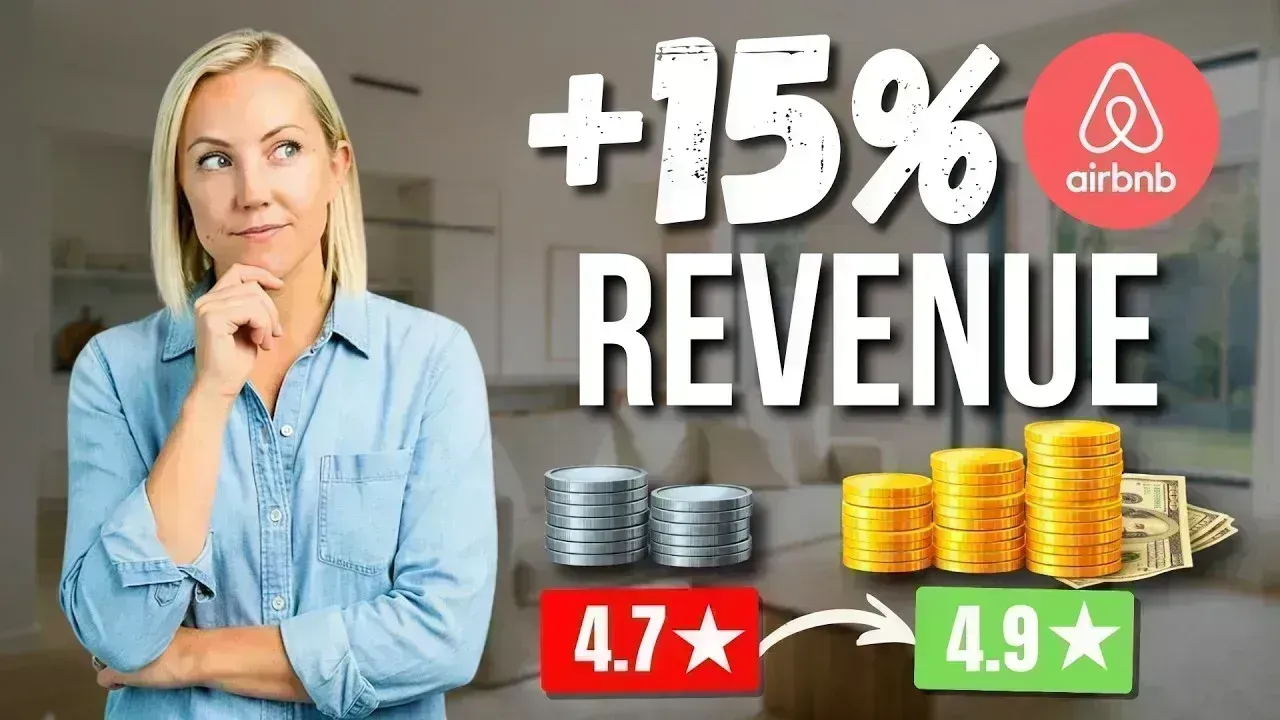
What 4.9-Rated Properties Do Differently (Based on Real Guest Reviews)
In this episode of Get Paid For Your Pad, Kaye Putnam (Head of Marketing at Freewyld and Freewyld Foundry) sits down with Eric Moeller, CEO of Freewyld and Freewyld Foundry, to break down what separates 4.9-star portfolios from the rest of the market. After Brian Chesky announced at the Airbnb Host Summit that the platform is moving toward incentivizing high-rated professional hosts and devaluing operators below 4.9, the stakes have never been higher. If you are an STR operator who wants to scale without sacrificing guest experience, earn higher ratings across a large portfolio, and understand exactly what drives five-star reviews at scale, this episode is essential. Kaye analyzed hundreds of 4.9-rated Airbnb listings to identify the four core attributes guests consistently call out after their stay. Eric shares real examples from Freewyld, their RPM clients managing hundreds of properties at 4.97, and the systems that make unreasonable hospitality scalable.
One Christmas Eve, I got a phone call from Toronto Deputy Police letting us know that they have a confirmed sighting of a known gang member posting on Instagram with automatic weapons in one of our properties asking for our permission to raid the place. The fact that bad actors exist, but AI is giving them new tools and making it easier and harder to detect. And if you think that's science fiction, no, like the criminals are using bots. They are using a voice bot. And more than that, the voice bot is programmed to answer questions in real time, with technology that doesn't make it go with any ums or rrs. And more than that, be armed with psychological manipulation to then change the conversation for empathy, for urgency, for have a really, really good story. That is super interesting from a marketing perspective, but super dangerous from a safety perspective. They said something like the very things that make hospitality magical are the same things that make us a playground for fraudsters. Your gut feeling that didn't used to be great, but now it's dangerous. Your gut feeling that you're bad. What happens when you cross AI with fraudsters and risk and everything that is coming in the future? That is the intersection that we are going to be unpacking in this conversation. I have Ella Mezaborski from Autohost here on the Get Paid for Your Bad podcast. Welcome to the show, Ella. I'm so thrilled that you're here. Thank you. This is going to be fun. It is going to be fun. So I thought it might be fun if you took us way back to the beginning of Autohost and your origin story. You got a call from the Toronto Police Department to get your permission to do a raid on one of the short-term rental properties that you owned in the area. Take us back to that moment. And how was it the catalyst for Autohost? And that wasn't even AI. You know what I mean? Yeah. Things were happening before that. Yes. So in a nutshell, I was an operator here in Toronto. I live in Canada. We managed a portfolio of a little over 100 units. And then at some point, kind of started being aware of, you know, direct bookings come with some exploitation. Some come from the different platforms. And so we were actually kind of aware of, you know, the need to screen our guests. But then as things started escalating a little bit, we kind of, you know, the story goes that one Christmas Eve, I got a phone call from Toronto Deputy Police letting us know that they have a confirmed sighting of a known gang member posting on Instagram with automatic weapons in one of our properties asking for our permission to raid the place. And so we're like, you go right ahead. Yeah. But that launched a really interesting investigation because at the time, so Autohost, which was previously an internal tool that was just helping us really screen guests and validate identities. Now it's what it is today. But because we already had that information, that was fascinating because we worked with police to really start piecing together data points of, hey, this local gang that ended up booking. We were able to then kind of see other patterns and realize that over a period of four months, these guys have been booking with us across our properties. All of that came to like a horrible culmination around that Christmas period. We lost a little over $20,000, which is lots of money. And then also it could have been a lot worse. But it was really that period that we were like, you know, we're aware of the need to screen. We don't want to have parties and rule compliance and vandalism and smoking. But like real fraud, like people saying that it's a lovely couple coming to visit their daughter in university, but it's actually a local gang that is selling like fentanyl. Those are two very, very different things. And so we kind of took things to the next level then working with. So my co-founder and CEO, Roy Fierstein, comes from the cybersecurity space. And other than just, you know, building Autohost and automating the sort of like low level screening, we kind of went next level. And how do we actually validate identities? And could we have prevented or queer? Could we have asked either more questions or more validation? Could the ideas been, could we have had more matching data points to not let these things kind of slip through the cracks? And right around that time, it was pretty much us understanding that players bigger and better than us have the same issues. The worst nightmare, I mean, other than just a chargeback, things are happening behind closed doors. And it's your responsibility as an operator to prevent that, whether you end up on the news, which you want to avoid, or just your moral integrity and, you know, your ethical responsibility. And so that's kind of what put things into motion that we kind of said, you know, like we need to double down. And this is a huge need in our industry. Criminal activity goes anywhere from, you know, gangs and drugs and money laundering to like escort services, trafficking and whatnot. And chargebacks are horrible. And we want to deal with those. But there's also so much that goes on beyond. So that's how things got started before AI was kind of looming over us and taking this to the next level. Yes. Oh, my gosh. Thank you for sharing that story. I can't even imagine. And what an important reminder. I feel like as business owners, we get just, I don't know if it's complacent or we're just so dang busy that we kind of forget that there are very real risks and implications that have incredible negative impacts on our business if we allow them to happen. And sometimes I imagine even with a system like auto host, like something still happen and that's still part of being in business. But it's such a great reminder to pay attention and to do everything that you can. And as we get further into this conversation, everything that you can, I think, is evolving or it needs to evolve if it hasn't yet. So let me quote. I'm going to read one quote from an article that you posted that I thought was freaking brilliant. So you said something like the very things that make hospitality magical are the same things that make us a playground for fraudsters. Can you unpack that for us? Yeah. I think one of the earliest things whenever I was asked about, like, why do I love this space? I'm like, we're talking like recreational travel, even business travel is recreational. Like you're seeing the world. You're out there. This is discretionary income. We're in such a space where travel is beautiful, hospitality is beautiful. But because of that, maybe even, you know, different than retail or anything else, we are so focused on being extra hospitable and giving the guest the benefit of the doubt. And going above and beyond and having that incredible, incredible experience. Even now, even with automation, like especially with automation, companies pride themselves on building their brand and growing that loyalty and the guest experience they're providing that you're going to go above and beyond to accommodate a request, a question, a need, some vulnerability. But then again, your guest support team isn't trained to be a gatekeeper or a bouncer. They're not trained to be a lie detector. On the contrary, we're there to give the best guest experience possible. And most guests are great guests. The absolute majority of guests are fantastic guests. And that's why we're in business. So it almost feels even like dirty to like to be skeptical. Like, why do I need to ask them all these questions? I don't want to. Like, is it like guilty until proven innocent? No. But that's exactly why there's this opportunity for unfortunate malicious intent in whatever shape and form it takes to really exploit hospitality. In addition to the fact that there's the very specific, unique nuance about our space that you're not selling a shirt. It's not just one exchange. You're giving keys to a closed space. And things happen behind closed doors. And that's your responsibility as well to make sure that this is all legitimate. And to kind of segue into this AI conversation, the fact that bad actors exist will probably always be true. But AI is giving them new tools and making it easier and harder to detect. So we have things, I think you mentioned on your LinkedIn that there's like websites that will generate you a fake ID. We have deep fakes that are getting better by the day. We have voice cloning or just like voice generation software that is super interesting from a marketing perspective, but super dangerous from a safety perspective. How do you even begin to combat all of that? So first of all, I think there's two things at play. There's what you said, the fact that the tools are getting a lot more sophisticated. But there's the really scary part also that they're getting easier to use. So if before you had to be like a really sophisticated criminal, even to like to have a machine at home that would create fake IDs that I may have gotten when I was younger or not, but, you know, for different reasons. But you still had to go to like a special dude and have it look real. And so it's not like every person in their basement could have generated one. Whereas right now the tools are getting easier. So the point is that security measures need to be that much more advanced because amateur criminals, let's call them, have access to them. So before, even as an operator, like you're kind of aware of the risks that are out there, but you're like, yeah, but I mean, who's going to do that? And your answer was, well, crazy criminal minds. So right now it's not necessarily. It's anybody who can get away with, you know, getting through your system, booking a place either for the sake of a chargeback, actually staying, falsifying their identity so that they can, you know, take advantage of the space and then kind of record a chargeback. But that's the main thing we need to be aware of that if before fraud kind of seemed like, oh, it's horrible, but it's happening elsewhere. And then operators feeling helpless just kind of assumed, well, if I do get a chargeback, it's a line item. You know, like stores have theft as a line item on their financial statements. But the more helpless you feel, the less you think you can combat that. So you're just like, well, that happens and that sucks. But what do I do about it? So I think that's kind of where a lot of the issues are, where people awareness is important because you need to if you got the chargeback, it's a little late. Right. And what you want to really do is figure out what measures you have to filter before they come through without hurting the guest experience, without hurting your brand, without hurting all these things, because there's a reason why you're like you're in this business and you love the space. Yeah, because you love humans and hospitality and all of those things that are more fun to talk about and to think about. But like you said in the intro, this is very real. So at AutoHost, it almost sounds like you're in a kind of an arms race with the criminals and the fraudsters are developing new technology. Or they're not the ones that are developing new technology, but they're leveraging new technology, including AI. What are you doing on your side to spot some of that? So it's actually interesting. I was pointing out the other day that our even our domain that was created in 2016 is actually AutoHost.ai. So we were very much aware back then that we are taking that many data points using machine learning and we're kind of already utilizing artificial intelligence to kind of say, if you had all these data points coming in, let's use artificial judgment to flag something. So, first of all, a lot of the measures that we have in place, interestingly enough, are catching the types of AI exploits by definition. So basically, an ID generated with AI or voice cloning or whatever is happening won't be able to have all of the data points fit for us to conclude that it's a real person. So the same test that we did two years ago to see whether it's the same person, their IP address, are they pinging in? Are they saying they're in Florida, but they're actually in Bulgaria? Are they, you know, like, is there any like are they hiding behind anything? Are they are we seeing credit card stuffing? So there's a lot of things that if a bot is doing it, like making 20,000 reservations a minute or trying to stuff a bunch of credit cards, you know, 18 of which failed and the 19th one goes through. Even things like the speed with which the forms get submitted that a human receiving the form won't know, but we are seeing the system and we're like, this was a bot. This wasn't human. So there's so many data points there for us to flag on the fraud side other than, you know, name mismatch and ID is expired or the credit card didn't go through or the phone number is registered in a different place. All of these things are even that much more important because we're saying that in the past we're almost competing with explaining to operators that gut feeling is lovely. It's better than nothing. But once you go to that next level, there are objective data points that there were looking at. Now with AI, a lot of those objective data points are still really valid. It's just the gut feeling becomes that much less valid. You used to look at messages and say, this sounds sketchy or like they're not coherent or this story doesn't check out. Every story is going to check out. Every story is written with AI. You can, on the contrary, if the story is too good, go look into it. You know what I mean? Like phone call. Like if, you know, I had a team of seven guest support agents. If anything seems a little bit off at the end of the day, it's like just give them a call. Let's just like give them a call. You can give them a call. And if you think that's science fiction, no, like the criminals are using bots. You're not using a voice bot when you're booking a place. But if somebody is booking a property, they are using a voice bot. And more than that, the voice bot is programmed to answer questions in real time with technology that doesn't make it go with any ums or ahs. And it's going to answer the questions coherently, give you a really, really good cover story. And more than that, be armed with psychological manipulation to then change the conversation for empathy, for urgency, for have a really, really good story. And again, back to explaining our industry, talk to a guest support agent that is really just trying to make their stay amazing. Whether you're the claim is that, you know, you're in town because somebody is sick or it's your, you know, wedding anniversary or whatever that is. And we just go back into guest service mode. We want to make the experience amazing. Like you're trying to see whether they're planning a party and they're asking you whether the pillows are down or synthetic. And you're like, oh, my God, they're down. They're grave. And you start selling. You know what I mean? So, oh, my gosh. Yeah. You got like you want to keep the humans there, but you want to make sure that they're armed with the tools to recognize the objective data points. Rather than just like your gut feeling that didn't used to be great, but now it's dangerous. Yeah. I find myself like intentionally adding typos or like leaving typos in my text. Like text now. Like even when I'm like on Slack or sending an email, I'll make a typo inadvertently. I'm like, you know what? I'm going to leave that in there. But it's going to be like another month before some bots put that on purpose to make it sound like it. I know. I know. Yes. It's such a good point that our human intuition, it's limited, unfortunately. Like it used to be really good at just being kind of a good filter. But now we're at greater risk than ever to make bad decisions because our intuition and our empathy and the rest of the things that make us human are being weaponized against us. For the property owner, the host, the portfolio manager that's listening to this, what can they actually do? Like this sounds pretty bleak. What can they do right now to help protect against some of these things? Yes. So it really does all depend on like size and technology. So, I mean, something is better than nothing. And then once you get into this, you know, you have different layers of what you could be doing. The absolute basics these days is you do whatever you can to validate identities and to verify that the person coming in is who they say they are. There are tools out there that do that. There's also ways to, I mean, some operators still meet the guests. Some use ID verification platforms. I will passionately urge to never ask for IDs to be emailed or for credit cards to be recorded by your team because that's, I mean, illegal in many, many places. It's kind of PII, personal identifiable information. It's something that you don't want to keep on file. But it's really that. So whatever you can do so that when somebody walks through the door, it's not a black box. And we're fortunate in the fact that in this day and age, because of all the automation, there are ways to really put that experience as not it's we're making you jump through hoops, but rather this is there to make your stay easier. So we just need to validate a few things. We need your identity on file. We want to make sure you're not being impersonated. So we're also there to protect you, right, that your credit card wasn't stolen, that you are who you say you are, that your ID wasn't falsified. And therefore, we're going to send you the door lock code. We're going to get you the instructions. You're good to stay. We're going to move on to upsells and whatever that is. So there's a really, really good way to turn that into a fantastic guest experience. But you also being a responsible operator and having a proper log of who's staying in your place, whether it's for legal purposes or for your safety or for the guest safety and so on. So really, these days, if we used to a few years ago talk about the fact that screening guests is a privilege and the high-end brands are doing it, right now it's table stakes. So any PMS you're using, any guest app will have a widget or a thing to turn on. You know, I think one day we're going to get to a stage of opting out of it rather than opting in. But right now, by all means, you should be able to collect IDs, validate them, and then you really talk about what level of scrutiny you need. So, I mean, collecting an ID is better than nothing. Then again, there's some methods of collection that just, I mean, send us a file. It could be a picture of your cat. It could be an ID. Better than nothing, because it's kind of like having, you know, a sign saying beware of dog versus having the actual dog. A sign is great. It's going to intimidate some people. But real criminal and real fraud, you know, is more likely to get kind of through the door. So my urging would be that, to make sure that in your process, and it's very accessible these days, whatever tool you're using, whether auto-host or not, there's ways to make sure that IDs are validated and that you have everything in your power to conclude that the person walking in is who they say are. Because if I provide Kay's ID, it's a real ID. It's just not me. Yeah. A hundred percent. And vote of confidence for Ella and auto-host. We use it at Free Wild ourselves, and it is excellent at catching, not catching people, but just like flagging anomalies and paying closer attention to that. Because, again, we're trying to do a million things in any given day. You need to have the peace of mind that those things aren't slipping through the cracks, and your software makes it really easy. So vote of confidence. I love what you said about flagging anomalies, because that's exactly that. Like, we don't aim to, we won't be canceling reservations. This is just your AI assistant, really, that will just do that filtering for you. And so instead of human eyes looking at a thousand reservations, you have everything going through an automated process. It's being done 20 times better, if not 100, than, you know, what a human gut feeling will do. And then out of those thousand, it flags, okay, hey, these 25 really need human eyes on them. And then it might be a legitimate concern. It might not be. But then that is where your judgment comes in. That is where you can choose to give them a call, again, as one of your measures. I'm not saying don't call guests anymore, but just be aware of the fact that the more data points you have, the more confident you are that the guest is who they say they are, and that their intentions are not malicious. Yeah, exactly. Amazing. I want to pivot a little bit. So you mentioned that AutoHost uses machine learning and AI in kind of its data analysis. But I'm curious, because so much has been changing in the last couple of months, last year, how are you personally or professionally leveraging AI inside of your business right now? Who? So like fraud aside, product aside? Yeah. Yeah. Just, yeah, let's open up the context window here. So, I mean, there's been one 80 degree shift. So like we work within a system internally that depending on your department, like everything goes through like, you know, an AI agent assistant, be it sales and our account execution where we have everything on file and in prep for a sales call. We have all the points and we know what's been going on and where the pain points are and where we left it off and what to do things, where to follow up. And even as far as kind of what is the strategy to take, you know, to tackle these pain points in specific. Why couldn't it be huge? Again, not just to generate content, but to kind of say what's out there in the industry. What are the pain points right now? Where do we fit in and how can we actually add value? Because I go way back and kind of looking at times where even for our content, I felt like we prioritized volume over quality at some point. And it's great because there's a lot to share. But I feel like now, I mean, everybody's generating and it's that much easier to generate content. And of course, the content that we're coming up with is AI assisted. But I feel like the more important is like the back and forth, almost like brainstorming that is happening with the AI and what angle we want to take and who do we want to help. So it's really like strategic advisors at every department that will then help us, you know, put together the best content, put together a right email for customer success, put together a report with what every individual client wants to see. So I think also this is kind of like, you know, so Roy comes from a cybersecurity space, but just like general engineering development. So it's almost like his internal baby where we have this like internal system that you go into. It's called Otto's Chat. And you just, I mean, everybody has agents for everything. And like, you know, we summarize meetings and we translate, you know, like notes from, hey, like here's this guy's personality. Like how do we move forward for like partnership negotiations? Like it's almost like it's everybody has an assistant, which has been really great, really intimidating. And I would say that like it's just the tip of the iceberg. Like if you asked me, you know, am I at the forefront of utilizing AI to the fullest? Oh, my God, not yet. No, I don't. If somebody said that they are, I would almost immediately doubt them just because it is changing so quickly. But this is fascinating. So did you guys build a custom solution essentially to build that agent or that suite of agents? Yeah. So we have internal access to, you know, be it the Chagipity or the Antropic or like the Gemini. Right. Whatever models are there and for whatever uses their best for, we'll be selecting. Like it goes way more complex. I'm a user of it. But yeah, it's fancy and exciting. But even there, it's like if we were to talk about what AI is doing both internally or even if I look back to, you know, bad AI and hospitality and how bad it gets. Like I'm doing a talk in June. I don't know what I'm going to be talking about. Right. The general outline. But a lot of it I'm keeping till May because so much is going to change. So same with like that next level of up until now, I just utilize it, you know, as a coach and a consultant. Whereas now go ahead and do some things for me and let me just validate that. Like I think making us work more effectively, not even efficiently, but actual effect in the results. Yeah. Something that is constantly evolving, but it's really exciting. Yes, it is super exciting to me. I saw that that conference got announced. It's by scale, correct? Right. Where you're speaking. Yeah. And I had the same exact thought when I saw the LinkedIn post. I was like, how in the world are they going to plan their talks? Because it's going to be different in by the time you're stepping on that stage. But the event looks amazing. It's even the fact that like a few months ago, I think you referenced, like I wrote an article for service departments by Short Term Rentals and that brand, the hospitality, international hospitality media. Yeah. Like that was about, you know, bad AI and hospitality. And I was talking about, you know, fake IDs, but AI generated and synthetic identity is basically synthesizing a person. So it looks like a real person, but it's not somebody impersonating Kay per se, but it's creating a real person out of nowhere. So everything supposedly checks out, but, you know, the barcode on the ID will not lead to a real person with a SIN number. So all of these things and voice cloning and, you know, message generation, impersonation things. But I wrote that a couple of months ago and now we're talking about armies of agents. We're talking about, you know, agents that are doing the bookings and rather like, and therefore like you could get 30 or 30,000 reservations all at once and what agents can do and how they can be programmed. And I think, again, the thought of like, how could I be exploited? It's just evolving month over month. If not, you know, people that are AI heavy will tell me day over day. But yeah. Yeah. Since I'm on the marketing side of things, I've been looking at AI through that lens almost primarily. So this is really like blowing my mind in many different ways. And I'm curious and maybe you won't have a good answer for this, but see where it lands. You're a mother. We were chatting before we started recording. As you're looking at this landscape, are you parenting any differently? How are you thinking about the future? Because it's something that's been on my mind as a mother as well. That's a good question. I love this shift. Okay. Let's do it. Am I parenting different? I mean, yes. I don't know that I know exactly what I'm doing. But I mean, it starts with a year ago already. Like, you know, my son goes to me. Can we Google that with ChadGPT? Like that was a transition. You know how like a generation I used to Googling something that is a verb. So they were like, yeah, let's Google that with ChadGPT. And so we utilize it a lot. I think I'm in the conflict of that intersection of how do I teach my kids to utilize it, but almost ignore how decisive it sounds. So basically like, ask it something and it's going to suck up to you, compliment you on your question, do whatever it is you want. But that confirmation bias that it gives you, it's really hard. Like kids that are so impressionable to teach them. Like, I know it sounds like you know what it's doing, but hey, we're going to catch it on some things. Or like, you know, it's just like an input. You're treating it like a robot that is helping you. And then it's on you to like, you know, make your opinion. Now, mind you, this is for research and questions. I mean, we had like political and historical discussions in the car where I kind of go pause. Let me quickly double check the facts and ask it to explain it to a 10 year old. That's really funny. My kids are six and nine, but each of them were like, well, I'm nine. But I mean, explain it to a 10 year old because I'm like, it's fine for my age. So they always want to go a year or two up. Like I can handle it. Explain it like you're talking to a 10 year old. So we do a lot of that. But then honestly, there's also just like the fun. They want a coloring page and actually just bought a printer, which is fun. Like every house used to have a printer. And then they didn't. And now it's almost like a commodity. So I bought a printer. We can print stuff. But anyways, my kids go and they go, OK, well, make me a coloring page of a girl holding a bubble tea on a cloud with butterflies all around. And she's going to be jumping and there's going to be like a bunch of friends around. And she just describes exactly what she wants and then put my name above. And then two seconds later, a coloring page prints. So they do a lot of that. Yeah. We've done fun like scavenger hunts that are put together for us or like we use it for activities and things. But I think it's really that it's like teaching them that it's almost like an assistant. And how can we utilize it to get like smarter rather than dumber? But I don't know that I have a good formula on how to implement that. Oh, my gosh. No, I've been thinking about the same things because I feel like one of the reasons why AI feels so powerful to me is I've been a marketer for 20 years. So I know what good looks like. I know what I should, quote unquote, should be doing. Like I know that I want to go out and scrape all of the industry's LinkedIn posts and find the outliers and like see what the hooks are like just to get super granular. But at some point you have to learn that. And I'm not sure. Like, I think you can learn through AI. But there is such that danger for hallucinations and for it just confidently making stuff up. You have to be able to recognize it. And I'm not sure how to build that skill in my children. But that's what I'm thinking about. It's like, so I. Yeah. Go ahead. Not to be alarmist or maybe yes to be alarmist. But there's also like the whole other side. I love that we moved to parenting. But there's the whole side of like you don't want AI to become your kids' best friend. No. Like, how do you just love her? Like, there's that level also of like how do you stop them, you know, quietly in their room? They don't have access to AI right now on their phones. But how do you also kind of leave that human element there? There was a really great talk by Zach Cass. I believe he was the head of go-to-market and open AI. And he gave a keynote speech at Darm back in December. And he was like. Oh, nice. It was fascinating and just like captivating. But and he actually he wrote a book that I like halfway through. But I really liked just kind of his view and, you know, where we're headed. And it was kind of a mix of doom and gloom, but also lots of optimism. And then he mentioned at the time that he just had like a daughter born. I think she was a few months old. And I complimented him on LinkedIn and he actually got back in touch. And I'm like, OK, but dude, talk to me, kids. Like, what's your approach? Like, you know, like you're in it. Like, what's your approach? And he said something beautiful. He's like, get them to go outside. Like, keep investing in the real world and in the social skills and elements. And I feel like that's my main interpretation that like, you know, we're avoiding screens and Nintendos and TVs. But then you also have chat GPT. The last thing you want is for a kid kind of going, well, you know, I'm being bullied or kids are like, you know, I'm sad in class. And then an AI agent is going to be the most understanding out there. Or God forbid you reach teenage years. You know, my parents are assholes. And, you know, what do I do? And just like you want that human connection and leading to career as well. Like right now, what can you teach your kids? I mean, mastering AI, maybe yes, no. But no, mastering social skills. Like, yeah. Continue staying in touch. Don't hide behind it because that's what's going to differentiate us down. Everybody can have access to AI. But keep those, you know, human connections and social skills readily. And because, yeah. Heck yes. Yes. Mic drop. All right. To close on something slightly more industry specific, but also related to the human element. We got to connect at Verma in Vegas briefly. And I know that you make it a priority to attend a lot of conferences. So what conferences are on your radar coming up? Right now it's really, I mean, there's the scale ones. The one scale with AI and June Brighton. I might actually, this is kind of new, but I might be heading to scale Eastern Europe later this month. This was kind of like on a whim, spontaneous. And so I'm trying to make that happen. And other than that, I mean, VRMA exec has been on my radar, but I'm not sure that's happening. And I mean, and then you're jumping to the fall. So, I mean, VRMA is probably going to be there. And I don't know if there's a women's conference, but I haven't been to one of those. And I've been like really bitched at by a lot of badass women friends. They're like, why is your face not there? So I'll see. There's the Europe one with Christiana and another one that Amy Hino runs. So I'll see which ones. Oh, nice. Those are probably top of my list and just continue to embrace like any conference is always amazing. And especially now that we in Autohost have transitioned to really work with, like we've narrowed in on the software. So right now we don't work as much with the direct operators, but rather we make sure that Autohost can be embedded in any software that you use. So PMSs and guest apps and direct booking websites and so on that are all recognizing that screen needs to be part of their flow. We want to make sure that we're embedded. We're industry native. There's so many positives, you know, in the history and databases that we have. So for me, conferences are a really great way to both see the operator side, but just kind of strengthen those connections. And it's always industry reunions, which is lovely. And I mean, Eric and Jasper and I go way back. Yeah. Always like amazing to see people. So yes. Yeah. I feel like those like in-person connections are going to become even more valuable in the advent of AI. Because again, like any bot can generate a LinkedIn message or a LinkedIn post or even a video at this point. So really being in the energy, like in the same space and sharing energy with people. I love it. I want to do more of it. So I appreciate your recommendations. Amazing. Where can people find more about you, about Autohost and continue this conversation if they're so inspired? So lots of great information on our blog. So that's autohost.ai slash blog. And then I'm happy to. I'm always kind of trying to really put together content, both from Autohost and general industry things and what I'm following and what I care about. So I mean, just adding me and following me on LinkedIn, it's Ella Mijiborski. Pretty easy to find. Any other Mijiborski you find is probably a family member. So not hard. But yeah, definitely feel free to, you know, reach out. I'm always happy to talk to people and hear perspectives and share some thoughts. And I'm always learning. So AI or not, like I'm always open for conversation. Amazing. Ella, thank you so much for your time and your brain and your attention. I appreciate you so much. Thank you. Thank you for having me. Thank you.
Related Articles
Pet Screening for Short-Term Rentals: How to Verify ESAs and Capture Pet Revenue
60% of emotional support animal claims in vacation rentals don't meet federal standards. Here's how to verify service animals and ESAs legally, collect pet fees you're entitled to, and become more pet-friendly without adding risk.
AI Guest Screening: Protect Your STR from Fraud | Expert Guide
Fraudsters use AI to bypass traditional guest screening. Learn how to protect your short-term rental with data-driven identity verification from Autohost co-founder Ela Mezhiborsky.

Airbnb Review Guidelines 2026: What Hosts Need to Know About the Updated Policies
Everything hosts need to know about Airbnb's review system in 2026, including the 14-day review window, content policies, removal process, and how recent platform changes affect your ratings strategy.