
Want to outperform the market? Freewyld Foundry’s Revenue & Pricing Management service is driving an 18% performance lift for $1M+ STR operators, even in down markets. If you’re managing 15+ listings and want a free pricing audit: apply here.
In this episode of Get Paid For Your Pad, Jasper Ribbers breaks down one of the most important and often underestimated decisions in a short-term rental business: who should own revenue management. As margins tighten, competition increases, and performance stagnates across many markets, revenue management has become a core function that can no longer be treated as an afterthought.
If you are an STR operator who is currently managing pricing yourself, considering hiring in-house, or evaluating revenue management service providers, this episode provides a clear framework to help you choose the right approach for your business. Jasper walks through the three main options available today and explains the real risks, trade-offs, and financial impact behind each one, based on years of hands-on experience managing portfolios and working with operators at scale.
You will hear:
• Why revenue management now deserves the same attention as operations and marketing
• Why many STR businesses struggle because revenue management lacks true ownership
• The pros and cons of managing revenue yourself as an owner
• Why education is critical if you plan to own pricing decisions
• The risks of learning revenue management from unreliable online advice
• What makes hiring an in-house revenue manager especially challenging in STRs
• Why analytical skill alone is not enough to succeed in STR revenue management
• How poor revenue management decisions can quietly reduce profitability
• Why the cost of a revenue manager should be evaluated against revenue impact, not salary
We also talk about:
• Why ramp-up time often hurts performance when hiring in-house
• How a small revenue drop can significantly impact management company profits
• Why owner-operators and master lease models feel revenue gains more directly
• How working with a revenue management service reduces key person risk
• Why transparency and reporting matter when outsourcing revenue management
• What operators should expect from dashboards, communication, and support
• Why access to your pricing tool is essential for accountability and flexibility
• How incentives and fee structures influence revenue management outcomes
• What to look for when evaluating the credibility of a revenue management partner
🎯 Mentioned in the Episode:
• Revenue management ownership models
• In-house vs outsourced revenue management
• STR pricing tools and dashboards
• Revenue reporting and performance tracking
• Key person risk in STR operations
• Freewyld Foundry Revenue & Pricing Management
• Pricing tool access and transparency
• Incentive alignment through percentage-based fees
🔥 Favorite Takeaway:
“Revenue management is no longer optional. The difference between doing it well and doing it poorly is often the difference between breaking even and building a profitable business.”
Continue Listening
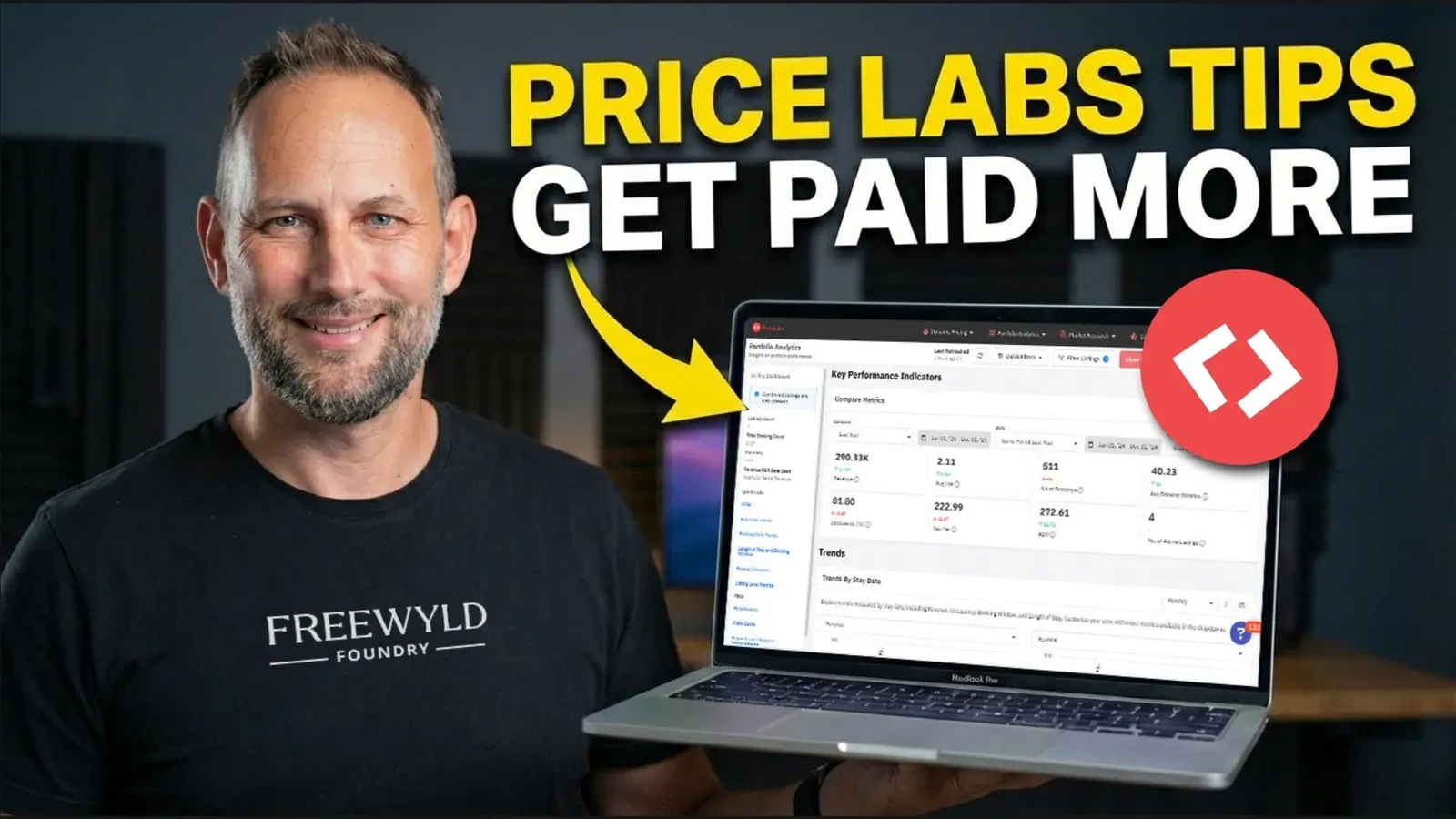
The Price Labs Features 90% of Operators Miss
Jasper Ribbers reveals that 90% of PriceLabs users are leaving money on the table by not utilizing the platform's most powerful features. Through screen-share analysis, he walks through seven overlooked features that can immediately improve revenue management performance for STR operators.

99% of STR Portfolios Leave 10-40% on the Table: The Invisible Revenue Problem
Eric and Jasper reveal why 99% of STR operators are leaving 10-40% revenue on the table despite using pricing tools. Learn the fundamental concepts that actually drive results, including the pacing strategy most operators ignore and how one client went from $20K to $68K in weekly revenue in just four weeks.

From $20K to $137K in Direct Bookings: The Meta Ads Playbook
Dustin Baker from HiddenGem Media breaks down the social media funnel strategy driving massive direct booking results for STR operators, including one client who went from $20K to $137K in a single month.
Jasper Ribbers:
What’s up everybody. Welcome back to Get Paid For Your Pad. Today is Monday, which means this is a RevUp episode, where we talk about revenue management every single week.
Today’s topic is an important one: how to select a revenue manager for your business.
Revenue management deserves the same level of attention as operations, marketing, and distribution. It is one of the most critical parts of your business, and someone needs to own it. That person needs to be well trained and skilled at revenue management, because if they are not, you are losing money.
Over the past few years, expenses have gone up while overall market performance has stayed relatively flat. Margins are getting tighter, and it is no longer as easy as it was five or ten years ago to run a profitable short-term rental business.
When I started back in 2012, there was so much opportunity in the market. You could rent a few places, list them on Airbnb, and make good money without having every department dialed in. Those days are gone.
The industry has matured. Competition has increased. Running a profitable short-term rental company today is genuinely challenging.
When I talk about profitability, I am not talking about working fourteen hours a day and paying yourself twenty or thirty thousand dollars at the end of the year. I am talking about owning a business where the time you put in is rewarded more than a nine-to-five job. For many operators today, that is no longer guaranteed.
We speak with many operators who are either breaking even, barely profitable, or not profitable at all. One of the most common reasons is the absence of true revenue management expertise.
In this episode, I want to walk through your options for establishing that expertise. There are essentially three paths: doing it yourself, hiring in-house, or working with a revenue management service provider.
Option 1: Doing It Yourself
Many owners currently manage revenue themselves. That can work, especially if you enjoy numbers, have strong analytical skills, and are willing to invest time into learning.
The advantage is control. You do not need to hire anyone, and you are naturally motivated as the business owner.
The risk is that if you do not do it well, it can cost you more than hiring someone. Revenue management mistakes are expensive.
Education in short-term rental revenue management is limited. I know this because when I focused fully on revenue management, I searched everywhere: conferences, online resources, industry experts. There simply was not much structured education available.
If you choose this route, you need to be careful about who you learn from. There is good advice online, but there is also bad advice. The challenge is that when you are learning, it is difficult to know who is credible.
Pricing tools offer training and webinars, and those resources can be helpful. At Freewyld Foundry, we also offer a revenue management course based on strategies that have worked across more than fifty portfolios, typically producing ten to forty percent improvements.
If you manage revenue yourself, education is non-negotiable.
Option 2: Hiring In-House
Another option is hiring a full-time revenue manager. This is something we are asked about frequently.
It can work, but it is difficult. We have hired five revenue managers ourselves, and finding people who understand short-term rentals deeply is hard.
Strong analytical skills alone are not enough. A great STR revenue manager must also understand operations, distribution channels, guest behavior, and platform dynamics.
We have hired people from the hotel industry. They were excellent, but they still required extensive training to understand how short-term rentals operate.
If you hire someone without STR experience, you need to be prepared for significant onboarding and education. That takes time and resources.
There is also performance risk. The difference between a good revenue manager and a poor one can mean tens or hundreds of thousands of dollars.
For example, if your portfolio generates one million dollars in top-line revenue and you manage for others at a twenty-five percent fee, your company earns $250,000. A ten percent performance drop reduces your revenue by $25,000. If you pay that revenue manager $50,000, the real cost is $75,000.
On the other hand, a strong revenue manager who increases revenue by twenty percent could add $50,000 or more to your bottom line.
For owner-operators or master lease models, the impact is even greater. Every additional dollar flows directly to the bottom line.
Hiring in-house also carries key person risk. If that person leaves, gets sick, or underperforms, you must start over. The same risk exists if you manage revenue yourself.
Option 3: Working With a Revenue Management Service Provider
The third option is outsourcing revenue management.
One of the biggest advantages is team coverage. You are not dependent on one individual. If someone leaves or is unavailable, the service continues.
What matters most is results. Can the provider increase your revenue?
Service providers often bring broader experience. At Freewyld Foundry, we manage revenue, but we also bring decades of operational experience and insights from working with more than a thousand students and dozens of clients.
Transparency is critical. You should have access to your pricing tool. You should be able to see what is being done and understand the strategy.
Reporting matters. You should have real-time access to performance data, not just monthly PDFs. You need to see how units are performing, how new listings compare, and how the market is trending.
Communication matters. Pricing is time sensitive. Waiting days for responses is unacceptable. Regular check-ins and direct communication channels are essential.
Fee structures also matter. Percentage-based fees align incentives. Fixed fees do not.
Guarantees matter. If a provider cannot increase revenue, the cost can be significant. A guarantee shows confidence and accountability.
Finally, credibility matters. Know who is behind the company. Look for operators with real experience, transparent teams, and strong client references.
Selecting the right revenue management approach is one of the most important decisions you will make as an STR operator. There is no universal right answer, but there is a right answer for your business.
If you have questions, feel free to reach out. If you are managing over one million dollars in annual rental revenue, you can request a revenue report at freewyldfoundry.com/report.
Thanks for listening. Have a great week, and we’ll see you next time.