September RM Update: Best Month in Company History, GuestyVal Takeaways, and an Airbnb Story

Want to outperform the market? Freewyld Foundry’s Revenue and Pricing Management service is driving an average 19% performance lift for STR operators, even in down markets. If you are managing 15+ listings and want a free pricing audit, apply here
September was the best month in Freewyld Foundry’s history. Comparable units were up 37% year over year while the average market was up 7.3%, putting Freewyld Foundry’s measurable impact at 27%, the highest they have ever recorded. Jasper walks through the full September portfolio breakdown, shares takeaways from GuestyVal in Madrid, covers the Vrbo commission change and what Airbnb presented on visibility, and closes with a personal story about leaving an Airbnb early for the first time in over 100 stays.
You will learn:
- Why September was the best month in Freewyld Foundry’s history: portfolios up 37% year over year with 27% measurable impact above the market
- Why the market was up in September and what the Labor Day weekend shift means for reading year-over-year data
- Which markets stood out and which were down: Gainesville, San Antonio, Kansas City, Myrtle Beach, Canada markets
- What Jasper learned at GuestyVal in Madrid: AI needs human oversight, the human-plus-AI consensus, and how Freewyld Foundry uses AI to flag price points for review
- What Airbnb presented on visibility: flexibility, availability, and discounts are the three levers, and how to stack discounts without dropping rates
- The Vrbo commission change: moving to a single percentage model, dropping the fixed-fee plan tier, following Airbnb’s commission structure
- What the Airbnb resolution process looks like from the guest side: submitting a claim, how the host responded, and what Jasper wishes he had done differently
We also talk about:
- Portfolio count now at approximately 80 clients, with several new clients signing up in September
- AirDNA data: US RevPAR up only 3% for the year, coming primarily from ADR, with occupancy flat or slightly down
- The direct booking share decline: OTAs gaining market share versus direct bookings this year, counter to the trend of prior years
- How Freewyld Foundry’s AI flags price points with the highest likelihood of needing human review, rather than letting AI set prices autonomously
- The mold situation: why a quick clean was not an acceptable fix, and what happened when Jasper offered the host a reasonable settlement before going to Airbnb
Mentioned in the Episode:
- Free Revenue Report from Freewyld Foundry
- VRMA Nashville October 4-6: Booth 1143, Tuesday workshop at 11:30 AM
- GuestyVal Madrid, September 2026
- Email Jasper: jasper@freewyldfoundry.com
The Direct Booking Playbook
The complete system for growing direct bookings from 20% to 50%. Covers brand strategy, website conversion, email marketing, creator partnerships, Meta Ads, and the 5 biggest mistakes to avoid.
Download Free GuideContinue Listening

The Javier Effect: A Custom PriceLabs Strategy for Unique STR Inventory
Javier Vasquez, a Freewyld Foundry revenue manager and former PriceLabs employee, walks through the custom Portfolio Occupancy-Based Adjustment strategy he built for a glamping dome portfolio with 97-98% occupancy year-round and 212-day booking windows.
Midterm Rentals with Frank Bosie: The Revenue Strategy Already Happening in Your Portfolio
Frank Bosie of Hostfully joins Jasper to break down the data behind midterm rentals, including why 39% of STR operators already have 30+ night bookings, how the occupancy math works, and when the hybrid approach beats a hard minimum-stay strategy.
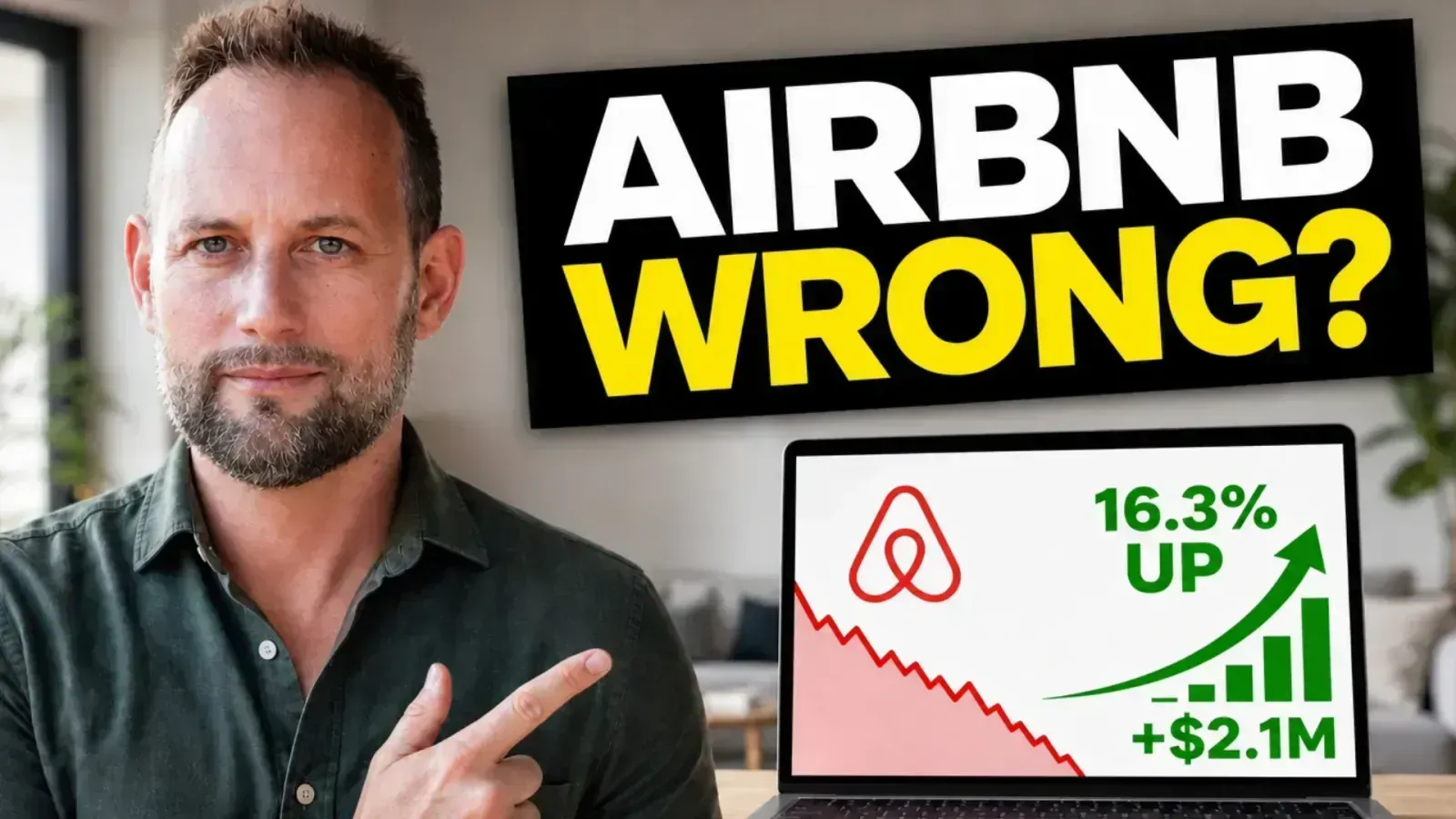
August 2026 STR Market Update: 16% Growth While the Market Declined 2.5%
Jasper shares the full August market update including July portfolio results (16.3% YoY growth vs. a 2.5% market decline, $2.1M in additional client revenue), the top winning and declining markets, the Labor Day weekend shift, Airbnb's AI pricing model and new mobile discount, VRBO sponsored listings, OTA discount stacking risk, and what operators should focus on heading into shoulder season and low season.
Introduction
Jasper: Hello, everybody. Welcome back to Get Paid for Your Pad. Today I am going to cover the September update. So once a month now on the podcast we do an update at the end of the month to share what we're learning, some insights, and whatever else we think is interesting to share with you. Today I'm giving you an overview of the performance of our portfolios in September, what we're seeing in the markets, and then I have a few other items to cover as well.
Number one, I went to GuestyVal, so I want to share some takeaways from that. And also this week is VRMA. Freewyld Foundry will be present. I'm actually doing a workshop on how to build your own AI revenue management analyst, and we'll probably make that available online as well for people who are not able to attend. If you're listening to this and you might be at VRMA right now, come say hi at booth 1143. On Tuesday at 11:30 AM I will be holding the workshop.
I also have an interesting personal experience with Airbnb this week. It was actually the first time that I left an Airbnb before my checkout day, because it was a pretty bad experience, and I'm now going through the resolution process with a host to get a refund. I want to share that story as well, because it gave me some insights I figured were interesting to share.
September Performance Update
Jasper: September has been our best month in the history of our company. We started this revenue management service about two and a half years ago, and September was the best month we've ever had. I'm super excited and super proud of our revenue managers. I've put a lot of time and effort into creating trainings and really helping our revenue managers drive better results for our clients, and it's definitely starting to show in the numbers.
We're up to about 80 clients now, so we're definitely still growing. This month in particular we had quite a few new clients sign up, which we're very excited about.
In September, year over year for comparable units, we have about 3,500 to close to 4,000 units now. What we do every month is compare apples to apples: we only look at the units for each portfolio that were active last year, because obviously your revenue could be up, but if you have new units that doesn't mean the revenue for your existing units actually went up.
When we do that comparison, last year we finished at just over $7.8 million. This year we finished at around $10.5 million. So we added over $2.5 million year over year for comparable units and we're up about 37%. The market on average across all the markets we're in was up just over 7%, at 7.3%.
That puts our impact at just over 27%. That means we generated 27% more revenue for our clients than if they had essentially paced with the market. If they would have been up 7.3% without our service, with our service they're actually up 37%. Our impact is about 27%, which is the highest we've ever seen. We're super excited about that.
Market Breakdown
Jasper: On the downside, we did not have a lot of markets that were down significantly in September. We're seeing the beach markets in the Carolinas, Myrtle Beach for example, down a little bit. We have a couple of markets in Canada that are down, not hugely, maybe 6 to 12%. And Kansas City is also down, which is interesting because I think they are experiencing a bit of a post-World Cup hangover. Kansas City was one of the cities that performed well for the World Cup, but a lot of inventory hit the market, and that inventory is now slowly starting to come down but is still renting.
On the upside, most of our markets are up somewhere between 0 and 10%. But there are a couple that are really standing out. Gainesville and San Antonio are the two biggest movers. September through November you can see pretty big swings year over year, especially in sports cities and college football towns. Those games can attract an enormous amount of people. Gainesville was up 24%, and I'm sure it has to do with college football. San Antonio had a really strong month as well, up 39% by at least one data source. We also have a market in Wisconsin up over 20%, and some of the Florida markets are pretty strong.
Why September Was Strong
Jasper: Now the reason the markets are up in September, I'm sure a lot of you will have already figured this out: Labor Day weekend fell in September this year. Last year Labor Day weekend fell in August. That is obviously a big shift in demand. I'm actually a little surprised the market is only up 7%, because I would think Labor Day has a bigger effect than that. It depends on the market, but it's a pretty big weekend in an otherwise not-so-busy season. Shoulder season in a lot of markets starts right after schools go back in mid-August, so Labor Day is definitely a significant demand driver.
If you take out the Labor Day weekend effect, we're probably kind of flat to slightly down. Looking into October, I see our markets pretty much flat as well based on where we're pacing now. That's generally been the story for 2026. AirDNA came out with data showing US RevPAR is up only 3% compared to last year, and that pretty much came from ADR, with occupancy flat or slightly down.
GuestyVal Takeaways
Jasper: GuestyVal was a really cool conference. It was in Madrid and was very well organized. The locations were incredible, the food was great, the speakers were dialed in. If you ever have the opportunity to go to GuestyVal, I highly recommend it. I'm really happy I went.
One interesting data point shared at the conference: the percentage of direct bookings has been going down this year, which surprised me. I would have expected that as operators get more professional and focus more on reaching past guests, direct booking share would be steadily increasing. But the OTAs are actually winning market share, which is very interesting. It varies by market, but overall direct bookings are losing versus the OTAs.
AI in Revenue Management
Jasper: AI was a big topic at GuestyVal, and there were some really interesting talks. The biggest takeaway for me was that AI needs human oversight. What AI is not very good at is judgment. AI works really well when there's a logical plan to follow, but when it has to weigh factors you can't express as a number, it falls down. The general consensus amongst speakers was that human plus AI delivers a great result, but AI on its own is not always delivering a great result.
We have to leverage AI for what it does really well and combine it with human judgment. AI is good at deterministic logic, if-this-then-that type decisions. It's good at processing large amounts of data quickly. Those are things humans are not very good at. My own talk at the conference was about how to build your own revenue management analyst, and at Freewyld Foundry we're using AI quite a bit now.
The way we think about it: a 100-unit portfolio has 100 times 365 days worth of price points. That's 36,500 price points that every day might need attention. That's obviously way too much for a human to manage. So we've essentially taught the AI how to spot price points that should be reviewed by the revenue manager: the ones with the highest likelihood of us deciding we want to change the price. For example, if we're asking a price that's more than 20% above the highest price the unit has ever booked for a similar date type, or if similar units we also manage have never booked at that price. Based on those factors, AI can tell us where to put our focus.
You can't just give AI all the data and expect the AI to come up with the perfect price. You really need the human to make the judgment call. The general consensus at GuestyVal was a similar understanding. And people are also expecting that the human aspect of the relationship will become extremely important going forward, because as people get used to talking to AI, they're going to be craving the personal connection.
Airbnb on Visibility
Jasper: Airbnb also did a presentation at GuestyVal on how to get better visibility on their platform. Nothing really groundbreaking, but they hammered quite a bit on three levers: flexibility, availability, and discounts. Flexibility means cancellation policies. Availability means minimized stay restrictions, being bookable at least 12 months out, not putting too many restrictions on lead times or same-day check-ins. And discounts means leveraging all the new promotions Airbnb has introduced. Of course, some of those stack, so you definitely want to make sure you have a little markup on the channel so your prices don't drop too much. But that's the way to get more visibility on Airbnb.
Vrbo Commission Change
Jasper: One other thing from GuestyVal: Vrbo is now going to go the Airbnb route when it comes to commissions. They had different plans before, where you could pay a fixed annual amount and then a low percentage like 5%, or opt into a program at around 8%. They are now simplifying it to a single percentage model. It's interesting to see the OTAs kind of copying each other: Vrbo introduced discounts similar to Booking.com, then Airbnb introduced those discounts, and now Vrbo is copying Airbnb on commission structure. The OTAs are clearly very focused on gaining market share.
A Personal Airbnb Story
Jasper: I want to close out this podcast by sharing a personal experience. I've probably stayed in over 100 Airbnbs, and I don't think I've ever left because I wasn't happy with the place. Now I have.
I arrived in Valencia on Saturday night with my wife, our seven-month-old baby, and our Pomeranian. We booked an Airbnb while looking for a place to live. When we arrived, the place was not clean, pretty dirty actually. The place needed a lot of maintenance. There were cracks on the walls, some door handles missing, and there was even a window missing with wooden panels put up to cover it. Most importantly, there were black stains around the air conditioning units, which is mold.
We arrived really late after a six-hour ferry and a long travel day. With a baby, you just need to eat and get everyone to sleep, so we dealt with it the next morning. After one more night, the mold was really concerning us. Not just on the outside of the unit, but potentially inside the AC. We have a baby. So we decided to leave and find somewhere else.
I called the host and told him the state of the apartment was not acceptable. He offered to send a cleaner and said he'd clean the mold, that it was no big deal. But cleaning mold means the spores are floating in the air, and we don't know if it's inside the AC. We just didn't want to deal with it. So I left and offered a very reasonable arrangement: I'd pay for the three nights we actually stayed, even though we had 12 nights booked. I thought that was fair and expected him to take it.
He didn't. He wanted me to stay and kept insisting a clean would fix it. So I had to contact Airbnb and go through the resolution process. What was interesting was getting to experience the process from the guest side. As operators we manage close to 4,000 homes, and we see a lot of guests who take advantage of the system, asking for a full refund over something minor. Now I was on the other side, submitting evidence, seeing how the host responded, going through the steps.
I requested a refund equivalent to the unused nights, essentially what I had offered the host directly. Honestly now I'm regretting I didn't ask for more, because once he refused the direct offer I should have. But it's already done. I'll share next time what the outcome of the resolution was. I'm assuming Airbnb will give me what I asked for, but I'll keep you posted.
Closing
Jasper: That's it for today. If you're at VRMA Nashville, come find us at booth 1143. Tuesday at 11:30 AM I'm holding the workshop on building your own AI revenue management analyst. Hope you enjoyed this one. We'll be back next Monday with another episode of Get Paid for Your Pad. See you then.
Related Articles
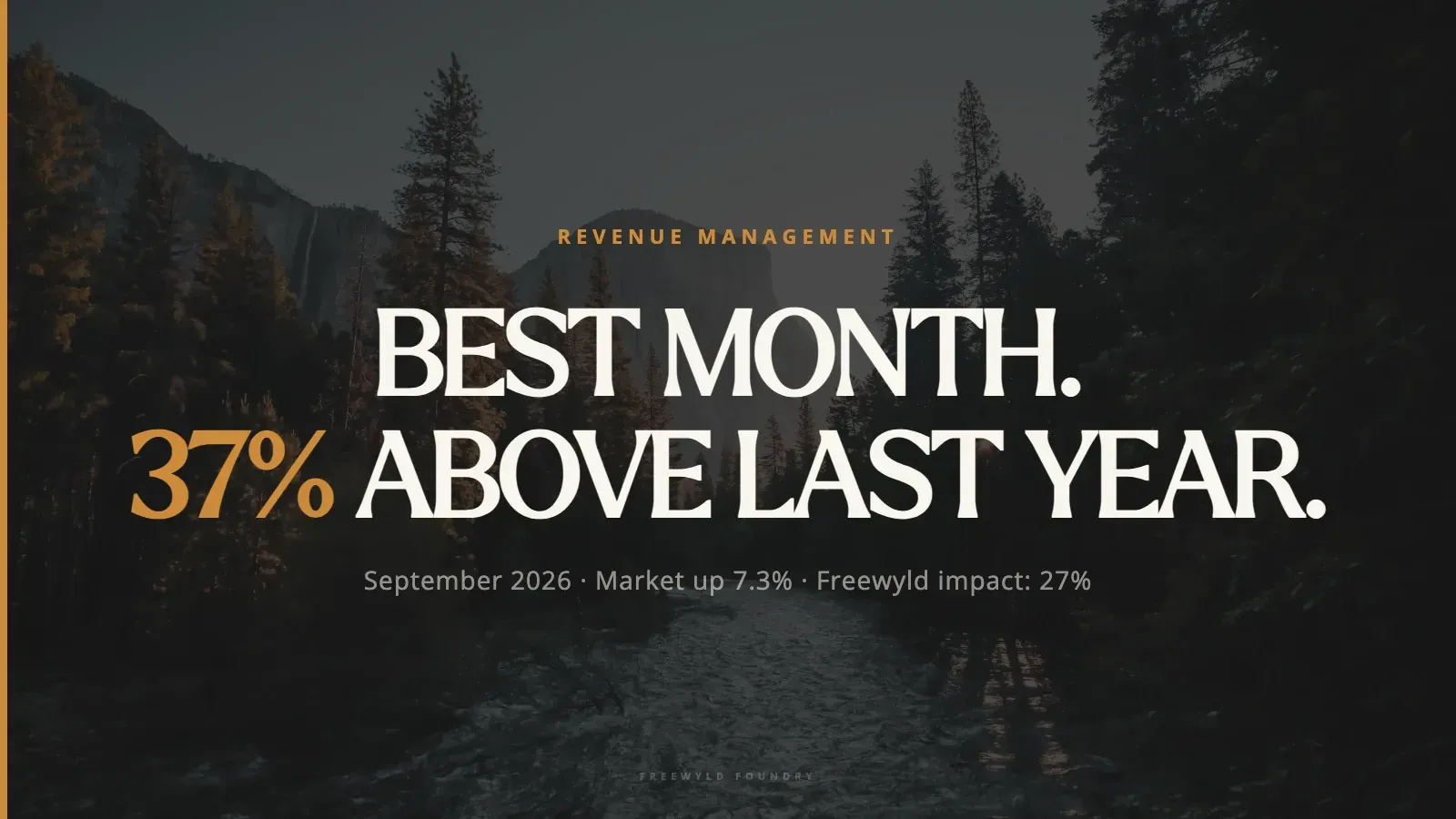
STR Market Update September 2026: Record Month, Vrbo's Commission Shift, and What AI Means for Revenue Management
September 2026 was the best month in Freewyld Foundry's history. Comparable units finished 37% above last September while the broader market grew 7.3%, producing a 27% measurable impact, the highest we have ever recorded. Here is what drove that gap, which markets led and which lagged, what Vrbo just changed about commissions, and what the industry learned about AI in revenue management at GuestyVal in Madrid.
PriceLabs Portfolio Occupancy-Based Adjustment: A Strategy for Unique STR Inventory
When your STR inventory runs at 97% occupancy year-round with a 212-day booking window, standard PriceLabs market factors actively work against you. Here is how to build a custom Portfolio Occupancy-Based Adjustment strategy for destination and unique inventory.
Midterm Rentals for STR Operators: The Data, the Math, and How to Start
Midterm rentals are already happening in most STR portfolios. 39% of short-term rental operators have received at least one 30+ night booking. Here is the data, the occupancy math, and how to be intentional about it without abandoning your short-term rental business.