FIFA World Cup STR Update - Why the Demand Disappeared

The World Cup demand everyone predicted simply didn’t show up. Occupancy is down in every major host city compared to last year - Dallas, Kansas City, Houston, Vancouver. All down 10 to 15 percentage points. ADRs are higher, but not enough to compensate for the drop in bookings.
In this Rev Up episode, Jasper shares real data from Price Labs dashboards across 75 markets and breaks down exactly why it happened - and what your pricing strategy should be for the rest of the tournament.
You’ll learn:
- Why occupancy is down 10-15 points in every World Cup host city despite record expectations
- The real numbers: Dallas, Kansas City, Houston, and Vancouver compared to last year
- Why high airfare and accommodation prices are keeping both local and international travelers away
- Why July is still shaping up strong, up 14% on average across markets
- The right pricing strategy for the group stage vs. the knockout rounds
We also talk about:
- Why RevPAR is still up in host cities even as occupancy drops (and what that means for you)
- Why even Canadian World Cup cities are seeing occupancy declines despite a strong overall summer
- Why the knockout rounds could still bring a demand surge if major football nations advance
- The difference between what the news shows about US immigration and what international travelers are actually experiencing
Mentioned in the Episode:
- Free Revenue Report
- Price Labs: pricelabs.co
Subscribe for new episodes every Monday on YouTube, Spotify, and Apple Podcasts.
Continue Listening
Midterm Rentals with Frank Bosie: The Revenue Strategy Already Happening in Your Portfolio
Frank Bosie of Hostfully joins Jasper to break down the data behind midterm rentals, including why 39% of STR operators already have 30+ night bookings, how the occupancy math works, and when the hybrid approach beats a hard minimum-stay strategy.
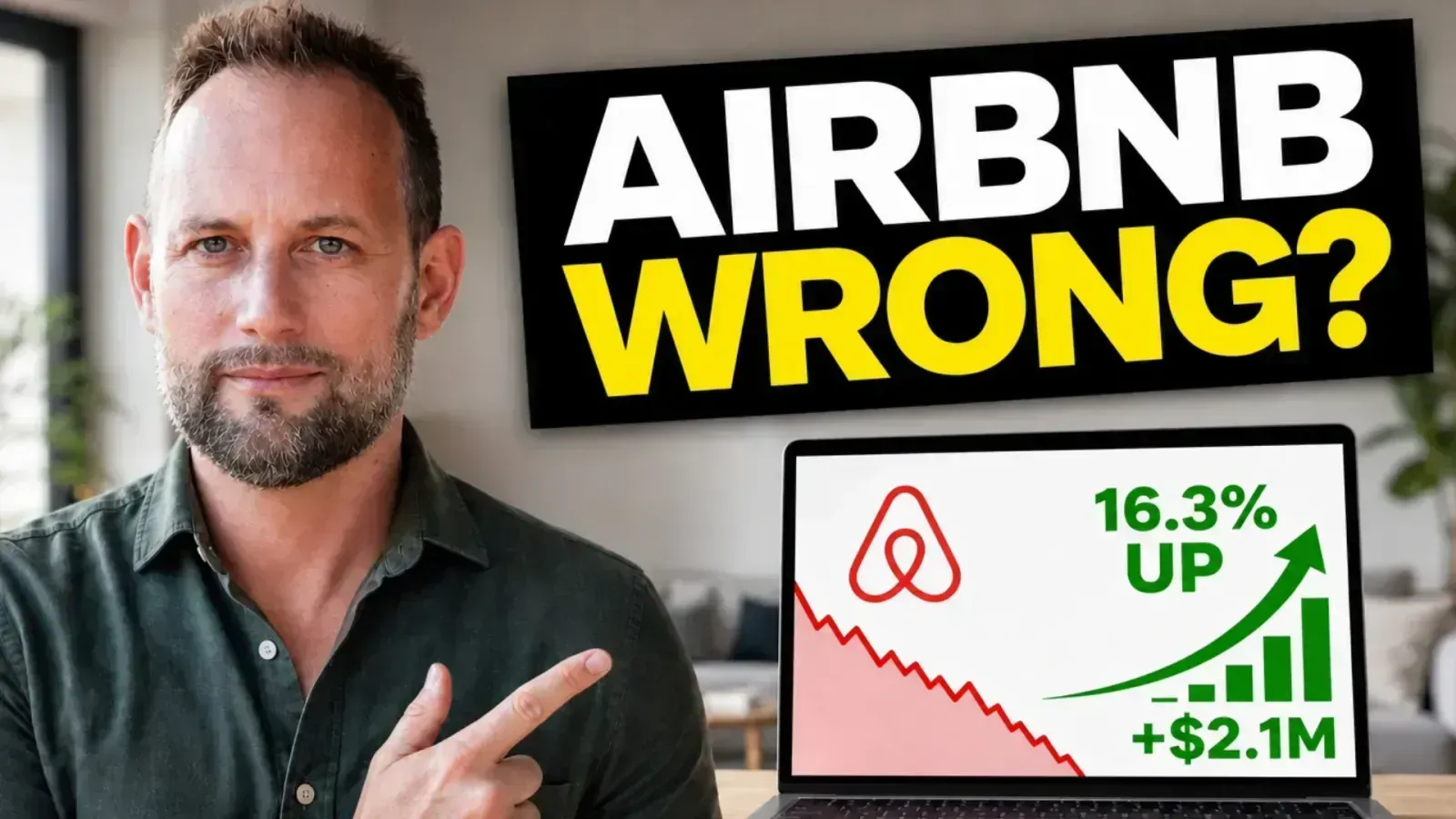
August 2026 STR Market Update: 16% Growth While the Market Declined 2.5%
Jasper shares the full August market update including July portfolio results (16.3% YoY growth vs. a 2.5% market decline, $2.1M in additional client revenue), the top winning and declining markets, the Labor Day weekend shift, Airbnb's AI pricing model and new mobile discount, VRBO sponsored listings, OTA discount stacking risk, and what operators should focus on heading into shoulder season and low season.
Secrets of a Pro STR Revenue Manager to Maximize Your Revenue
Jasper sits down with Patrick Morton, one of Freewyld Foundry's revenue managers, for an inside look at the pricing tactics, listing optimization moves, and team strategies that are moving the needle for STR operators every day.
World Cup Is Here. The Demand Isn't.
Jasper: Occupancy in World Cup cities is down compared to last year. Now, how is that possible? Keep listening to find out. Welcome back to Get Paid for Your Pad. It is Monday. We're doing an episode of Rev Up, where we are giving you insights from behind the scenes of our revenue management service. We're at about 75 markets around the world, mostly in the US. So we have a pretty good understanding of what's happening in the different markets. And today I want to give an update, a final update about the FIFA World Cup football that's happening in the United States, in Canada and Mexico.
Right now, when you're listening to this, the World Cup must have started a few days ago or maybe even a week ago. I'm recording this the day before the World Cup starts. So it's Wednesday, June 10th. Tomorrow is the first official game in Mexico. And for the next five weeks or so, the World Cup is going to take place. I think the final is on July 19th, if I'm not mistaken.
And the big story around the World Cup football is that the demand that was anticipated is absolutely not happening. Most cities - I'm going to go through some data. I pulled up some market dashboards on Price Labs to give you an understanding of what the situation looks like. But in general, it's a very clear picture. Occupancy is down. Occupancy is down quite significantly, actually, compared to last year in pretty much every single one of the host cities.
Why Isn't the Demand There?
Jasper: And how is that possible? You may ask. And that's a good question, because aren't there supposed to be millions of people traveling to the States to attend these games? Where's all the demand? Well, it's not there. And I think it's because of two things.
Number one is I think regular travel to the World Cup cities is just not happening. People that don't care about football - which is probably most Americans - they're now going somewhere else or they're just not traveling at all. Because the prices are so high. Hosts are still looking to get premium prices, even though demand has been very sluggish. So if you're not traveling for the World Cup, why would you pay 50% or 100% higher rates? You might just skip this year or travel somewhere else.
The second thing is the amount of international travelers that everyone was expecting - it's just not materialized. I think there are a couple of reasons. Number one is just the cost. There's a lot of economic uncertainty around the world with multiple wars going on, with inflation, with oil prices being elevated. Airplane tickets on average around the world are up 12% in price. And specifically, prices for airplane tickets to the US are very expensive right now. So a lot of people just can't afford to travel to the States.
And the second factor is a lot of people need visas for the States. I read that one of the appointed referees - somebody who's going to be a referee in one of the matches - was actually denied entry at the airport. These are the kinds of stories that go around the world and create a lot of fear for foreigners traveling to the US. Nobody wants to arrive at an airport just to be sent back.
I also think the videos that have gone around the world of ICE are a factor. I don't follow the news too closely, but those go viral. Interestingly, journalists I listen to who are now in the States are reporting that immigration was very smooth. So it's not the reality that every foreigner is getting into trouble. But it's the stories on Instagram and the videos going around the world that are creating fear.
The Market Data: City by City
Jasper: I pulled up a bunch of Price Labs market dashboards to give you an understanding of what's actually going on.
Dallas: current occupancy for June is sitting at 47%. Last year, same time, it was 52%. So occupancy is down around 10%. RevPAR is actually up - from 111 to 149 - because ADR went from 210 to 318. So ADR is about 50% higher. But because occupancy is down, RevPAR is up around 30-35%. It's going to be very polarized. The people that got bookings are doing pretty well. But there's a lot of people that didn't get any bookings because they were priced too high.
Kansas City - and I feel like Kansas City has the biggest World Cup vibe. The most activities and the most visible advertising. Even so, occupancy is at 43% versus 58% last year. That's down 15 points, or about 25%. But ADR went from 175 to 322, up about 85%. RevPAR is still up about 35%.
Houston: occupancy down from 51% to 40%. ADR up from 171 to 274. RevPAR only up about 15% - not as strong as other cities.
Canadian cities are doing really well this summer overall - up 20-30% for June and July. But even Canadian World Cup cities are seeing a drop. Vancouver: 43% occupancy now versus 59% last year. ADR went from 303 to 534. RevPAR up about 25%.
What the Overall US Market Is Doing
Jasper: On average for June, we're seeing the market pretty much flat, up a couple of percent. The World Cup cities are seeing RevPAR up. But a lot of other areas are actually down. So on average the market is flat for June.
July is a different story. Our markets are up 14% on average for July. The World Cup cities are up around 20-30% in RevPAR for July as well. I think a lot of people that are not traveling in June are now traveling in July. So there's good news there - July is shaping up to be a strong month.
Pricing Strategy for the Rest of the Tournament
Jasper: The World Cup has already started. I don't think a lot of people are going to book last minute for the group stage. So right now, a good strategy is to just be competitive. You don't have to drop to the minimum, but make sure you're competitive compared to the rest of the market. Most hosts still have their prices elevated. So you can still get booked at a pretty good rate compared to previous years - but you have to be competitive. If you keep prices elevated, you're probably going to sit empty.
The knockout rounds are different. A lot of travel hasn't happened yet for those games because the matchups aren't known yet. We know when they'll be played, but we don't know the teams. So people haven't booked their travel. Once big countries like Brazil, Germany, England, Spain, or France advance - countries where football is extremely popular - you could see a big surge of demand, especially in the later knockout stages.
If my country, the Netherlands, reaches the final - I mean, I'm not planning to travel because I have a baby. But if I didn't, I would consider it. Because being in the stadium when your team wins the World Cup might not happen again in your lifetime. So people are willing to pay a lot of money for those quarterfinals, semifinals, and the final. It's like the Super Bowl - if your team is in it, you might pay a couple thousand dollars for the ticket.
So: be aggressive for the next couple of weeks for the group stage. Then for the knockout rounds, you have a little more leverage on pricing.
That's it for today. This is the last FIFA update I'm going to do - I think we've talked enough about it. Definitely a little disappointing how it all played out. But there's still opportunity to get booked at pretty good rates. And again, July is looking very strong. People traveling to the games might stay for a week or two and travel around the States - Grand Canyon, Yellowstone, Los Angeles, New York, Las Vegas. Those markets still have a great chance of performing well during and after the World Cup.
If you're looking for a revenue management partner, we offer a free report. Apply at freewyldfoundry.com. We'll tell you what you're doing well, what you're not, where the opportunities are. Thanks for listening. We'll see you next time.
Related Articles
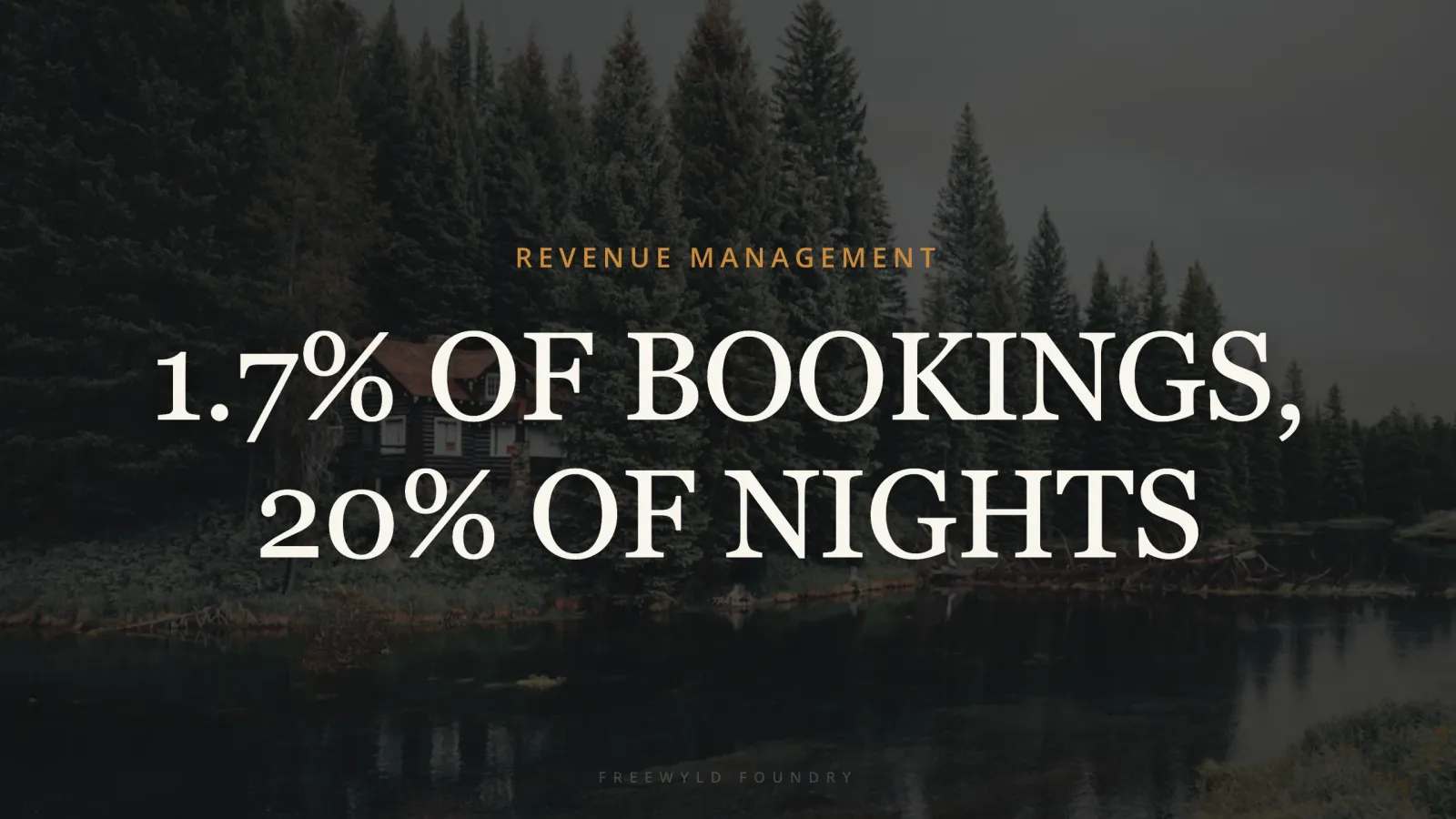
Midterm Rentals for STR Operators: The Data, the Math, and How to Start
Midterm rentals are already happening in most STR portfolios. 39% of short-term rental operators have received at least one 30+ night booking. Here is the data, the occupancy math, and how to be intentional about it without abandoning your short-term rental business.
STR Market Update August 2026: 16.3% Growth While the Market Fell 2.5%
August 2026 was the highest-impact month in Freewyld Foundry history. Comparable client listings grew 16.3% year over year while the broader market fell 2.5%. Here is what drove that gap, which markets won and lost, what Airbnb and VRBO just changed, and what every STR operator should be doing right now heading into shoulder season.
How to Increase Airbnb Revenue: 5 Tactics From a Full-Time STR Revenue Manager
Most operators cap their prices, skip amenity audits, and discount when bookings slow down. A professional STR revenue manager does the opposite, and the results show it.