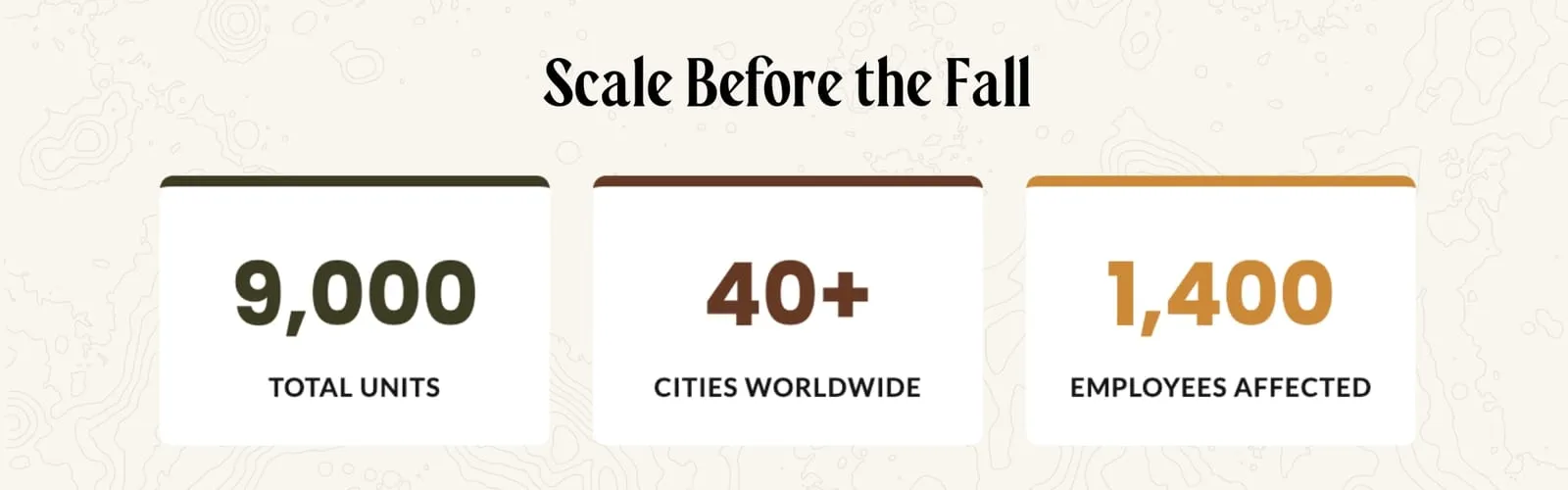
If you’re running a short-term rental business right now, you need to hear this story. Sonder, once valued at over $2 billion and managing 9,000 properties across 40+ cities, shut down in November 2025. Guests in Chicago were kicked out mid-stay during a snowstorm. The collapse was sudden, brutal, and avoidable.
This isn’t just another cautionary tale about a failed startup. This is a masterclass in what happens when you prioritize growth over profitability, when you build your entire business model on a foundation that can’t support its own weight.
In this article, you’ll learn exactly what went wrong with Sonder’s rental arbitrage model, why the Marriott deal that was supposed to save them accelerated their demise, and most importantly, what you can do right now to ensure your short-term rental business doesn’t follow the same path. Whether you’re managing 5 properties or 500, these lessons apply to you.
The Rental Arbitrage Model: A Ticking Time Bomb at Scale
Rental arbitrage sounds brilliant on paper. You lease properties from landlords, furnish them beautifully, and rent them out on platforms like Airbnb for a profit. When it works, it can generate serious cash flow without requiring you to own any real estate.
The problem? At scale, it becomes a financial nightmare.
Sonder’s 2024 financials tell a devastating story. For every dollar of revenue they brought in, they were spending 60 cents just on rent and direct unit costs. Another 30 cents went to operations and support. That’s 90 cents gone before they even touched marketing, executive salaries, or product development.
Think about that for a second. They were spending more than they made, and they had zero room for error.
The rental arbitrage model works beautifully when you’re managing a handful of properties in one city. Your fixed costs are manageable. You can respond quickly to market changes. You’re nimble.
But when you scale to thousands of units across dozens of cities, you’re guaranteeing massive lease payments every single month regardless of whether guests book your properties or not. You can’t just turn off the expense tap when occupancy drops or a market crashes.
The Occupancy Trap: Why High Bookings Don’t Equal Success
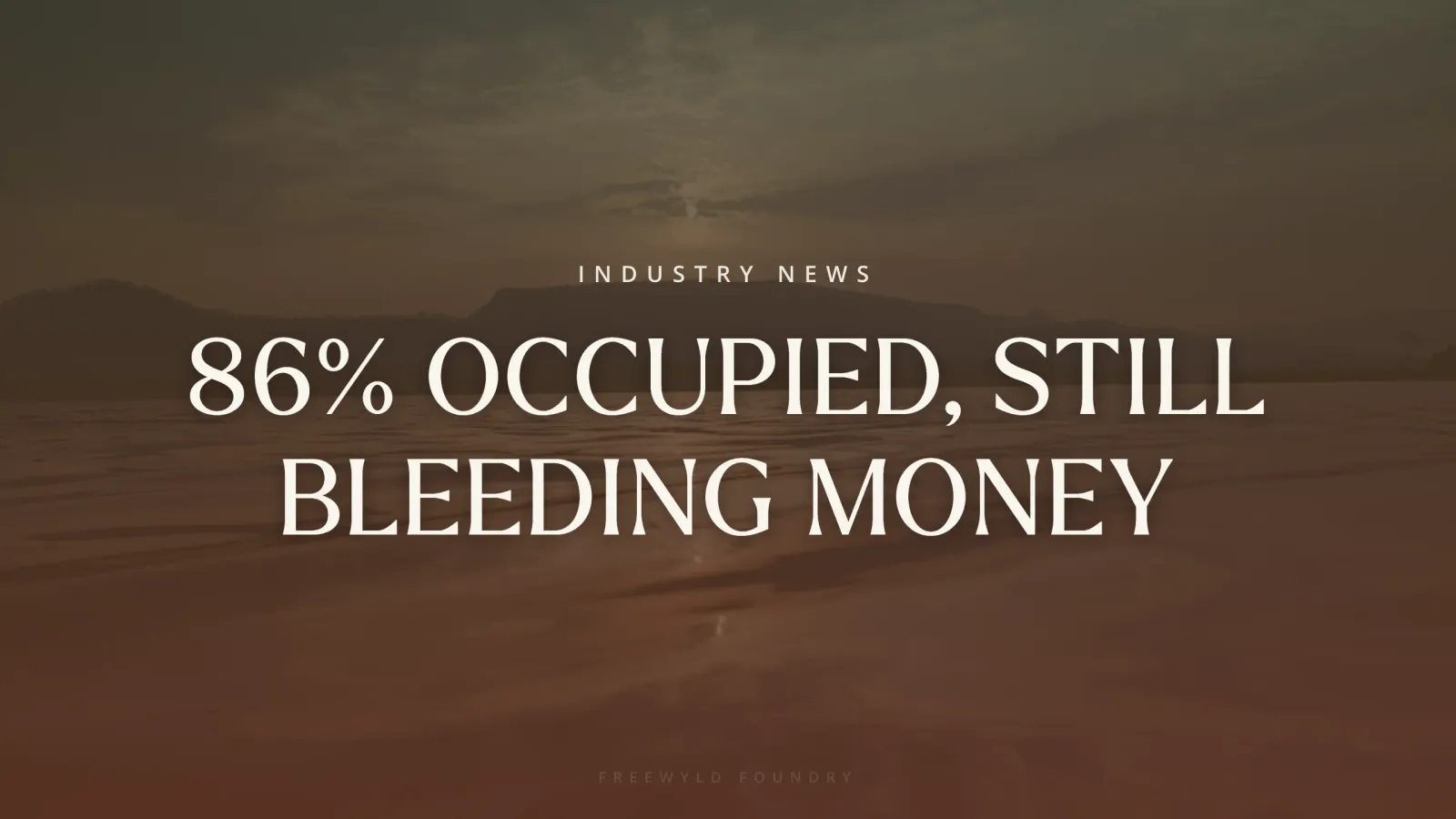
Sonder wasn’t failing because they couldn’t fill their properties. They were achieving 86% occupancy and growing their RevPAR (revenue per available room) by 13% year over year.
On the surface, those numbers look fantastic. Any property manager would be thrilled with 86% occupancy.
Occupancy means nothing if you’re losing money on every booking.
Sonder was slashing their prices to maintain high occupancy rates. They needed to show investors and potential partners that their model was working, that guests wanted their product, that they were winning in the market.
But they were sacrificing profitability to achieve those vanity metrics. They were buying occupancy with discounted rates, which meant their already thin margins became nonexistent.
This is a trap that many short-term rental operators fall into. You see your occupancy dropping and panic. You lower prices to fill gaps. Before you know it, you’re working harder than ever but making less money.
The lesson here is brutal but essential: profitable vacancies are better than unprofitable bookings. If you can’t make money at a certain price point, leave the calendar open and use that time to improve your operations, enhance your property, or market more effectively.
The Marriott Deal: When Your Lifeline Becomes Your Anchor
The partnership between Sonder and Marriott in 2024 was supposed to be the industry’s validation moment. The short-term rental industry collectively celebrated. Finally, a major hotel brand was legitimizing the space and bringing professional credibility to what had been seen as a mom and pop industry.
The reality? That deal killed Sonder.
The integration costs were astronomical. Sonder had built their own custom property management system from scratch because they wanted to be valued as a tech company, not just a hospitality business. This meant they couldn’t plug into Marriott’s existing systems like most hotel brands do.
They had to develop entirely new integrations, modify their technology stack, and dedicate massive resources to making the partnership work technically. All while continuing to pay leases on 9,000 properties.
Even worse, the inventory they placed on Marriott’s Bonvoy booking platform underperformed. The bookings they expected from Marriott’s distribution channels never materialized at the levels they needed to justify the investment.
When Marriott pulled the deal, Sonder filed for Chapter 7 bankruptcy within days. The company that had raised hundreds of millions of dollars and achieved a $2 billion valuation was gone almost overnight.
Single Points of Failure: The Danger Zone for STR Businesses
Sonder’s collapse reveals a critical vulnerability that exists in many short-term rental businesses: the single point of failure.
When your entire business model depends on one partnership, one booking channel, one market, or one type of arrangement, you’re building a house of cards. One strong wind and everything tumbles.
Take a hard look at your own business right now. What percentage of your revenue comes from Airbnb? If Airbnb changed their fee structure tomorrow or modified their ranking algorithm, would you survive? If your top three properties suddenly became unavailable, could you maintain profitability?
Diversification isn’t just smart business advice. It’s survival strategy.
This means:
Developing multiple distribution channels beyond just Airbnb and Vrbo. Build your direct booking website. Partner with local corporate housing providers. Get listed on specialty travel sites.
Operating in different markets with different seasonal patterns. If you’re only in ski towns, summer becomes your nightmare season. If you’re only in beach destinations, winter crushes you.
Having a mix of property types and arrangements. Combine owned properties with management agreements. Don’t put all your eggs in the rental arbitrage basket.
Creating multiple revenue streams within your business. Can you offer concierge services? Partner with local experiences? Provide property management consulting?
The operators who survived COVID weren’t necessarily smarter or better. They were more diversified. They had built businesses that could withstand major shocks to one part of their operation. With major events like the 2026 World Cup creating huge demand, diversified operators are best positioned to capture upside while managing risk.
The Tech Valuation Trap: Choosing Your Lane
One of Sonder’s fatal mistakes was trying to be two different businesses simultaneously: a hospitality company and a tech company.
They wanted to be valued like a tech startup because tech companies get higher valuations from investors. A property management company might get valued at 2-3x revenue. A tech company can get 10x revenue or more.
So Sonder invested heavily in building their own property management software, their own booking systems, their own integrations. They raised money as a tech-enabled hospitality brand.
In the tech world, your fixed costs hit a ceiling. Once you build the software, adding more users doesn’t significantly increase your costs. Your profitability can scale exponentially.
In hospitality, every single property you add increases your fixed costs. You need more cleaners, more maintenance, more customer service, more rent payments. Your costs scale linearly with your growth.
Sonder was trying to achieve tech company profitability while bearing hospitality company costs. Those two models are incompatible at scale.
The lesson for smaller operators is clear: choose your lane and stay in it until you’ve mastered it.
If you’re a property management company, be the best property management company you can be. Don’t get distracted trying to build software or become a booking platform or expand into 40 cities before you’ve dominated your home market.
If you want to build technology for the industry, focus on that. Build tools that other operators will pay for and let them handle the hospitality side.
Trying to do everything usually means you end up doing nothing particularly well.
Real-World Example: The San Diego Boutique Hotel
Consider this real scenario that illustrates both the opportunity and the risk in rental arbitrage.
A boutique hotel owner in downtown San Diego was approached by Sonder before COVID to lease the entire building. Sonder would handle all operations, pay a fixed monthly lease, and the owner would have stable income without any management responsibilities.
The deal looked perfect on paper. Guaranteed income, professional management, a nationally recognized brand operating the property.
Then COVID hit. Sonder immediately pulled their lease. The owner was left with an empty building and no revenue.
But here’s where it gets interesting: another operator quickly stepped in with a different deal structure, the kind of creative approach operators like Jairo, a Florida operator have used to grow sustainably. Instead of a straight lease, they negotiated a revenue share model. The owner would get a percentage of actual bookings rather than a fixed monthly payment.
This new arrangement is still running successfully today. Why? Because the risk is shared. When occupancy drops, both parties feel it and work together to improve performance. When bookings surge, both parties benefit.
The fixed cost burden that killed Sonder’s model was eliminated by creative deal structuring.
The Profitability Exercise Every Operator Needs to Do Right Now
Stop reading for a moment and pull up your financials from last month. Now break down where every dollar of revenue goes:
How much goes to property costs (rent, mortgage, HOA fees)?
How much goes to operations (cleaning, maintenance, utilities)?
How much goes to team salaries and administrative costs?
How much goes to marketing and guest acquisition?
How much goes to technology and tools?
What’s left over as actual profit?
If you’re spending more than 60-70 cents of every dollar on fixed costs that you can’t easily reduce, you’re in dangerous territory. You have no buffer for market changes, no room to invest in growth, no cushion for emergencies.
Sonder was spending over a dollar for every dollar they made. They were paying to be in business.
Your goal should be to structure your business so that at least 20-30% of every revenue dollar becomes profit. This gives you room to weather storms, invest in improvements, and build wealth rather than just generating activity.
The Vacuum Left Behind: Opportunities in Crisis
While Sonder’s collapse is tragic for the 1,400 employees who lost their jobs and the guests who were displaced, it creates significant opportunities for operators who understand what went wrong.
There are now thousands of properties in major cities that landlords need to do something with. Many of these are turnkey operations with existing furniture and setups.
There are 1,400 talented hospitality and revenue management professionals actively looking for work right now. These people have experience operating at scale, dealing with complex systems, and managing operations across multiple markets.
There are lessons learned that you can apply immediately to your own business without having to make the same expensive mistakes.
Smart operators are already reaching out to former Sonder employees, connecting with landlords who have suddenly vacant properties, and structuring deals that learn from Sonder’s errors.
If you’re looking to grow, this is your moment. But approach it intelligently. Don’t just replicate Sonder’s model at a smaller scale. Fix the fundamental issues first.
Building a Sustainable Short-Term Rental Business
So what does a sustainable short-term rental business look like?
It prioritizes profitability over growth every single time. You turn down deals that would increase your unit count but decrease your profit margins. You say no to expansion into new markets until your existing markets are running profitably.
It maintains low fixed costs relative to revenue. You avoid long-term lease commitments that lock you into payments regardless of performance. You negotiate profit-sharing arrangements when possible. You keep your overhead lean.
It diversifies revenue sources and reduces single points of failure. You’re not dependent on any single booking channel, market, or property type for the majority of your income.
It stays in its lane and excels at one thing before trying to do everything. You master property management before you try to build software. You dominate your market before you expand to others.
It builds financial cushions and maintains healthy cash reserves. You can survive three to six months with zero revenue if necessary. You’re not constantly scrambling to make payroll or pay bills.
This might sound boring compared to Sonder’s rocket ship growth story. But you know what’s boring? Bankruptcy. Laying off your entire team. Disappointing guests who trusted your brand.
The Size Myth: Big Doesn’t Mean Better
One of the most dangerous myths in entrepreneurship is that bigger companies have figured something out that smaller companies haven’t. That their size proves their model is superior.
Sonder managed 9,000 properties. But they were solving the exact same problems as an operator managing 50 properties. The numbers were just bigger.
They were dealing with pricing strategies, occupancy challenges, maintenance issues, guest communication, and profit margins. Same problems, different scale.
The difference is that at 9,000 properties with massive overhead and fixed costs, their margin for error was smaller than a lean operation running 50 properties profitably.
Size can make you more fragile, not less, if it’s not built on a foundation of solid unit economics.
Summary & Key Takeaways
The collapse of Sonder teaches us several critical lessons:
Rental arbitrage at massive scale is extraordinarily difficult to execute profitably. The fixed costs become overwhelming and eliminate any cushion for market changes or unexpected challenges.
Occupancy and growth are vanity metrics if they don’t translate to actual profitability. It’s better to have fewer properties that generate real profit than more properties that drain your resources.
Single points of failure (like the Marriott deal) can destroy even billion-dollar companies. Diversification across channels, markets, and revenue streams is essential for survival.
Choosing your lane and excelling at one business model is more sustainable than trying to be everything to everyone. Tech-enabled hospitality sounds impressive but creates conflicting cost structures.
Profitability must come before scale, every single time. The most important metric in your business is how much money you keep, not how many properties you manage or how fast you’re growing.
Next Steps: Take Action Now
Don’t let Sonder’s mistakes become your own. Take 30 minutes this week to conduct your own financial audit. Where is every dollar of your revenue going? What are your fixed costs? How dependent are you on any single booking channel or market?
If you discover vulnerabilities, start addressing them immediately. Renegotiate deals to reduce fixed costs. Develop new distribution channels. Build cash reserves.
The short-term rental industry has just watched one of its biggest players collapse. The question is: will you learn from their mistakes or repeat them?
What single point of failure exists in your business right now that you need to address? Where are you prioritizing growth over profitability?
Share your thoughts and biggest takeaways in the comments below. Let’s build more sustainable businesses together.