The 2026 FIFA World Cup is coming to North America, and it’s going to be massive.
We’re talking about five full weeks of elevated demand across the United States, Canada, and Mexico. Millions of international travelers. Stadiums with capacities to host up to 100,000 people per game. Fan zones in every host city.
And for short-term rental operators? This is the biggest pricing opportunity most of us will ever see.
One of our revenue management clients just booked $1,718 per night for a two-bedroom property in Philadelphia. Kansas City listings are holding firm above $1,000/night. Seattle hit 65% occupancy for the US vs Australia game.
But here’s what’s interesting: most markets are still sitting at only 10-25% occupancy right now. And a lot of operators are starting to panic, wondering if they should lower their rates.
In this guide, we’re breaking down exactly what’s happening in World Cup host cities, which markets will see the biggest rate premiums, and the specific strategy you need to maximize revenue over those five weeks in June and July 2026.
Understanding the FIFA World Cup 2026 Event
Event Timeline and Scale
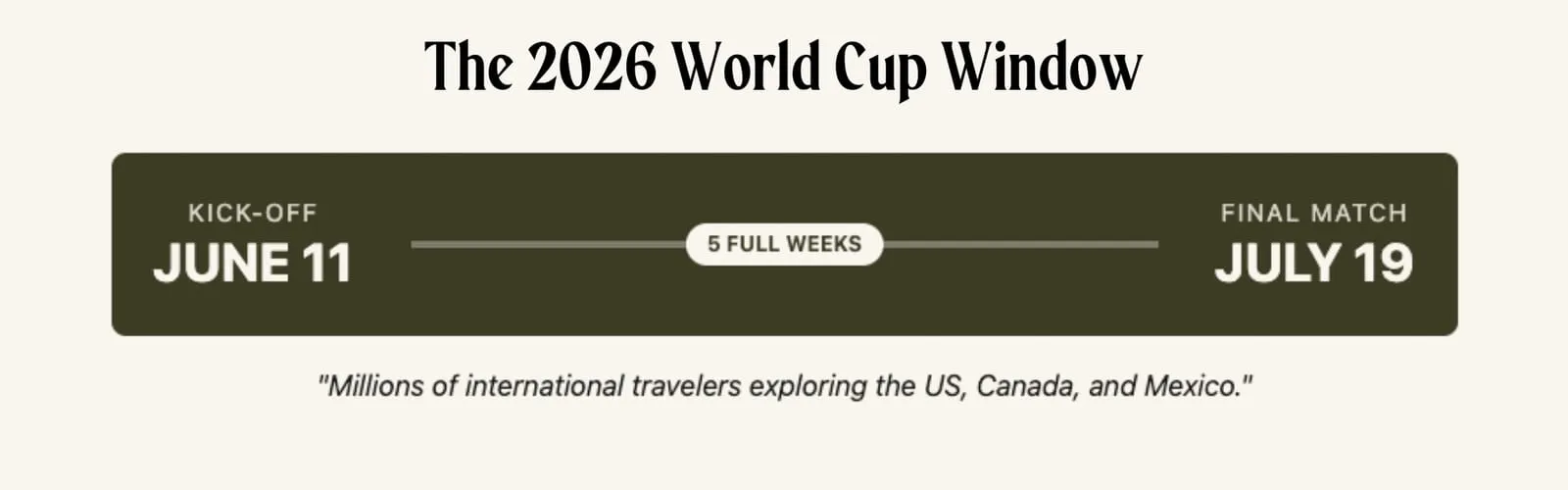
The World Cup runs from June 11 through July 19, 2026. That’s five solid weeks of games across multiple cities in the US, Canada, and Mexico.
Forty-eight countries will participate. Stadiums hold anywhere from 60,000 to nearly 100,000 spectators per game. But there will be far more people traveling than there are tickets available for games.
Fan zones will be set up in host cities. Teams will be staying in specific areas, attracting crowds who want to watch training sessions or catch a glimpse of players. And millions of international travelers will be coming from Europe, South America, and Asia not just to watch one game, but to spend a week or two exploring the country.
Why This Matters for STR Operators
This isn’t just about game dates. The elevated demand will span the entire five-week period, and it will extend beyond host cities into surrounding tourist markets.
We’re already seeing this pattern emerge. Beach markets in Texas are pacing ahead of previous years. Properties in tourist areas near host cities are getting bookings for extended stays as travelers plan to combine World Cup attendance with broader vacation time.
The scale of this event means even operators who aren’t in direct host cities need to understand what’s coming and how to position their properties. For the Airbnb-specific playbook, see our World Cup 2026 Airbnb strategy.
What Happened After the Match Schedule Dropped
The First Booking Wave (December 6, 2024)
On December 6, FIFA released the match schedule. Fans around the world finally knew which cities would host which games.
What followed was immediate. Bookings started coming in.
However, that wave stopped quickly. Within about two weeks, the initial rush was over.
During that first wave of bookings, bargain hunters went looking for underpriced properties. Hosts who hadn’t adjusted their calendars yet or weren’t using dynamic pricing tools saw their inventory get scooped up fast at rates that didn’t reflect the true value of World Cup demand. Avoiding these kinds of revenue management mistakes is critical during high-demand events.
Those properties are gone now. The underpriced inventory has been booked.
Current Market Conditions
Today, most World Cup host cities are sitting at 10-25% occupancy for the event period. And that’s causing some operators to second-guess their pricing strategy.
But low occupancy right now doesn’t mean weak demand. It means we’re in a waiting period.
International fans are still navigating visa approvals, ticket lotteries, and figuring out if they can afford the full trip. Flights from Europe, South America, and Asia aren’t cheap. Game tickets can run anywhere from several hundred dollars to over $1,000 depending on the match and seat location. Add in accommodation and other travel costs, and you’re looking at a significant investment per person.
Most fans haven’t booked accommodation yet because many don’t even know if they’re going.
Real Booking Data from World Cup Host Cities
Seattle: Early Momentum
Seattle is interesting because some games were announced before the full schedule dropped. The US vs Australia match on June 19 was known for a while.
Right now, about 65% of two-bedroom properties are already booked for that game. That’s significantly higher occupancy than most other markets.
We also saw a booking come through for June 26 (Iran vs Egypt) at $1,268 per night for a two-bedroom. For that game, occupancy currently sits at 43%.
The pattern here? Games that were announced early or involve the home team see faster booking velocity.
Kansas City: Holding Above $1,000/Night
Kansas City is where things get interesting from a pricing perspective.
When you search Airbnb for game dates in Kansas City, you won’t find much available below $1,000 per night. Even one-bedroom properties are priced above that threshold.
Current occupancy? Only 10-25%.
But prices aren’t dropping. Why? Because smaller cities like Kansas City have limited hotel inventory. When demand arrives, hotels will fill fast and push excess demand into the short-term rental market. Operators who hold their rates will capture premium pricing as inventory shrinks.
Philadelphia: The $1,718 Booking
Philadelphia is the market where we saw that $1,718 per night booking for a two-bedroom property.
What makes Philadelphia especially compelling is the timing. There’s a round-of-16 World Cup game on July 4th. That’s also Independence Day. And 2026 marks the 250th anniversary of the Declaration of Independence, which was signed in Philadelphia.
You’re looking at stacked demand: World Cup fans, Independence Day travelers, and people coming for the 250th anniversary celebrations. All on the same weekend.
This illustrates an important point: World Cup demand doesn’t exist in a vacuum. June and July are already strong travel months in many markets. The World Cup adds a massive layer of additional demand on top of existing seasonal patterns.
Why Smaller Cities Will Dominate Pricing
Hotel Inventory Constraints Create Pricing Power
Here’s the fundamental dynamic that will determine which markets see the biggest rate premiums: hotel inventory relative to demand.
Stadium capacity is massive. Games will draw 60,000 to 100,000 people. But smaller cities like Kansas City, Philadelphia, and Seattle don’t have enough hotel rooms to absorb that volume.
When hotels sell out, demand shifts to short-term rentals. And when inventory is constrained, operators control pricing.
Major Markets Will See Different Dynamics
Compare that to cities like Los Angeles or New York. These markets will see elevated demand during the World Cup. But they also have massive hotel inventory that can absorb much of the surge.
Hotel supply in major markets will dampen how high STR premium rates can climb. You’ll still see rate increases, but not at the same magnitude as smaller cities with limited inventory.
The strategic takeaway: if you’re operating in a smaller World Cup host city, you’re positioned to capture pricing you’ve probably never experienced before. If you’re in a major market, you’ll benefit from elevated demand but need to set expectations accordingly.
International Traveler Behavior and Booking Patterns
The Visa Factor
One of the biggest factors slowing early bookings is visa processing. Many countries require visas to enter the United States, and the process takes time.
Fans need to go to embassies, submit passports, stand in line, and then wait for approval. Some have tickets already but won’t book accommodation until their visa is confirmed.
There’s been discussion about US immigration creating special visas or streamlined processes for World Cup travelers, but nothing concrete has been announced yet.
Ticket Lotteries and Availability
Here’s how ticket allocation typically works: FIFA distributes a limited number of tickets to each participating country. The demand for those tickets far exceeds supply.
Most countries use lotteries or draft systems to determine who gets tickets. If you want to attend a game, you often need to be a member of your country’s fan club, submit your ticket request, and then wait to see if you’re selected.
Many fans are still in that waiting process. They don’t know yet if they’ll secure tickets, which delays accommodation bookings.
Total Trip Cost Calculations
From conversations we’ve been monitoring in fan forums (particularly in the Netherlands, where Jasper is from), many fans are still calculating whether they can afford the full trip.
You’re looking at: international flights, game tickets (potentially $500-$1,000+), accommodation, and other travel expenses. It adds up quickly.
This isn’t a lack of passion. Soccer fans are passionate. But the economics of attending a World Cup in a different country require planning and budgeting, especially when coming from Europe, South America, or Asia.
Business Travelers and Less Price-Sensitive Demand
Journalists and Media Coverage
World Cup games attract massive media coverage. Journalists from around the world will be traveling to host cities to cover matches, conduct interviews, and report on the event.
These are business travelers. Their companies are paying for accommodation. While they’ll notice if prices are unusually high, they’re generally less price-sensitive than leisure fans booking with personal funds.
We’ve seen reports of journalists already booking hotel rooms at over $1,000 per night because it’s covered by their employer.
Event Staff and Sponsors
Beyond journalists, you have FIFA staff, event coordinators, sponsors, and various people working the games and fan zones.
This creates a layer of demand that’s not subject to the same budget constraints as individual fans. It’s worth keeping in mind when evaluating total demand: not everyone coming to World Cup host cities is a leisure traveler weighing every dollar.
The Strategy: When to Hold and When to Adjust
Hold Your Rates Now
If you’re in a World Cup host city and occupancy looks low right now, resist the urge to panic and drop rates.
The underpriced inventory is gone. Most of the demand hasn’t arrived yet. Fans are still navigating logistics, and the next booking wave will come once tickets are finalized and visas are approved.
Dropping rates now means leaving significant money on the table when demand does arrive.
Monitor the Market Weekly
That said, this isn’t a “set it and forget it” situation. You need to actively monitor what’s happening in your market.
Check your bookings weekly. Do competitive searches on Airbnb to see what inventory is available and at what prices. Track occupancy trends in your pricing tool.
The key metrics to watch: pickup (new bookings coming in), pricing trends among comparable properties, and any changes in occupancy velocity.
Research Fan Behavior and Ticket Sales
One of the most valuable things you can do is put yourself in your potential guest’s shoes.
If your city is hosting a game between Germany and another country, for example, research German fan forums. Use Google Translate if needed. See what fans are discussing: Are they booking? What are their concerns? What’s their timeline?
Track ticket lottery announcements. Monitor airline pricing from key markets. Understand the logistics your guests are navigating, and you’ll have better insight into when the next booking surge will hit.
Consider Surrounding Markets
If you’re not in a direct host city but you’re within driving distance or in a nearby tourist area, pay attention to pacing compared to previous years.
We’re already seeing some Texas beach markets running ahead of last year. Guests aren’t just booking for game dates. They’re booking extended trips that combine World Cup attendance with broader vacation time.
If you’re seeing elevated pacing, adjust your rates accordingly. If you’re not seeing it yet, stay alert. The pattern could shift as more fans finalize their plans.
What About Cancellations?
The Free Cancellation Window
Here’s a reality to keep in mind: many bookings that come in now can still be cancelled.
Unless you have a strict cancellation policy, guests booking six months in advance can cancel weeks or even a month before check-in without penalty.
Some guests might book now to secure a property, then continue monitoring Airbnb to see if cheaper options appear later. If they find something more affordable, they could cancel and rebook.
Why Rates Will Likely Climb, Not Drop
That said, there’s good reason to believe most bookings will stick.
The underpriced inventory is already gone. There aren’t deals to be found anymore. So the only way rates come down from here is if we get close to the event and inventory still hasn’t filled up, causing operators to panic.
That scenario is possible if demand doesn’t materialize as strongly as expected in certain cities. But based on the scale of the event and the patterns we’re seeing, rates are more likely to climb higher as inventory shrinks and demand builds.
Guests who booked early at elevated rates will likely hold those reservations rather than risk losing their accommodation entirely.
Real-World Example: How We’re Approaching This
Portfolio-Level Strategy
Across the portfolios we manage at Freewyld Foundry, here’s how we’re approaching World Cup pricing:
First, we’ve identified which properties are in or near host cities. Those properties get World Cup-specific pricing strategies with elevated rates for the entire five-week period.
Second, we’re monitoring occupancy and pickup weekly. If we see booking velocity increase, we adjust rates upward incrementally rather than waiting for occupancy to hit a certain threshold. These are the same revenue management strategies we apply across all our portfolios.
Third, we’re tracking comparable properties in each market to understand competitive dynamics. If the market is holding firm above certain price points (like $1,000/night in Kansas City), we match or exceed those rates rather than undercutting.
Fourth, we’re setting minimum night stay requirements strategically. For game dates, we’re requiring multi-night stays to prevent single-night bookings that leave orphan nights on either side. Our broader World Cup 2026 STR pricing analysis covers market-by-market tactics in more detail.
What We’re Telling Clients
The consistent message to clients: hold your rates, we’re monitoring actively, and don’t panic when occupancy looks low.
This is a waiting game. The demand is coming. The question is whether you’ll be positioned to capture it at premium rates or whether you’ll have already dropped prices unnecessarily.
For properties in smaller host cities with limited hotel inventory, we’re confident rates will climb significantly higher than current levels. For properties in major markets, we’re setting expectations for elevated but not explosive rate premiums.
Summary and Key Takeaways
The 2026 FIFA World Cup represents the biggest short-term rental pricing opportunity most operators will experience.
Here are the key points to remember:
- The first booking wave already happened in early December when the schedule dropped. Underpriced inventory got scooped up fast. That inventory is gone now.
- Current occupancy of 10-25% across most host cities doesn’t mean weak demand. It means fans are still navigating visa approvals, ticket lotteries, and trip logistics.
- Smaller cities like Kansas City, Philadelphia, and Seattle will see the biggest rate premiums because limited hotel inventory creates pricing power for STR operators.
- Major markets like LA and New York will see elevated demand but not explosive premiums due to massive hotel supply that absorbs much of the surge.
- The strategy right now is to hold rates, monitor weekly, and resist the urge to panic. Most of the demand is still coming. Rates will likely climb higher as inventory shrinks, not drop.
Next Steps: Position Your Portfolio Now
If you’re operating in a World Cup host city or surrounding market, now is the time to finalize your pricing strategy.
Don’t wait until May or June to think about this. The operators who capture the biggest upside will be the ones who position correctly now and hold firm as occupancy builds.
Want help analyzing your specific market and property performance? We offer free Revenue Reports for STR operators managing 15+ properties. We’ll show you exactly where your biggest opportunities are and how to capture them during the World Cup period.
Apply for your free Revenue Report at freewyldfoundry.com/report.
Questions for discussion:
Are you positioned in a market where inventory constraints will work in your favor? What are you seeing in your local market right now?
Internal Links:
-
Ep681 - FIFA World Cup Draw: Which Cities Will Profit the Most
-
Ep679 - 2026 Pricing Strategies Every Short-Term Rental Operator Must Use
https://freewyldfoundry.com/ep679-str-pricing-strategies-2026/
-
Ep667 - Airbnb 2026: How Pro Hosts Will Dominate the Game
External Links:
- Hostaway - “4 Revenue Management Best Practices for Short-Term Rentals”:
https://www.hostaway.com/blog/revenue-management-best-practices/ - FIFA World Cup 2026 Official Schedule: https://www.fifa.com/en/tournaments/mens/worldcup/canadamexicousa2026