The Reality of Scaling a Short-Term Rental Business
Growing a property management company isn’t just about adding more doors. It’s about maintaining quality while your portfolio explodes, keeping your team aligned during constant change, and knowing when to say no to opportunities that don’t fit your vision.
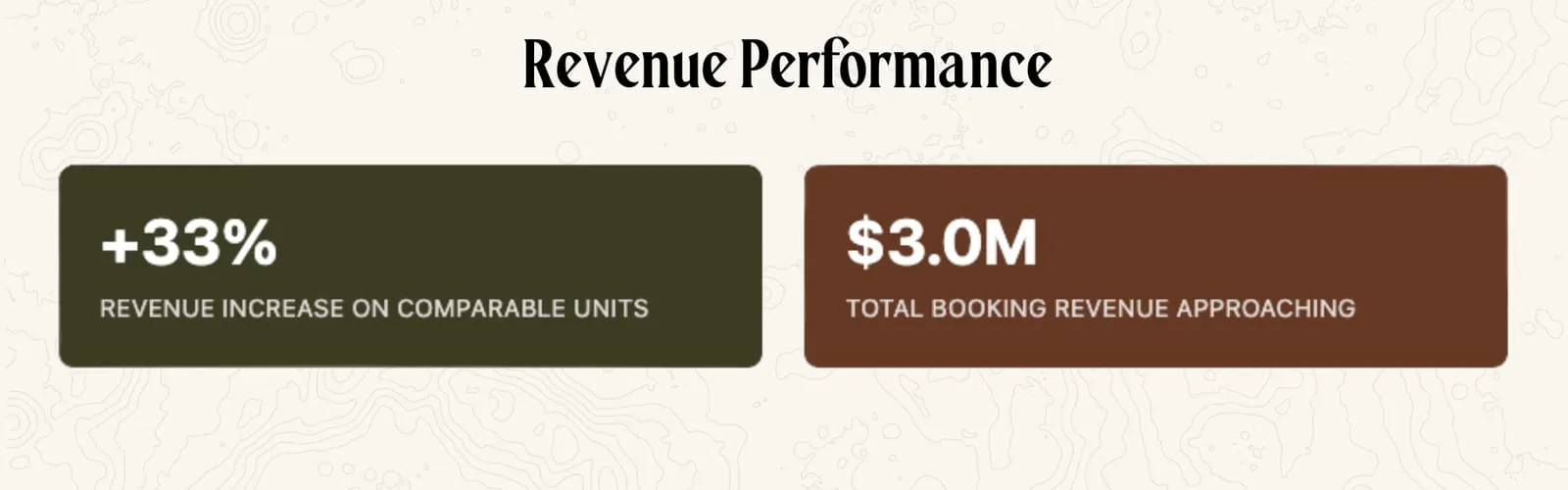
Troy Daily, CEO of Elevated Stays in Traverse City, Michigan, knows this better than most. In just one year, he nearly doubled his portfolio while opening an in-house laundry facility, renovating a 150-year-old building, and increasing revenue by 33% on comparable units. His company now manages 95 active short-term rentals with total booking revenue approaching $3 million.
If you’re wondering how to scale your vacation rental business without sacrificing guest experience or burning out your team, this guide into Troy’s strategies will give you the practical framework you need.
Understanding Seasonal Markets: The 90% to 10% Occupancy Challenge
Traverse City presents a unique operational challenge that many short-term rental managers can relate to: extreme seasonality. During June, July, and August, Elevated Stays maintains over 90% occupancy across all units. Come January through March, that number drops to 10-12%.
This dramatic swing forces strategic thinking about operations, staffing, and growth planning. Troy uses the slow season deliberately. Rather than panicking about low occupancy, his team focuses on planning, evaluating tech stack efficiency, and setting vision for the year ahead.
The winter months become strategic planning time. His team evaluates what worked and what didn’t, implements new operational systems, and ensures quality standards remain high. This intentional approach to seasonality transforms a potential weakness into a competitive advantage.
For property managers in seasonal markets, this pattern offers a blueprint. Use your slow periods to sharpen your operations rather than weathering the storm.
The Right People in the Right Seats: Why Team Alignment Matters More Than Growth
Troy mentions this principle repeatedly throughout the conversation, and for good reason. As he puts it, getting the right people in the right seats was the single best decision he made this year.
But what does this mean in practice?
First, it means hiring slowly and firing quickly, though Troy admits this is much easier said than done. Everyone has emotions, feelings, and families to consider. The difficulty doesn’t make it less necessary.
Second, it requires brutal honesty about alignment. If team members don’t share your goals, values, and vision, the relationship won’t work regardless of their individual capabilities. Troy learned this lesson the hard way during his rapid growth phase.
Third, it means recognizing that growth is uncomfortable for everyone, not just the visionary leader. Employees typically want stability and consistency. When you’re onboarding 40+ units in a single year, you’re asking your team to adapt constantly to new properties, systems, checklists, and workflows.
The housekeeping team visits different locations. Operations staff learns new property quirks. Everyone adjusts to new owner personalities and preferences. This constant change creates natural turnover, especially in housekeeping roles.
Troy’s solution involved splitting previously combined roles. The housekeeping operations position became two distinct roles: a housekeeping manager and a separate operations manager. While these positions overlap significantly (the operations manager still handles inspections), separating them allowed each person to focus on their core responsibilities.
The operations manager now handles inventory, owner relations support, scheduling, payroll, and HR functions. This freed the housekeeping manager to focus purely on cleaning quality, team management, and maintaining the elevated standards that define the brand.
Bringing Laundry In-House: A Game-Changing Investment in Quality Control
Earlier in 2024, Elevated Stays made a significant operational shift by bringing laundry in-house. Troy admits he had no idea what he was getting into until facing the reality of washing linens for 288 rooms worth of inventory.
Opening a dedicated laundry facility represented a massive undertaking, but it solved several critical problems simultaneously.
First, it gave Troy complete control over linen quality. Elevated Stays now supplies all linens to every owner in their portfolio. Owners never worry about towels, sheets, pillows, or duvets. The company provides Hilton hotel-grade, all-white linens that present a consistent, elevated experience across all properties.
Second, the facility includes a large commercial iron press. Sheets go in wet and come out crisp, hot, and ready to place on beds. This level of finishing separates short-term rentals from traditional hotels in terms of quality.
Third, in-house laundry created a new competitive advantage for owner acquisition. When Troy pitches potential clients, he can confidently explain how his company handles every detail of the guest experience, including premium linens that owners never purchase or maintain themselves.
The investment paid off in guest reviews, repeat bookings, and the ability to command higher nightly rates. Quality linens aren’t just about aesthetics. They’re about delivering an experience that justifies premium pricing and earning five-star reviews consistently.
The Art of Saying No: Why Troy Started Turning Down Properties
For the first several years of growth, Troy said yes to almost every management opportunity. He wanted to grow, needed to scale, and didn’t have the luxury of being selective about which properties entered his portfolio.
That strategy worked initially, but it created problems as the company matured and developed a clear brand identity.
Some properties didn’t align with the Elevated Stays vision. Owners weren’t willing to reinvest in their properties to maintain quality standards. Units generated poor reviews or low revenue that dragged down the portfolio’s overall performance.
Troy made the difficult decision to drop several properties after the 2024 season because they didn’t align with company values and quality expectations. More importantly, he started turning down new opportunities that would have made him say yes 18 months earlier.
This selectivity serves a crucial strategic purpose. If your brand doesn’t mean something specific, it loses all value. When guests don’t know what to expect from an Elevated Stays property, you become just another generic property manager competing solely on price.
Troy even applied this standard to his own properties. The seven-unit building he owned included some of his worst performing units. Rather than continue managing substandard properties, he committed over $700,000 to renovate the building across two winters.
That decision exemplifies the principle. If a property doesn’t meet your standards, you either invest to bring it up to standard, convert it to long-term rental, or remove it from your portfolio. There’s no fourth option if you’re serious about maintaining brand integrity.
Revenue Management: The Hidden Advantage of Expert Partners
Troy has worked with Freewyld’s revenue management team since the service launched. The results speak: 33% revenue growth on comparable units and 102% total growth when including new properties.
He admits he initially thought he could handle pricing himself. Most property managers do. But as the portfolio scaled toward 100 units, the time commitment became impossible to sustain.
Dynamic pricing isn’t a weekly task. It requires daily attention, analysis of local market conditions, weather patterns, events, holidays, and competitor pricing. Doing this properly for 100 properties is a full-time position. The 7 Strata framework for STR operators outlines how revenue management fits into a holistic growth strategy.
Beyond the time investment, expert revenue managers bring market knowledge that’s difficult to develop internally. They understand regional seasonality patterns, optimal pricing strategies for different property types, and how to maximize revenue in both peak and shoulder seasons.
Troy’s market presents particular challenges. Traverse City is experiencing rapid growth with new condo developments appearing constantly. Everyone thinks they can manage short-term rentals profitably. In an increasingly saturated market, professional revenue management became the difference between growing revenue 33% and watching profits stagnate.
For Troy, the partnership allows him to focus on his strengths: owner relations, vision setting, and strategic growth. He can confidently tell owners how Elevated Stays will increase their revenue because he trusts the pricing strategy being executed daily on their behalf.
Real-World Example: The 150-Year-Old Building Transformation
Troy’s decision to renovate his seven-unit building illustrates several important principles about scaling with intention.
The building dates to the late 1800s and sat just blocks from downtown Traverse City. For years, these units represented some of the worst performers in the Elevated Stays portfolio. Troy faced a choice: sell it, convert to long-term rental, or invest heavily in renovation.
After consulting with his partners and advisors, including conversations with Eric about whether to demolish and rebuild or renovate, Troy chose the renovation path. Local regulations complicated new construction by limiting short-term rental percentages in rebuilt properties.
The renovation revealed unexpected challenges. From one corner of the building to another, there’s an 18-inch difference in floor height. New framing, roof rafters, and structural work became necessary just to level everything properly.
Over two winters, Troy invested over $700,000 in gutting and renovating all seven units. The first winter focused on three lower units. This winter, the upstairs units are being transformed. All interior walls were removed, leaving only exterior walls standing.
The finished product will function as a boutique hotel with efficiency units offering an elevated experience above traditional hotel quality. It won’t compete with larger vacation homes. Instead, it fills a market gap for travelers who want quality accommodations without needing full-house amenities.
This project demonstrates Troy’s commitment to brand integrity. He refused to keep managing properties that didn’t meet Elevated Stays standards, even when he owned them. The significant investment positions this building as a flagship property that exemplifies what the company represents.
Owner Acquisition Strategies That Work
Troy generates new management contracts through three primary channels: Venturi, organic SEO, and referrals.
Venturi required patience. The first year and a half produced minimal results. Troy considered stopping the service multiple times. But he understood that consistent marketing takes time to generate momentum, similar to SEO requiring 6-9 months before showing meaningful results.
By the end of year two, Venturi started generating quality leads. Throughout 2024, Troy received 12-14 new contracts directly from Venturi, with monthly meetings increasing to three or four quality prospects.
His advice for other property managers considering similar services: commit for at least two years. The first 18 months builds foundation and credibility. Real results accelerate after that initial investment period.
SEO represents another major lead source. Elevated Stays ranks well for local search terms related to property management in Traverse City. This generates inbound leads from property owners actively searching for management services.
Troy’s background as a real estate broker provides natural referral opportunities. Other agents and brokers in the area refer clients purchasing investment properties who need management services.
The referral channel extends beyond real estate professionals. Satisfied owners recommend Elevated Stays to other property owners in their network. Troy considers referrals his number one lead source because they come pre-qualified with understanding of his company’s quality standards and service approach.
The CEO’s Weekly Focus: Owner Relations and Strategic Vision
As CEO of a 95-unit operation, Troy’s role has evolved significantly from his early days managing everything himself.
He now spends most of his time on owner relations and communication. With 100 units comes 100 ownership relationships requiring nurturing, trust-building, and regular updates. Each owner wants to understand how their investment is performing and what Elevated Stays is doing to maximize returns.
Troy implemented a monthly owner newsletter that provides updates on company initiatives, market highlights, and specific suggestions for property improvements. Recent newsletters included information about the local airport expansion and recommendations for amenities that increase ADR and occupancy.
He personally handles all owner acquisition sales calls. When prospective clients want to learn about Elevated Stays, they speak directly with Troy. This approach ensures consistent messaging about company vision and values. It also begins the owner relationship with the person they’ll continue working with long-term.
His operations team handles everything happening on the ground: housekeeping, laundry, maintenance, and day-to-day property management. But owners communicate primarily with Troy about strategic decisions, property improvements, and performance analysis.
This structure leverages Troy’s strengths as a visionary leader while protecting him from getting pulled back into operational details that others handle more efficiently.
Growth Strategy for 2026: Boutique Hotels and Strategic Acquisitions
Looking ahead, Troy is evaluating several growth opportunities that align with Elevated Stays’ focus on unique, experience-driven properties.
He’s specifically interested in small property management company acquisitions in the Traverse City area. Rather than just taking on individual properties, acquiring existing management companies allows faster scaling with established operations.
More intriguingly, Troy is exploring opportunities to manage or acquire small hotels and convert them into Airbnb-style boutique hotels. Traditional legacy hotels dominate the Traverse City market. Few offer the unique, elevated experiences that modern travelers increasingly demand.
Troy sees an opportunity to transition standard hotels into properties that provide boutique experiences with short-term rental flexibility. This fills a market gap between traditional hotels and full-house vacation rentals.
The strategy aligns with his renovated seven-unit building approach: create efficiency units with hotel-grade amenities and elevated design that commands premium pricing while serving travelers who don’t need entire houses.
This growth direction reflects Troy’s commitment to pursuing unique opportunities rather than adding generic properties. He’s building a portfolio of distinctive experiences that can’t be easily replicated by competitors.
Summary & Key Takeaways
Troy Daily’s journey from 18 to 95+ units offers several critical lessons for property managers scaling their businesses:
- Quality must remain non-negotiable during growth. Invest in your own properties first before expecting owners to invest in theirs. Brand integrity depends on consistent standards across your entire portfolio. These are among the core non-negotiables for STR success.
- The right team members matter more than rapid growth. Hiring slowly and ensuring values alignment prevents costly turnover and operational chaos. Split roles as needed to prevent overwhelming individual team members.
- Bringing key operations in-house (like laundry) provides quality control and competitive advantages that justify premium pricing. Initial investment pays dividends through improved guest experience and reviews.
- Learn to say no to properties and owners that don’t align with your vision. Selectivity strengthens your brand and allows you to command higher management fees with ideal clients.
- Expert partnerships for specialized functions (like revenue management) free you to focus on high-value activities while ensuring professional execution of critical business functions.
Next Steps: Building Your Own Elevated Experience
What’s the one operational area in your business that, if brought in-house or improved significantly, would most elevate your guest experience? Consider where quality control matters most to your brand positioning.
How selective are you being about which properties enter your portfolio? If you’re saying yes to everything, you’re likely diluting your brand value and making it harder to command premium pricing.
What aspects of property management are you handling personally that expert partners could execute more effectively, freeing you to focus on strategic growth and owner relations?
Internal Links:
-
Ep667 - Airbnb 2026: How Pro Hosts Will Dominate the Game: https://freewyldfoundry.com/ep667-airbnb-pro-hosts/
-
Ep680 - 1,000+ 5-Star Airbnb Reviews: What It Took: https://freewyldfoundry.com/ep680-5-star-airbnb-reviews/