The Challenge That Changed Everything
Most property management companies dream of doubling their portfolio in a year. For Joe Prillaman and Grant from HostHelp, the mission to scale STR management wasn’t just a dream, it was a necessity. They didn’t have the luxury of slow growth; they had to move fast
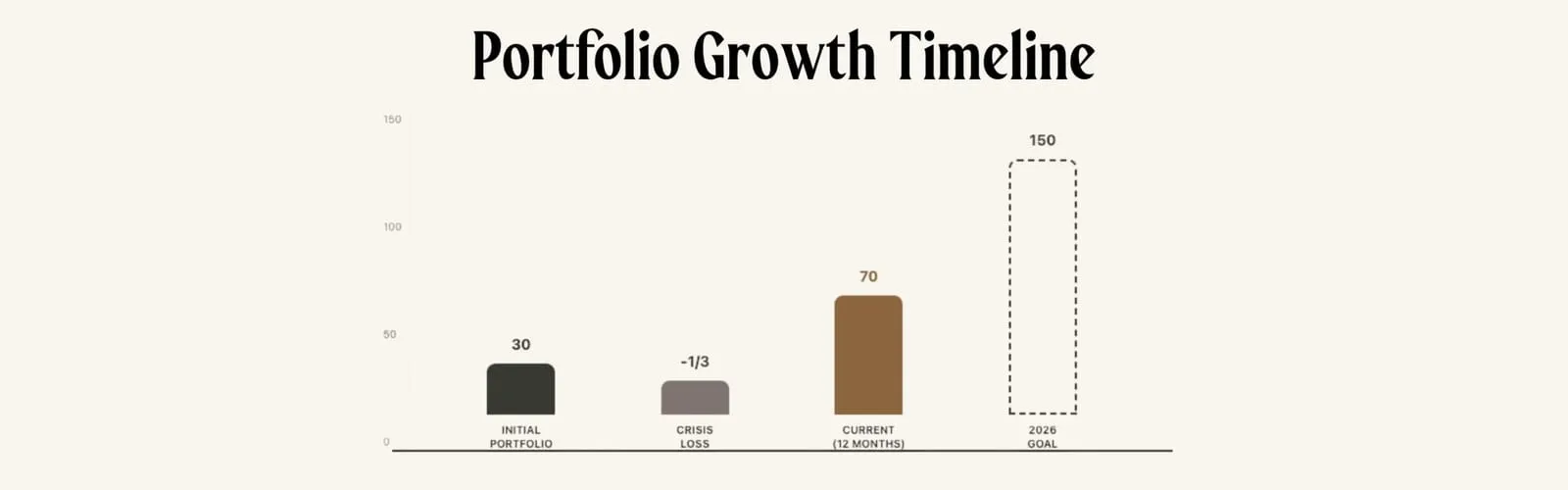
When Hurricane Helene devastated Banner Elk, North Carolina, following severe flooding in Carolina Beach just two weeks prior, Joe lost a third of his 30-property portfolio almost overnight. The mortgages didn’t stop. The team was already in place. And the bills kept coming.
Instead of retreating, Joe and his partner, Grant, decided to transform their business: they went all-in on property management for other owners. Within 12 months, they grew to nearly 70 properties with plans to reach 150.
This isn’t a story about overnight success or some secret growth hack. It’s about turning catastrophic loss into opportunity through systems, relationships, and relentless focus on quality. If you’re managing short-term rentals or thinking about scaling your property management business, the lessons from HostHelp’s journey could save you years of trial and error.
The Foundation: Building Relationships Before You Need Them
Joe didn’t start his property management company with a cold outreach campaign or expensive advertising. He spent years building something far more valuable: genuine relationships in the North Carolina short-term rental community.
For years before launching property management services, Joe had established himself as “the short-term rental guy” in Wilmington. He started a BiggerPockets meetup group, became a high-producing real estate agent specializing in short-term rentals, and consistently helped other hosts improve their operations with zero expectation of return.
When crisis hit, and he needed to pivot quickly, Joe pulled out his phone and contacted every person in his network. The conversation was simple: “I’m in the game now.”
What made this approach work wasn’t just the size of his network. It was the trust he’d built by first giving value. For years, people had asked if he did property management, and his answer was always the same: “No, but here’s exactly how we do it for our own properties. I’m an open book.”
When he finally said yes to managing properties for others, people already knew his standards, his integrity, and his results.
The lesson here is clear: start building your reputation and relationships today, even if you’re not ready to scale. Your future growth depends on the seeds you plant now.
The Three C’s: Fighting for Five-Star Reviews
When Joe talks about his management philosophy, he keeps it refreshingly simple: cute, clean, comfortable. But simple doesn’t mean easy.
“There’s no secret sauce,” Joe explains. “It’s fighting for your five-star reviews. It’s making sure you have a wonderful place that people want to stay at. And it’s really just bending over backwards for your guests.”
HostHelp’s approach was forged in the Airbnb ecosystem, where mediocre performance gets you buried in search results. They applied that high-standard mentality across all platforms.
Fighting for five-star reviews starts long before a guest arrives. It means having incredible photos that accurately represent the property. It means choosing locations that guests want to visit. But most importantly, it means building systems to handle the inevitable problems that arise.
Take door locks, for example. Every short-term rental manager knows that smart locks will fail. It’s not if, it’s when. Whether it’s internet issues, dead batteries, or a guest who can’t figure out the keypad, you need backup plans.
HostHelp’s solution is elegantly simple: three layers of backup. A manual lockbox sits right beside the smart lock with a backup key. A second lockbox contains another key for when guests lose the first one. And a third lockbox holds keys for cleaners and serves as an emergency backup when both guest keys have disappeared.
This is what Joe calls “putting yourself in positions to get lucky.” It’s not luck when you’ve planned for every likely scenario.
The Quality is Free Philosophy
One of HostHelp’s biggest lessons from their rapid growth came from onboarding properties that weren’t up to their standards. When you’re desperate to replace lost revenue, it’s tempting to take on any property that comes your way.
Joe learned the hard way that this approach creates more problems than it solves.
“Quality is free,” he now says. “The more work you put in on the front end of making a property set up well for a guest, the better you’re going to do long term and the better you’re going to be able to maintain that standard.”
HostHelp didn’t have the luxury of a careful onboarding process when they first pivoted to management. They were in survival mode, taking on properties as fast as possible. But through trial and error, they developed a comprehensive checklist covering everything that could go wrong based on five years of managing their own portfolio.
Sometimes going slow is fast. A property that’s properly set up from day one with the right equipment, three sets of linens, a rockstar cleaner, a reliable handyman, and professional photos will perform better and require less ongoing management than one you rushed to market.
The challenge is that no two properties are the same. You’ll encounter self-managers who have everything dialed in and just want to hand over the reins. You’ll also get brand new acquisitions that need complete restaging, professional photography, and full system implementation before they’re ready for guests.
The key is having a standardized process flexible enough to meet each property where it is while bringing it up to your quality standards.
The Economics of Scale: The 65-Property Threshold
You need significant scale before the business works.
Joe is refreshingly honest about this. “In a short-term rental management business, you really need 65 to 70 properties before you have the income to pay the level of staff that you need to not be glued to a phone 24/7.”
When you’re managing around 30 units, you can handle most things yourself with one or two helpers. But here’s what founders don’t realize: as the visionary and operator, you’re doing the jobs of five or six people. You’re the pricing manager, guest communication specialist, maintenance coordinator, quality control inspector, and business developer all rolled into one.
To scale beyond that point, you need an individual person in each of those seats. And hiring five or six people requires the revenue from 65 to 70 properties just to cover overhead.
This creates what Joe calls “a season of grind.” If you want to build a true property management business, you need to accept that you’ll be grinding to reach that critical mass where the economics work. Once you get there, though, that same team can manage 150 to 200 properties.
Joe’s advice for anyone starting out: don’t try to do both short-term and long-term rentals. Pick one and be the best at it. Splitting your focus will pull you in two directions and prevent you from achieving excellence in either. This mirrors the approach we’ve seen work for companies that dominate one market before expanding.
Building the Right Team: Removing Your Ego
HostHelp now operates with a team of 10 people, each focused on specific aspects of the business. Joe and Grant handle the visionary and integrator roles. Elizabeth serves as director of operations. Danielle manages guest communications. Kelsey directs the cleaning staff and coordinates maintenance.
But the real breakthrough came when Joe removed his ego from the equation.
“The people who are on our team are just better at it than I was,” Joe admits. “That’s what I love about it.”
This mindset shift is crucial for scaling. As a founder, you’ve been doing everything yourself and probably doing it pretty well. It’s easy to fall into the trap of thinking no one can do it as well as you can.
The reality is different. When you hire people who can focus full-time on specific functions, they’ll often exceed your performance in those areas. They’re not spread thin across a dozen responsibilities. They can develop deep expertise and optimize systems in ways you never had time to do.
Joe’s willingness to hand over pricing to Miles from Freewyld Foundry exemplifies this. Pricing was Joe’s “bread and butter.” He took pride in being at the top of his market. But when Miles showed him where he was dropping the ball, Joe didn’t get defensive. He recognized that Miles, focusing exclusively on pricing, had become better at it than Joe could be while also running the entire business.
“This is the guy. This is the goat. Let him eat,” Joe recalls thinking.
That humility and willingness to empower others allow businesses to scale beyond the founder’s personal capacity. It’s one of the non-negotiables for STR success that separates growing companies from stagnant ones.
The Highest Dollar Per Hour Activity: Pricing
Once you have your properties set up correctly with the right systems in place, pricing becomes your highest leverage activity.
Joe puts it bluntly: “If you have two properties that are identical and one is doing $100,000 gross while the other is doing $40,000, understanding the difference comes down to making sure your pricing is completely dialed in.”
Too many property managers get stuck endlessly tweaking their operations, constantly adjusting their setup, always chasing perfection. While those things matter, they’re not your highest dollar-per-hour activity once the basics are in place.
When you’re managing 30 properties, you might be able to manually optimize pricing. When you hit 70 and are heading toward 150, that becomes impossible. You need someone whose full-time job is to know your properties better than you do and adjust pricing based on market conditions, local events, competitor movements, and booking pace.
Finding the Right Revenue Management Partner
Joe interviewed multiple pricing services before finding the right fit. What stood out about working with Freewyld Foundry wasn’t just their systematic approach, which aligned with how HostHelp was already thinking about pricing. It was the attention to detail.
“Miles was just made to price,” Joe says. “That dude is a monster.”
What sold Joe was when Miles looked at HostHelp’s pricing and said, “Man, you’re doing really good, but here’s where you’re dropping the ball.” That kind of honest feedback is rare, especially when you’ve been proud of your performance.
For Joe, pricing had been his bread and butter. It was the part of the business he’d taken the most pride in, consistently keeping HostHelp properties at the top of their market. Handing that responsibility to someone else wasn’t easy.
“He took that job directly from me,” Joe admits. “And I had a lot of pride in how our price points had been top of the market.”
But the results spoke for themselves. Not only did occupancy improve, but ADR (average daily rate) increased across the portfolio. The results echo what we achieved with Jairo, a Florida operator, where professional revenue management transformed performance. More importantly, Joe got something back that money can’t buy: time and mental energy.
The Freedom to Focus on What Matters
Working with a dedicated revenue management team gave Joe something equally valuable as increased revenue: the ability to focus on building the business rather than constantly adjusting rates.
“The biggest thing for me is knowing that I can take one of the most valuable parts of the business and hand it to another group that is going to love it like I love it,” Joe explains. “You just don’t find that anywhere out there.”
Instead of spending hours every week monitoring pricing across 70 properties, checking competitor rates, analyzing booking pace, and adjusting for local events, Joe can now focus on what he does best: ensuring HostHelp provides an incredible product for homeowners and serves guests at the highest level.
This is the leverage point that many property managers miss. They think they’re saving money by handling everything in-house, but they’re limiting their growth. Every hour Joe spent on pricing was an hour he couldn’t spend onboarding new properties, training his team, or building relationships with potential clients.
“It gave me the freedom to get back in there and to make my business good,” Joe reflects.
That freedom is what allowed HostHelp to grow from 30 properties to nearly 70 in a single year. When you’re trying to scale, focus your time on the activities only you can do as the founder. For Joe, that’s vision, culture, and client relationships. Pricing, while critical, is something a specialist can handle more effectively when it’s their sole focus.
Marketing and Sales: Turning Up the Treadmill
Joe has a great metaphor for marketing: it’s like a treadmill. If you’re out of shape and you turn that treadmill up to 10, you’re going to learn very quickly just how out of shape you are.
HostHelp spent its first year getting in shape. They built the machine, developed the systems, and trained the team. They did zero advertising. Every property came through word of mouth from people who knew Joe would make mistakes but would go above and beyond to fix them.
“We’re finally at the point now where I’m confident in the machine that we’ve built that we can provide that same level to the masses,” Joe explains.
That’s when they started marketing. That’s when they began doing the normal things property management companies do, like putting signs on their properties.
This sequencing matters. Marketing amplifies what you already have. If your operations are chaotic, marketing will only bring you more chaos faster. If your systems work and your team delivers, marketing accelerates your growth trajectory.
Joe’s focus for 2026 is clear: add 75 more properties. His days now revolve around marketing, sales, and supporting his team. He’s making calls, contacting agents, creating content, and building out the HostHelp brand.
He’s no longer the guy who winterizes properties or clears sewer lines. He’s making sure those things get done and communicated correctly while spending his time on the activities that grow the company.
Real-World Example: Weathering the Storm
Coastal property management comes with unique challenges, and HostHelp learned this lesson the hard way. Losing a third of your portfolio to weather events in two weeks is the kind of crisis that destroys businesses.
Joe’s response was to build comprehensive policies and procedures for every possible weather scenario. Winterization protocols. Hurricane preparation. Flood response. They know this stuff will happen again, so they’ve systematized how to handle it.
But the real preparation happens on the backend. Every contract is signed. Every insurance policy is in order. All insurances are coordinated so they know HostHelp is managing the property and has proper coverage. Every guest now has a million-dollar liability insurance policy and damage protection insurance.
These are things you hope to never use, but being prepared means you survive when the inevitable happens.
Joe’s advice about real estate fundamentals matters even more in high-risk markets: buy for cash flow, secure long-term low-interest debt, and maintain adequate cash reserves. When thousand-year storms start happening every other year, you need financial resilience built into your business model.
The Personal Side: Building During Your Twenties
Joe and his wife started their real estate grind in their mid-twenties, before they had kids. They house-hacked, spent late nights scrubbing smoke off walls and cleaning up after previous tenants, and did whatever it took to make their properties work.
“We were broke and we had to figure out how to make this happen,” Joe remembers.
That early season of sacrifice positioned them to build HostHelp while also starting a family. Joe and his wife just celebrated their 10-year anniversary. They have a two-year-old daughter, and they’re expecting a son in May.
The timing mattered. By doing the heavy lifting in their twenties, Joe created the flexibility to spend more time with his family in his thirties while building a business that continues to scale.
There’s something powerful about what’s called a “startup marriage,” where you join together before revenue and grow together through the grind. Not everyone has that opportunity, but if you do, the shared sacrifice creates both financial results and relational depth.
Is it possible to balance personal life with the hustle required to build a property management company? Joe’s answer is honest: “It’s simple, but it’s not easy.”
You will have a period of grind. You will work long hours. But if you’re strategic about when you do that grind, and what you’re building toward, it creates the future you want.
The Monday Night Mastermind: Learning from Competitors
Here’s something counterintuitive: Joe has given his entire playbook to his direct competitors.
Every Monday night, Joe meets with a tight network of local property managers for a two-hour Zoom call. They talk about what’s working, what’s imploding, and how they can support each other. Some of these people manage properties in the exact same neighborhoods where HostHelp operates.
The most consistent advice Joe finds himself giving? You’re doing too much. You need to delegate more of the business to other people.
“You have to trust other people and understand that it’s probably not going to be at your standard at first,” Joe explains. “But as you train and grow and teach other people how to do this, it’s going to force you to lead well and to put things into SOPs and to actually create the systems that are required.”
This is hard for visionaries who are used to just figuring everything out as they go. But systems are what allow you to scale. Documentation is what allows you to train. SOPs are what allow you to maintain standards when you’re not personally involved in every detail.
The willingness to be vulnerable with competitors and share openly reflects a mindset of abundance rather than scarcity. There’s enough business for everyone. The real competition is between those who execute well and those who don’t.
Implementing AI Without Replacing Humans
HostHelp is implementing AI in their STR operations in several strategic ways, but not to reduce headcount. Instead, they’re using it to amplify what their team can accomplish.
They use HostBuddy for guest messaging, and the AI now handles about 55 to 60 percent of their messages. It can walk guests through common problems using basic SOPs and systems. Joe has watched it help a guest restart and troubleshoot a smart TV without even knowing the brand.
The AI handles internet problems, door lock issues, and routine questions before pulling in the human team when needed. This doesn’t mean fewer team members. It means the team can focus on higher-value activities instead of repeatedly answering the same basic questions.
HostHelp is also building an app for their onboarding process and developing a custom Roku TV solution. When guests arrive, the TVs will display HostHelp branding, property instructions, and recommendations for local attractions.
“AI is not replacing people,” Joe emphasizes. “It is amplifying the team that I have to do more.”
This is the right way to think about automation in service businesses. Use technology to handle routine tasks and enhance the guest experience, but keep humans focused on the complex, high-touch moments that differentiate your business.
Summary & Key Takeaways
HostHelp’s journey from crisis to growth offers several crucial lessons for anyone scaling a short-term rental management business:
- Build relationships and give value before you need anything in return. Your network becomes your safety net when you need to pivot quickly.
- Quality is free. Invest heavily in proper onboarding and setup. A property done right from the start performs better and requires less ongoing management.
- Understand the economics of scale. You need 65 to 70 properties to support the team required for true scalability, and that same team can then manage 150 to 200 properties.
- Remove your ego and empower specialists. People who focus full-time on specific functions will often exceed what you could do while juggling everything.
- Get your operations right before you turn up marketing. Marketing amplifies what you have. Make sure what you have is worth amplifying.
Next Steps: Building Your Own Property Management Success
The path from 30 to 70+ properties isn’t easy, but it’s achievable with the right systems, team, and mindset. HostHelp’s story proves that even catastrophic setbacks can become launching pads for growth when you focus on delivering exceptional value. For a strategic planning framework to guide that growth, explore the 7 Strata framework for STR operators.
If you’re managing short-term rentals or building a property management business, what’s your biggest challenge right now? Are you struggling with the grind of reaching critical mass, or are you ready to scale but unsure whether your systems can handle it?
Want to learn more strategies for scaling your short-term rental business? Join the Freewyld Foundry community, where we share cutting-edge tactics for property managers and STR operators serious about growth.